Company Overview
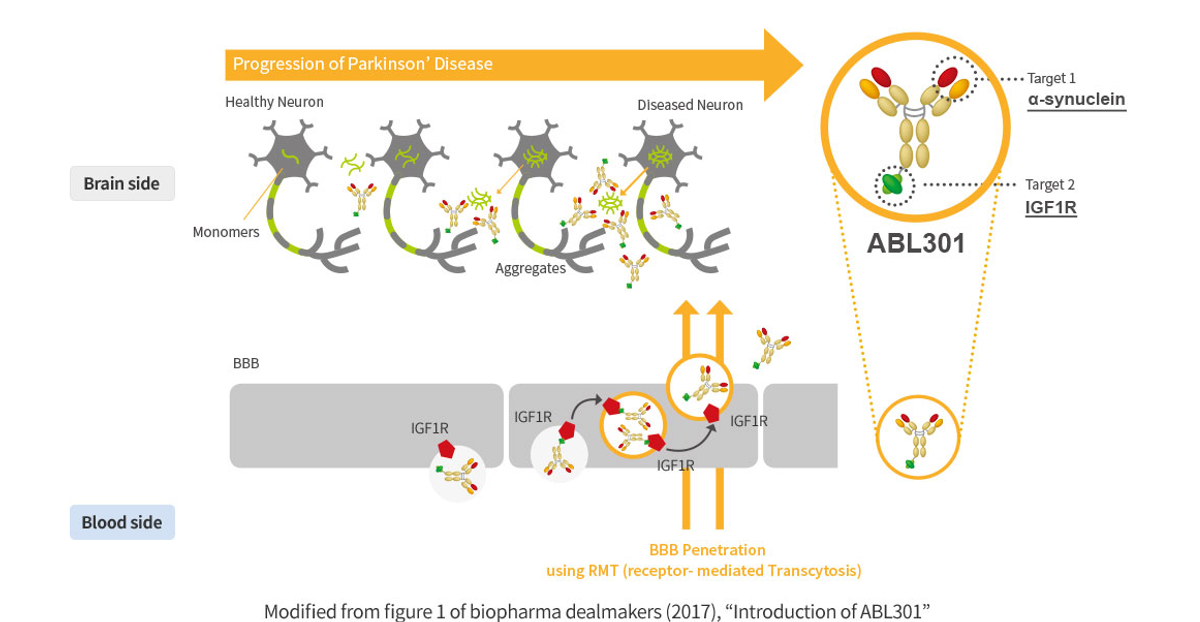
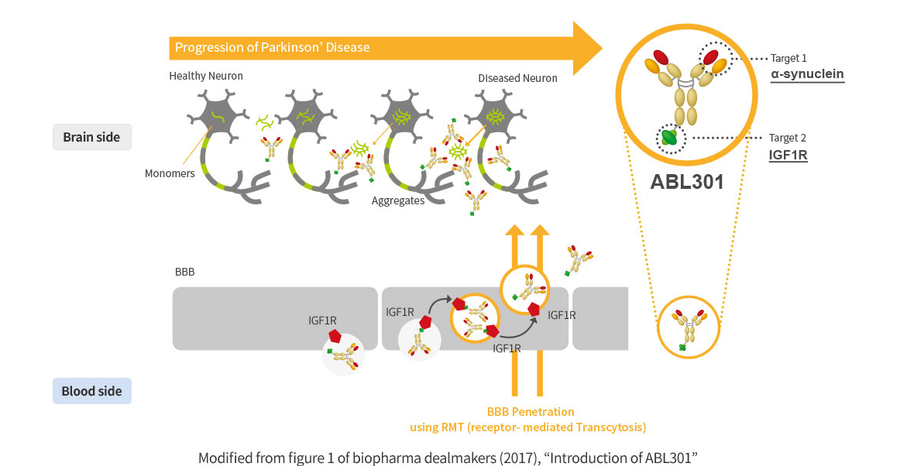
ABL Bio is a bispecific antibody specialist founded in 2016 and listed on South Korea's KOSDAQ, the technology-focused exchange comparable to America's Nasdaq. The company's core offering is its proprietary Grabody platform, which encompasses two principal technologies: Grabody-B, designed to ferry therapeutic agents across the blood-brain barrier (BBB), and Grabody-T, a bispecific antibody platform that activates T-cells to fight cancer. On the back of these platforms, ABL Bio has assembled a broad pipeline of drug candidates at various stages of development.
The South Korean pharmaceutical and biotech sector trades at price-to-book ratios (PBR) more than seven times the market average — a structural premium that reflects the outsised upside investors ascribe to successful drug development. Yet ABL Bio faces a layered set of challenges in meeting the expectations of the government's corporate value-up programme: unpredictable cash flows inherent to research-stage companies, no capacity to pay dividends, and mounting pressure for greater governance transparency.
Seoul launched its corporate value-up programme in earnest in 2024, prodding listed companies to improve shareholder returns and close the persistent discount at which Korean equities trade relative to global peers. The initiative has reverberated through the KOSDAQ biotech sector. Established players with meaningful revenues — such as Yuhan Corporation and Alteogen — have begun paying dividends and cancelling treasury shares. ABL Bio, by contrast, is pursuing what analysts describe as a "biotech-style value-up": lifting its valuation through technology licensing deals and clinical advancement rather than through conventional financial distributions.
Business Model and Financial Performance
Core Platform and Pipeline
ABL Bio operates along two axes: licensing its bispecific antibody platform technology, and advancing its own clinical-stage pipeline. Grabody-B, the BBB-penetrating technology, has received global validation through a licensing agreement with Sanofi. Grabody-T underpins several of the company's more advanced oncology programmes.
Clinical momentum has been building. In June 2026, one of ABL Bio's oncology candidates received Fast Track designation from the US Food and Drug Administration (FDA) — a regulatory status that expedites the review process for promising therapies — sending the share price up more than 10% on the day. Simultaneously, ABL Bio has been pursuing a spin-out and fundraising strategy for its subsidiary NeoX Bio, with a Series B financing round officially launched at the BIO USA conference in June 2026.
Financial Results by Year
ABL Bio's revenue is heavily dependent on upfront licence fees and milestone payments from technology transfer agreements, making annual results volatile. The company has yet to achieve sustained operating profitability.
Year | Revenue (bn KRW) | Operating Profit (bn KRW) | R&D Expenditure (bn KRW) | Net Profit (bn KRW)
2021 | c.25.0 | c.-18.0 | c.31.0 | c.-17.0
2022 | c.42.0 | c.-15.0 | c.35.0 | c.-14.0
2023 | c.31.0 | c.-20.0 | c.38.0 | c.-19.0
2024 | c.48.0 | c.-12.0 | c.41.0 | c.-11.0
2025 | c.55.0 | c.-9.0 | c.43.0 | c.-8.0
*Figures are estimates based on regulatory filings. Years in which large technology transfer payments are recognised may show significant deviations from the underlying trend.*
Value-Up Timeline: Key Developments
March 2024 — The Value-Up Programme Launches; Biotech Inclusion Debated
When the government's corporate value-up programme was announced, markets immediately questioned whether KOSDAQ biotech companies could meaningfully participate. Given ABL Bio's high R&D spending relative to revenue and its negligible capacity for dividends, analysts broadly concluded that realising the value of its pipeline — rather than conventional shareholder distributions — was the more credible route to value creation for the company.
February 2026 — Alteogen Declares a Dividend; Pressure Mounts on Peers
Alteogen's announcement of what amounted to a landmark dividend for a KOSDAQ biotech company sent ripples through the sector. Securities analysts began asking whether peers such as LigaChem Biosciences and ABL Bio would follow suit. Given ABL Bio's accumulated losses, markets remained sceptical that a cash dividend was imminent.
March 2026 — Mandatory Treasury Share Cancellation Gains Momentum
As companies prepared for annual general meetings, a wave of discussion swept through the pharmaceutical and biotech industry about amending corporate charters to mandate the cancellation of treasury shares — a practice that reduces the share count and benefits remaining shareholders. ABL Bio was not immune to this pressure; the company is understood to have internally reviewed whether it met the relevant criteria. No formal announcement of a treasury share cancellation plan had been made at the time of writing.
April 2026 — ABL Bio Named Among KOSDAQ's Value-Up Contenders
Brokerage research reports and media coverage in April 2026 identified ABL Bio, alongside Alteogen and SK Biopharmaceuticals, as companies undergoing a meaningful step-change in scale and quality. The company began attracting greater attention from institutional and foreign investors; it featured among the KOSDAQ stocks with the highest net foreign buying during this period.
June 2026 — FDA Fast Track Designation: Pipeline-Led Value Creation in Focus
The FDA's Fast Track designation for ABL Bio's lead oncology candidate — granted in June 2026 — was widely interpreted as the clearest demonstration yet of the biotech-style value-up thesis. Unlike a dividend or a buyback, the designation validated the scientific and commercial potential of the pipeline, raising expectations that technology transfer milestone payments could materialise. The share price jumped more than 10% on the news.
June 2026 — NeoX Bio Series B: Creating Value Through a Spin-Out
At BIO USA 2026, ABL Bio formally launched the Series B fundraising process for NeoX Bio. The logic is straightforward: if the subsidiary can secure external investment at an independently assessed valuation, the implied value attributed to ABL Bio's stake should feed through to the parent company's own share price — another form of value creation that sidesteps the need for direct shareholder distributions.
Challenges and Assessment
Challenges Ahead
The most pressing challenge ABL Bio faces is building a sustainable revenue base. So long as income depends almost entirely on technology licensing deals and milestones, any year without a major contract will produce a large operating loss. That structural volatility makes it practically impossible to commit to dividends or systematic share buybacks.
The justification for a premium valuation is also contingent on continued clinical success. The pharmaceutical and biotech sector's PBR of more than seven times the market average is simultaneously a source of upside and a source of fragility: if clinical programmes stall or fail, that premium can evaporate quickly. The path from FDA Fast Track designation to actual approval — encompassing further trials, regulatory filings and commercial negotiations — remains long and uncertain.
The fate of NeoX Bio adds another variable. A successful Series B round would provide an independent valuation anchor and boost the perceived worth of ABL Bio's stake. Failure to close the round, or delays in NeoX Bio's own clinical work, would introduce further uncertainty.
Overall Assessment
ABL Bio's approach to value creation is best understood as a biotech-specific variant of the value-up concept — one centred on realising the worth of its clinical pipeline rather than on financial engineering. Given the realities of running an R&D-stage company, this is a rational strategy. The FDA Fast Track designation, active global business development, and the NeoX Bio spin-out each send credible signals to institutional and foreign investors.
However, as Alteogen's dividend decision raises the baseline expectation for shareholder returns across the KOSDAQ biotech sector, a strategy that relies purely on clinical newsflow risks leaving a widening gap between what investors expect and what ABL Bio delivers.
Controversies and Limitations
No Dividends and the Structural Tension of Biotech-Style Value-Up
ABL Bio has never paid a cash dividend. Continuous R&D investment and persistent operating losses make this understandable, but it sits awkwardly with a government programme that treats shareholder returns as a central performance metric. As Alteogen's dividend opens the door to broader expectations within KOSDAQ biotech, market scrutiny of ABL Bio's no-dividend stance is likely to intensify.
Lumpy, Discontinuous Revenue
Licence fees and milestone income are inherently episodic. Boom-and-bust revenue patterns make it difficult for the market to assess the company's underlying intrinsic value and tend to attract event-driven traders rather than the long-term investors that a value-up programme is designed to cultivate. This sits uneasily with the programme's stated goal of fostering sustained, durable value enhancement.
Governance Transparency
The March 2026 discussions about mandating treasury share cancellations across the pharmaceutical and biotech sector remain only partially resolved as far as ABL Bio is concerned. The company has not made sufficiently detailed public disclosures about its governance intentions, which some investors cite as a source of frustration.
Sustaining a Premium Valuation
A sector PBR of more than seven times the market average implies that investors are pricing in substantial future success. It also means that any clinical setback — a trial failure, a delayed readout, a licensing deal that falls apart — carries the risk of a sharp derating. The FDA Fast Track designation was a positive catalyst, but it is not a guarantee of approval, and the structural vulnerability of the valuation remains.
Key Metrics Summary
Year | Dividend | Treasury Share Cancellation | Operating Profit (bn KRW) | Est. PBR (x) | Notable Event
2021 | None | None | c.-18.0 | c.5–7 | —
2022 | None | None | c.-15.0 | c.4–6 | —
2023 | None | None | c.-20.0 | c.3–5 | —
2024 | None | None | c.-12.0 | c.4–6 | Value-up programme launched; KOSDAQ biotech debate begins
2025 | None | None | c.-9.0 | c.5–8 | Net foreign buying increases materially
2026 (H1) | None | Under review | — | c.6–9 | FDA Fast Track designation; NeoX Bio Series B launched
ABL Bio's value-up journey is very much a work in progress. The era of dividends and treasury share cancellations is arriving in the KOSDAQ biotech sector — Alteogen has seen to that. The central question for ABL Bio is whether it can sustain its pipeline-led approach to value creation whilst simultaneously moving quickly enough on governance reform to meet the rising expectations of its shareholders. How it answers that question will, in large part, determine where its share price goes from here.