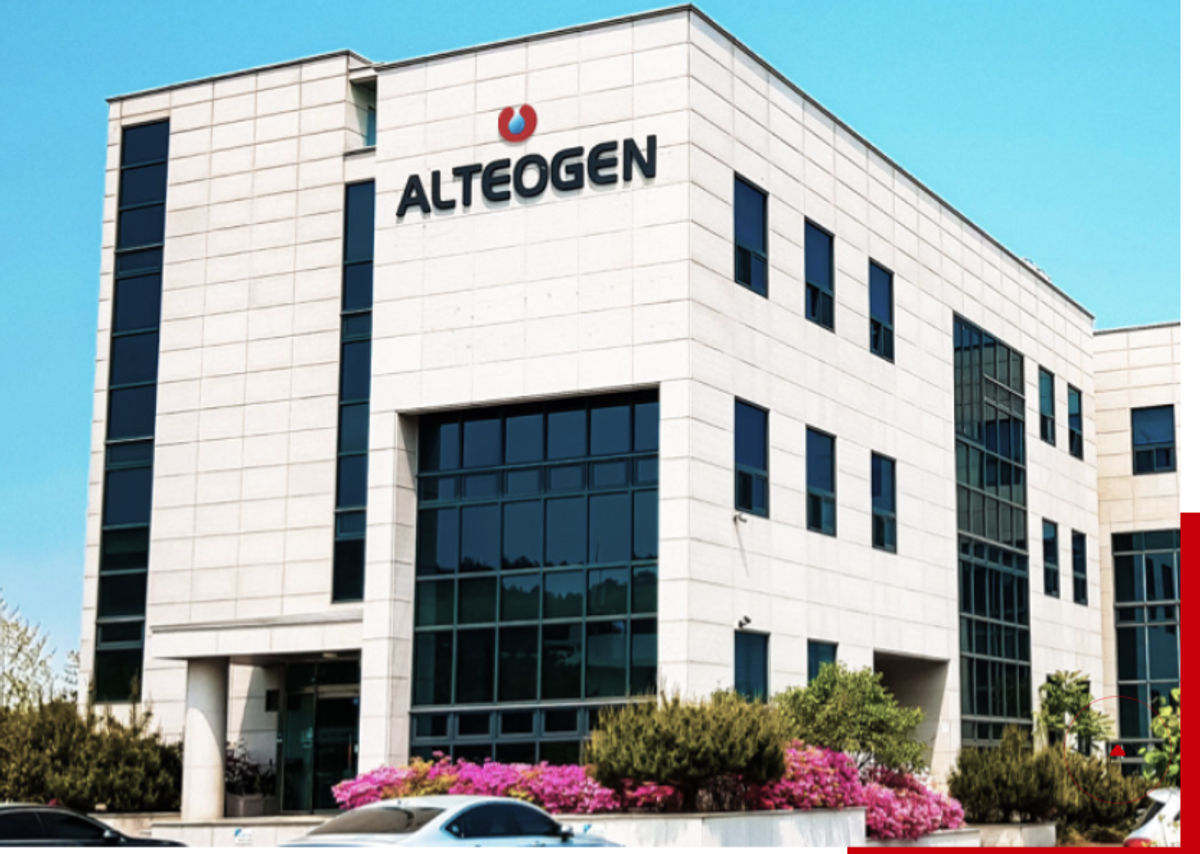
Company overview
Alteozen is a KOSDAQ-listed South Korean biotech whose central asset is ALT-B4, an enzyme-based platform technology that converts intravenous biologic drugs into more convenient subcutaneous (under-the-skin) formulations. Founded in 2008, it spent years on the margins of investor attention before a string of licensing deals with global pharmaceutical giants in 2023 and 2024 transformed it into one of the most closely watched growth stocks in Korea's biotech sector. Its market capitalisation has since swelled to several trillion won, propelling it to the top tier of the KOSDAQ by size and triggering serious debate about a potential move to the main KOSPI exchange, as well as participation in South Korea's government-backed "Value-Up" programme to improve corporate governance and shareholder returns.
The shareholder-value debate around Alteozen has two distinct origins. On one side, the company's explosive growth has naturally stirred demands from investors for a greater share of the spoils. On the other, a series of governance controversies — including share sales by the founding family and a public clash with institutional investors over a senior executive's reappointment — have turned shareholder-friendly management from an aspiration into an urgent priority. The fact that both retail investors ("개미," or individual small shareholders, as they are known in Korea) and institutional shareholders have begun to organise and speak out makes Alteozen's experience a landmark case in the awakening of shareholder activism across the Korean biotech industry.
Business model and financial performance
*Core technology*
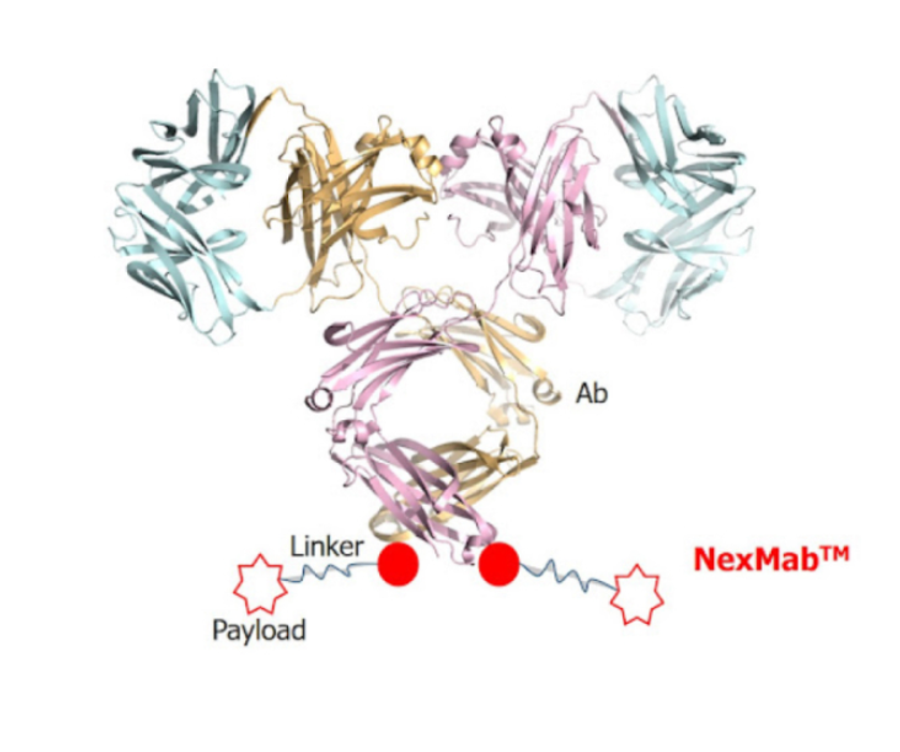
Alteozen's value is determined less by conventional profit-and-loss metrics than by the scale and quality of its technology licensing agreements. Its flagship ALT-B4 platform competes directly with Halozyme Therapeutics' ENHANZE® technology, which performs the same function of enabling intravenous drugs to be reformulated for subcutaneous injection, dramatically improving ease of use for patients. That a relative newcomer has secured contracts with multiple global pharmaceutical groups is widely regarded as compelling evidence of ALT-B4's technical merit.
*Financial results*
Year | Revenue (bn won) | Operating profit (bn won) | Notes
2022 | ~40 | Loss | Heavy R&D investment
2023 | ~80 | Breakeven/small profit | Milestone payments received
2024 | ~180 | ~60 | Multiple contracts under way
2025 | Record high | Sharp increase | Confirmed in Feb 2026 filing
*Note: Figures are approximate. Full-year 2025 results were disclosed in February 2026. Precise figures may differ from regulatory filings.*
Licensing milestone receipts are the primary revenue driver, meaning results can swing sharply from year to year depending on which contractual triggers are hit. High research-and-development expenditure also makes direct comparisons with conventional manufacturers misleading. The total potential value of Alteozen's licensing pipeline, measured against the maximum milestone payments stipulated in its contracts, is believed to run to several trillion won.
The value-up timeline
*December 2025 — KOSPI transfer gathers pace*
Reports in early December 2025 confirmed that Alteozen was actively pursuing a move from the technology-focused KOSDAQ to the main KOSPI board. Such a transfer would, in theory, bring the company within the investment universe of a broader range of institutional fund managers and raise the prospect of inclusion in the KOSPI 200 index. Commentary in the financial press began to link the exchange transfer explicitly with entry into the government's Value-Up programme — a scheme designed to encourage listed Korean companies to improve returns to shareholders — stoking expectations among retail investors. The notion that strengthened shareholder-return policies might be a prerequisite for the move gave the value-up debate a strategic urgency it had previously lacked.
*January 2026 — A prominent retail investor signals confidence*
In January 2026, Hyeong In-woo, a well-known individual investor sometimes called a "super-ant" — a retail shareholder wealthy enough to hold a meaningful stake in a large-cap company — publicly stated that he was maintaining his position in Alteozen, saying the company's fundamental direction remained intact. The statement was interpreted as a rebuttal of mounting concerns about governance and business risks. It also illustrated a peculiarity of Korea's biotech market: the public pronouncements of prominent individual shareholders can move prices and sentiment in ways that would be unusual in more institutionally dominated markets.
*February 2026 — Record revenues confirmed*
Early in February 2026, Alteozen disclosed that it had achieved its highest-ever annual revenues in 2025, driven by continued licensing milestone receipts. The strong result added concrete substance to discussions about shareholder returns, making the question of how to distribute capital less theoretical than before.
*March 2026 — Tax-free dividend reserve expanded to 80bn won*
On 16th March 2026, Alteozen announced that it would expand its tax-free dividend reserve to 80bn won (approximately $58m at prevailing exchange rates), drawing on share premium reserves and capital surplus rather than retained earnings. Dividends paid from this source are not subject to dividend income tax in the hands of shareholders — a material benefit, particularly for smaller retail investors. The announcement was received as a meaningful, if partial, response to longstanding complaints that the company's distribution policy was opaque.
*March 2026 — Second-largest shareholder opposes CFO reappointment*
Three days later, on 19th March, Alteozen's second-largest shareholder publicly declared opposition to the reappointment of the chief financial officer at the upcoming annual general meeting, citing concerns about financial transparency and insufficient shareholder communication. The episode was notable as one of the more visible exercises of shareholder voting rights against the management of a Korean biotech — a sector where founder-led decision-making has historically been difficult to challenge.
*March 2026 — Founding family sells shares*
On 25th March, it emerged that members of Alteozen's controlling family had sold a portion of their stake. Insider share sales are rarely welcomed by markets, and the timing — coming when expectations around the exchange transfer and value-up programme were running high — amplified the negative reaction. The company issued a statement reaffirming its strategic direction, but residual unease among shareholders was reported to linger.
*April 2026 — Shareholders go public with their grievances*
In early April, Korean financial media carried accounts of shareholders offering pointed public criticism of the company's management. While acknowledging Alteozen's technological promise, investors pressed for faster progress on communication, shareholder returns, and governance reform. The episode underlined that managing investor relations had become as pressing a management task as advancing the science.
*May 2026 — KOSPI transfer remains in focus*
By early May 2026, the prospect of an exchange transfer was being described in local media with the phrase "determined to part ways" — a colloquial expression suggesting the decision was all but made. Retail investor expectations for an accompanying value-up commitment remained elevated, with a growing market consensus that any serious KOSPI listing application would need to be accompanied by credible governance and shareholder-return commitments.
Challenges and assessment
*Outstanding challenges*
Three structural problems stand between Alteozen and a convincing value-up story.
First, securing a stable source of shareholder returns. A revenue model that depends on lumpy milestone payments makes it structurally difficult to sustain a consistent dividend or share-buyback policy. The expansion of the tax-free dividend reserve is a welcome start, but investors are calling for a formal regular dividend policy and a concrete share-cancellation plan to follow.
Second, improving governance transparency. The founding family's share sale and the clash with institutional investors over executive appointments act as a discount on the company's valuation. Strengthening board independence, broadening shareholder communication channels, and improving governance disclosure are all cited as necessary steps.
Third, ensuring that an exchange transfer actually translates into better governance rather than merely serving as a catalyst for short-term price gains. Moving to the KOSPI would widen the investor base and improve access for international funds, but it does not automatically deliver shareholder-return improvements or better oversight. The consensus view is that meaningful change must follow the listing, not merely accompany the announcement of it.
*Overall assessment*
Alteozen's experience offers a compressed illustration of the pressures that high-growth Korean biotech companies face as they mature and attract larger, more demanding investors. The expansion of the tax-free dividend reserve to 80bn won is a positive signal of intent. But the irregular, milestone-driven revenue structure, recurring governance controversies, and the tension between the controlling family's interests and those of minority shareholders leave genuine questions about whether the value-up commitment is substantive or cosmetic.
On the more encouraging side, the willingness of a major shareholder to vote against an executive reappointment, and the public stance taken by prominent retail investors, suggests that shareholder activism is beginning to take root even in a sector where it has historically been weak. How consistently Alteozen converts its scientific achievements into shareholder value will ultimately determine whether the market views its governance evolution as credible.
Controversies and limitations
*The share sale: a crack in confidence*
The founding family's March 2026 divestment remains the most contentious episode in Alteozen's value-up narrative. Markets tend to read insider selling as a signal that those with the best knowledge of a company's prospects are reducing their exposure. That the sale coincided with heightened expectations around the exchange transfer and value-up programme made the optics worse. The company's denial of any change in strategy has not fully dispelled concerns about conflicts of interest between controlling and minority shareholders.
*Milestone dependency: the dividend dilemma*
Alteozen's reliance on contract milestone payments means that a delay in negotiations or the invocation of a contract's clawback provisions could cause cash flows to deteriorate sharply. This is structurally at odds with the predictable distributions that income-seeking shareholders expect. If the 80bn won tax-free dividend reserve is treated as a one-off gesture rather than the foundation of an ongoing policy, doubts about the sustainability of shareholder returns will resurface quickly.
*Weak checks and balances*
The second-largest shareholder's opposition to the CFO's reappointment exposed the limitations of Alteozen's board oversight mechanisms. Korean biotech companies frequently retain a strongly founder-centric decision-making culture, and Alteozen appears to be no exception. Without a higher proportion of genuinely independent directors and a more robust audit committee, critics warn that value-up commitments risk remaining statements of aspiration rather than enforceable obligations.
*The risk of conflating exchange transfer with value creation*
There is a danger that the KOSPI transfer has become, in the minds of some investors, a proxy for value-up itself. Moving exchanges can improve liquidity and broaden the shareholder base, but it does not automatically generate better returns or governance. If tangible improvements fail to materialise after a successful transfer, the entire value-up exercise risks being remembered as little more than investor-relations theatre.
Key figures at a glance
Year | Revenue (bn won) | Op. profit (bn won) | Tax-free dividend reserve (bn won) | Share cancellation | Notes
2022 | ~40 | Loss | — | — | R&D investment phase
2023 | ~80 | Breakeven | — | — | First licensing milestones
2024 | ~180 | ~60 | — | — | Multiple big-pharma deals
2025 | Record | Sharp rise | — | — | Revenue record confirmed
2026 (planned) | — | — | 80 | Not announced | Tax-free dividend expansion
*Note: Price-to-book ratios are elevated relative to conventional industrial companies, as is typical for high-growth biotech firms; precise figures should be verified against regulatory filings at the relevant dates. As of May 2026, no formal share-cancellation plan had been publicly announced.*