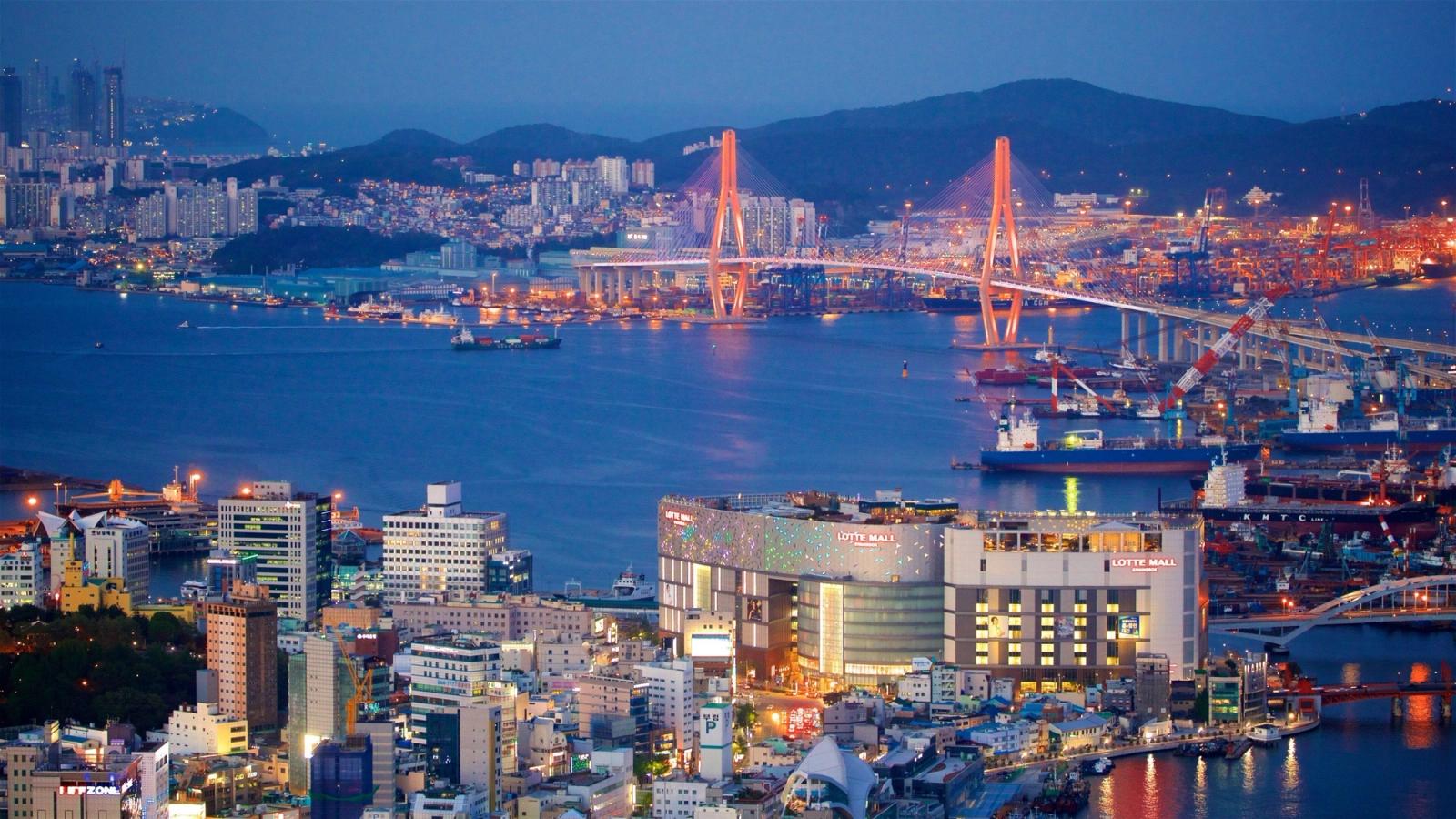
In July 2026, Busan burned bright. When BTS — the South Korean boy band that became the world's most streamed music act — staged a concert in South Korea's second city, fans descended from across Asia, America and Europe. Hotels filled instantly, luxury counters were mobbed and restaurant queues snaked around city blocks. The result was an extraordinary, if concentrated, surge in revenues across Busan's hospitality, retail and food-service industries. The episode offered the clearest evidence yet that K-pop is not merely a cultural export — it is an economic force capable of reconfiguring an entire city's commercial activity.
Hotels full, luxury counters mobbed
For the duration of the concert and the days immediately surrounding it, occupancy at Busan's major hotels approached 100%. Properties in Haeundae and Seomyeon — the city's two premier entertainment and business districts — reported average room rates rising by 30–50% above normal levels, yet still found no shortage of takers. According to the Korea Tourism Organisation, large-scale K-pop events typically produce a 200–300% increase in foreign overnight visitors to the host city in the week either side of the event.
The city's flagship department stores — Shinsegae and Lotte among them — experienced similar windfalls. Luxury brand boutiques and K-beauty counters recorded sharp spikes in foreign-visitor sales, with tax-refund transactions reportedly running at more than triple their usual pace. Fans from Japan, South-East Asia and the United States purchased far beyond official BTS merchandise, sweeping up fashion, food and cosmetics in what retailers have begun calling "fandom shopping" — discretionary spending that the pull of a beloved artist unlocks in ways conventional tourism marketing rarely can.
A structural question: boom or bonanza?
The Hyundai Research Institute, one of South Korea's leading private think-tanks, has previously estimated that BTS generates economic activity worth several trillion won annually. It has put the direct and indirect output effect of a single concert at tens of billions of won — roughly comparable, it suggests, to hosting a mid-sized international sporting event. The Ministry of Culture, Sports and Tourism classifies K-pop concert tourism as high-value content tourism, and has made the development of regionally integrated cultural tourism packages a formal policy priority.
Yet sceptics point to structural fragility. A tourism and convention specialist at Pusan National University cautions that "the economic windfall from K-pop concerts is real, but it is dangerously dependent on the popularity of individual artists." The evidence supports the concern: once a concert ends, accommodation and dining revenues typically revert to baseline with striking abruptness — a phenomenon analysts have labelled "trickle-down severance." Demand evaporates as fast as it arrived.
Déjà vu: Busan has been here before
The 2026 concert is best understood as the sequel to a precedent set in October 2022, when BTS performed "Yet To Come in BUSAN" at the city's Asiad Main Stadium. Busan's municipal government estimated the economic impact of that single event at more than 1 trillion won (approximately $750m at then-prevailing exchange rates). The concert was simultaneously live-streamed to more than 190 countries, generating a volume of global media exposure that no conventional city-marketing budget could plausibly have bought. It stands as one of the rare instances in which a provincial South Korean city attracted sustained worldwide attention through a single cultural event.
The 2026 concert carried additional emotional weight. It formed part of BTS's return to full-group activity following the mandatory military service that had temporarily dispersed its members — a hiatus that Korean law imposes on all able-bodied men (BTS members being no exception, despite intense public debate about possible exemptions). The intensity of pent-up fan demand amplified the economic impact accordingly. Crucially, overseas fans chose Busan as a destination in its own right, not merely as an appendage to Seoul — a signal that the city is consolidating its standing as an independent node on the global K-pop tourism map.
The Taylor Swift comparison
Busan's experience sits within a well-documented global pattern. Taylor Swift's Eras Tour of 2023–24 was estimated to have generated more than $100m in economic activity in each American city it visited; in Seattle, the vibrations from the crowd were strong enough to register on seismic monitoring equipment. Edinburgh and Singapore both deployed government subsidies to secure tour dates, treating a pop concert as industrial policy by other means.
South Korea, however, enjoys an advantage that most concert-dependent cities do not. K-pop is inseparable from the broader Korean national brand — the food, the cosmetics, the drama serials, the fashion. A BTS concert in Busan is therefore not just a concert: it is an entry point into a comprehensive "Visit Korea" experience that no other country can readily replicate. This integration of soft power and consumer spending is what gives Korean policymakers a more ambitious canvas to work with than their counterparts in, say, Edinburgh or Seattle.
Making the wave permanent
Economists and tourism specialists broadly agree that converting a one-off windfall into durable economic benefit requires deliberate institutional effort. Their recommendations converge on four priorities: standardising regionally integrated tour packages tied to concert events; expanding multilingual visitor infrastructure; addressing the unequal distribution of spending between large retail chains and small local businesses; and developing permanent K-pop cultural attractions capable of drawing visitors year-round, independent of any single concert's schedule.
Busan's city government has signalled its intention to treat the episode as a catalyst for urban regeneration and image repositioning rather than a mere blip in the revenue statistics. The ambition is defensible. K-pop's wave has reached Busan's shore with considerable force. Whether it becomes a recurrent tide or recedes into a fond memory depends, in the end, less on the music than on the policy choices that follow.