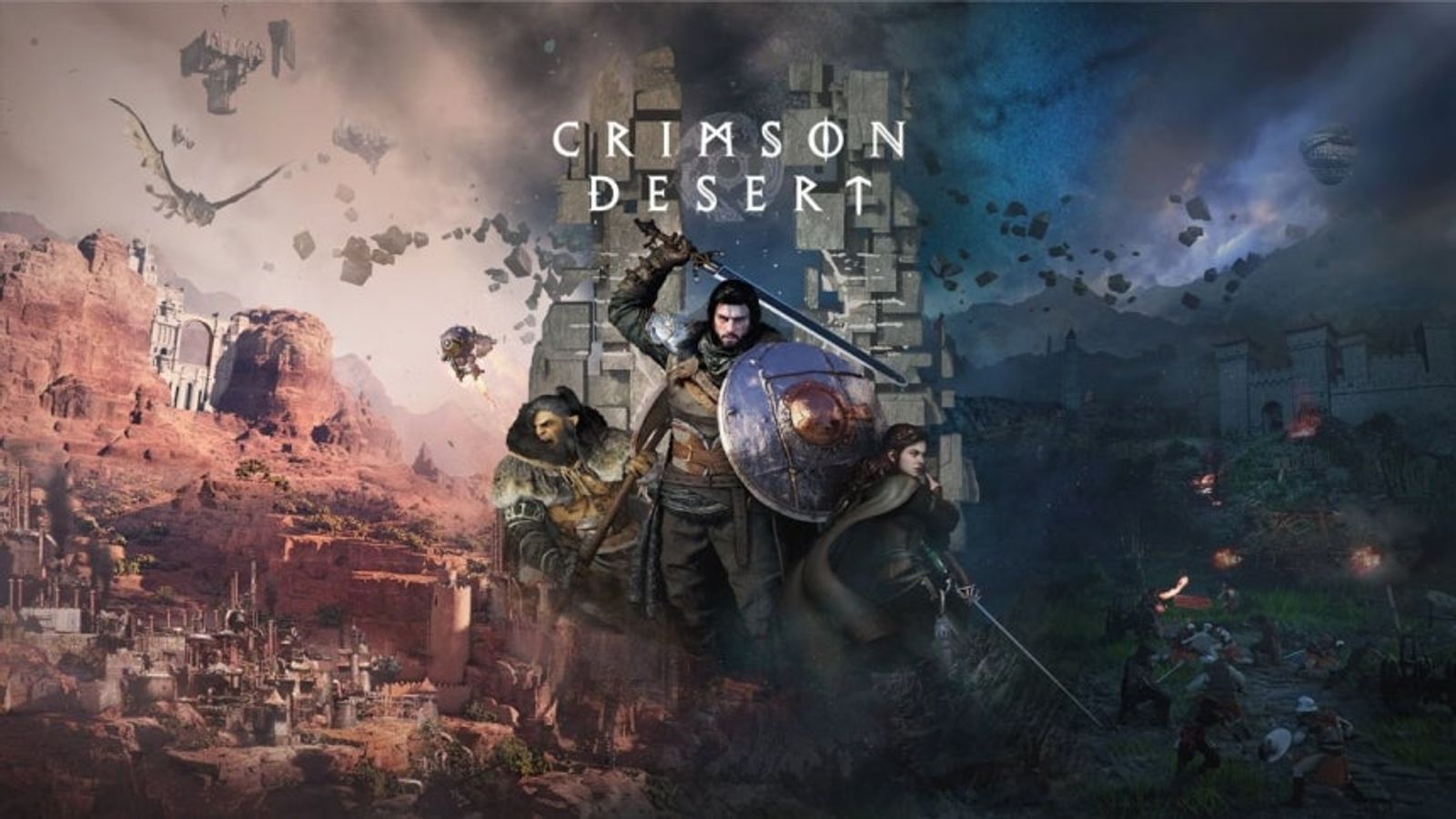
Pearl Abyss has announced that the first downloadable content (DLC) for its action-adventure game *Red Desert Enhanced* will launch on 16th October. The news, reported by Chosunbiz on 4th September 2026, is being watched as far more than a routine content update. In a sluggish domestic market for big-budget "AAA" games, it represents a pivotal test of the company's survival strategy.
From ambition to mixed reception
*Red Desert* is Pearl Abyss's most ambitious title since *Black Desert*, the massively multiplayer online role-playing game that made the company's name. Developed over several years and backed by heavy marketing expenditure, it generated considerable excitement among gamers at home and abroad ahead of its release. The reality proved disappointing. User reviews on Steam and scores on Metacritic, the games industry's main critical aggregators, were mixed at best. The game fell short on both commercial and critical measures.
The *Enhanced* edition—offering improved graphics and gameplay refinements—was an attempt to claw back ground lost in that initial reception. The forthcoming DLC is the next step in that rehabilitation effort, designed to retain existing players and attract new ones.
A well-worn playbook, executed with varying success
Extending a game's commercial life through DLC has become standard practice in the global industry. FromSoftware's *Elden Ring* released its expansion, *Shadow of the Erdtree*, roughly two years after the base game launched and sold more than five million additional copies worldwide. CD Projekt Red offers perhaps the most instructive parallel: after *Cyberpunk 2077* launched to a torrent of criticism in 2020, a sustained programme of patches and a major DLC, *Phantom Liberty*, achieved a remarkable rehabilitation.
The commercial logic is well-supported by data. According to Newzoo, a games industry research firm, post-launch content including DLC and expansion packs accounted for more than 35% of global games revenue in 2025. For AAA single-player titles specifically, DLC releases tend to trigger an average 20–30% rebound in base-game sales. On that basis, Pearl Abyss's decision looks analytically sound.
The financial stakes
Pearl Abyss's financial position sharpens the significance of this release. The company has ploughed substantial capital into *Red Desert*, funded largely by the steady revenues generated by *Black Desert*. How well *Red Desert* performs commercially is directly linked to its capacity to develop future titles. Some analysts have identified the timeline for recouping that investment as a key variable in any recovery of the company's share price, which has moved broadly in line with *Red Desert*'s fortunes. The market is treating the DLC launch as, in effect, a mid-term review of the entire *Red Desert* project.
A divided audience
Reaction among gamers is a blend of anticipation and scepticism. Those who responded warmly to *Red Desert*'s world-building and combat are eager to see its story expanded. Those who were frustrated by optimisation problems or felt the base game was thin on content are less easily convinced that additional paid content is worth their money.
One industry figure put the dilemma plainly: "The success of a DLC ultimately depends on whether it patches over the flaws of the original or stands alone as a polished piece of content in its own right. Which direction Pearl Abyss has taken is the crucial question."
A watershed moment
The period around the 16th October launch looks set to be unusually consequential. Metacritic scores and Steam concurrent-player figures for the DLC will be followed shortly by Pearl Abyss's fourth-quarter earnings announcement—a sequence that will amount to a comprehensive verdict on the *Red Desert* project.
The broader context matters too. Breaking into the global market with an AAA console title remains a formidable challenge for South Korean developers. Nexon, NCSoft and other large domestic studios have all encountered setbacks in their attempts to crack the global console market. Pearl Abyss's DLC strategy is thus not merely one company's commercial decision; it is a small but telling episode in the longer story of whether Korean game developers can establish themselves at the premium end of the global industry.
The question the market is now asking is whether Pearl Abyss can use this release to rebuild trust with its player base and transition *Red Desert* into a sustainable long-running live-service title. The answer will resonate well beyond the fate of a single game.