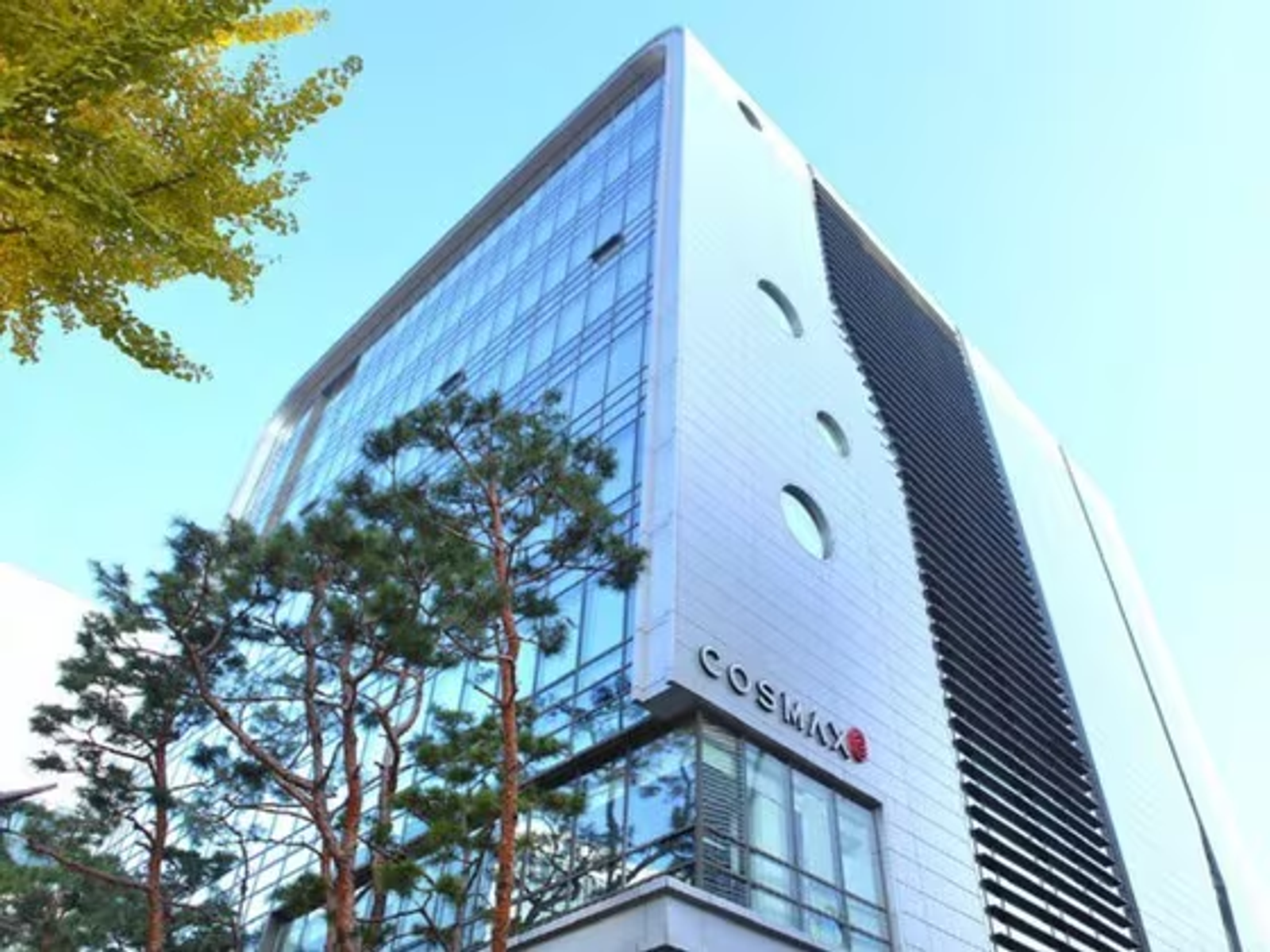
Company Overview
Cosmax is South Korea's leading cosmetics ODM (original design manufacturer) — a company that develops and produces products on behalf of brand owners rather than selling under its own name. Founded in 1992, it has grown on the back of the global K-beauty boom, developing and manufacturing skincare, colour cosmetics, and sun-care products for domestic and international clients. Listed on the Korea Stock Exchange's main board (KOSPI), the company remains under family control, with chairman Lee Byung-man and his relatives holding the largest stake.
The shareholder-value debate at Cosmax begins with K-beauty's spectacular rise. As global demand for Korean cosmetics surged and the company's earnings followed suit, critics repeatedly noted that shareholder returns had lagged behind profit growth. A modest dividend payout ratio and a half-hearted share buyback policy entrenched a valuation discount — the stock has persistently traded below one times book value (PBR below 1x). Against this backdrop, the company's dividend expansion and its designation as a "high-dividend company" in 2025–2026 are being read as a signal that the cosmetics contract-manufacturing sector is finally changing tack on shareholder returns.
Business Foundations and Financial Performance
*Growth as a K-beauty beneficiary*
Cosmax has evolved from a domestic manufacturer into a global ODM player, operating production subsidiaries in China, the United States, and South-East Asia. As K-beauty recognition grew in the American and European markets, export revenue expanded considerably. In sun care — a high-margin segment — the company secured formal international accreditation for its SPF testing capabilities in 2026, a tangible demonstration of its technical credentials. In April 2026 it unveiled a medium-to-long-term strategy centred on the "clean beauty" market, positioning itself as the sustainability vanguard of the K-beauty industry.
*Revenue trends*
Year | Revenue (approx.) | Note
2022 | ₩1.5 trillion | Depressed by Chinese COVID-19 lockdowns
2023 | ₩1.8 trillion | Recovery under way
2024 | ₩2.2 trillion | K-beauty boom in full swing
2025 Q4 | ₩601bn (quarterly) | +7.7% year-on-year; near a quarterly record
*Note: Annual operating profit figures are based on disclosed data where available; some figures are estimates.*
*Diversifying into sun care and clean beauty*
Since the start of 2026, Cosmax has focused on strengthening its sun-care range. The international accreditation of its SPF measurement capabilities is expected to unlock higher-value ODM orders in that segment. The company is also reported to be increasing investment in eco-friendly ingredients and formulations in response to the clean beauty trend.
Key Milestones in the Shareholder-Value Programme
*December 2025 — Korea Value-up Index forum*
Cosmax participated in a forum for companies included in the Korea Value-up Index — a government-backed initiative to improve corporate governance and shareholder returns. The event is understood to have catalysed internal discussions about strengthening the company's returns policy, while also raising market expectations for follow-through.
*January 2026 — Dividend expansion announced; market reaction mixed*
When Cosmax's plans to raise its dividend became public in January 2026, the response was divided. Several commentators argued that the increase was less a straightforward act of shareholder generosity than a mechanism to generate cash for the controlling family — specifically, to fund the transfer of control from chairman Lee Byung-man to his son Lee Byung-joo. The concern was that dividends would serve as a financing tool for succession rather than a reward for all investors. Others, however, welcomed the higher payout regardless of its motivation.
*March 2026 — Designated a "high-dividend company"; dividend raised by 44%*
In late March 2026, the Korea Exchange formally designated Cosmax a "high-dividend company" — the first cosmetics ODM firm to receive this classification. Simultaneously, the company announced a 44% increase in its dividend relative to the prior year, citing improved earnings driven by the K-beauty boom. Industry observers described the move as the opening act of "Value-up 2.0", and suggested that Cosmax's designation would heap pressure on rivals to follow suit.
*April 2026 — Clean beauty strategy and ESG commitments*
The company unveiled a medium-to-long-term sustainability strategy anchored in clean beauty, signalling an effort to enhance its corporate image by reinforcing both ESG credentials and shareholder-return commitments simultaneously.
*July 2026 — International SPF accreditation*
Cosmax received formal recognition from an international body for its SPF measurement and sun-care product development capabilities. This is expected to improve the company's competitiveness in high-value product categories, with favourable implications for margins and future capacity to return cash to shareholders.
Challenges and Assessment
*Challenges ahead*
The central challenge for Cosmax is making its enhanced shareholder returns sustainable. The market broadly agrees that a single year of generous dividends is insufficient; what is needed is a clear, credible dividend policy roadmap underpinned by a stable earnings base.
Equally pressing is the need to disentangle the company's shareholder-return policy from the family succession narrative. Until doubts about the connection between rising dividends and ownership transfer are resolved, the company's ability to rebuild credibility with outside investors will remain constrained. Greater transparency in dividend decision-making and a more independent board are widely cited as preconditions.
The performance of the Chinese subsidiary is another structural risk. The pace of Chinese consumer recovery and the intensity of local competition could materially affect group-wide profitability. Diversifying into the American and South-East Asian markets to reduce reliance on China is an ongoing imperative.
*Assessment*
Market opinion on Cosmax's value-up progress is broadly positive but tinged with scepticism. Being the first cosmetics ODM company to earn a high-dividend designation is a meaningful first, and the company deserves credit for translating a favourable external environment into tangible shareholder returns.
That said, the persistent book-value discount has not yet been addressed. Most analysts argue that higher dividends alone are insufficient to escape a chronic undervaluation; share buybacks and cancellations, alongside a more diverse and independent board, are needed to complement the payout increase. Whether Cosmax can sustain its commitment to shareholder returns and thereby regain the confidence of foreign and institutional investors — becoming a model case for South Korea's value-up programme — remains the central question for observers to watch.
Controversies and Limitations
*Dividend or succession fund?*
The sharpest criticism of Cosmax's dividend increase concerns who benefits most. With the founding family as the dominant shareholder, higher dividends flow disproportionately to Lee Byung-man and his son. Several media outlets reported critically that the shift to a generous payout was less a universal benefit for shareholders than a vehicle for financing the transfer of control. This episode is frequently cited as evidence of the gap between the stated aims of South Korea's value-up programme and the reality of how some companies implement it.
*Board independence*
Questions about the independence of Cosmax's board persist. In a company where decision-making remains concentrated in the hands of the controlling family, outside investors find it difficult to verify whether dividend and buyback decisions are the product of genuine independent scrutiny. By comparison, companies in other sectors — notably retail — moved more visibly in 2026 to strengthen board independence under the Value-up 2.0 framework. Cosmax's governance reform appears to lag.
*Short-selling pressure and market scepticism*
In May 2026, Cosmax reportedly ranked among the most heavily shorted stocks on the KOSPI. The fact that short sellers converged despite the high-dividend designation and a favourable K-beauty backdrop suggests that some in the market doubt the durability of earnings growth and the company's commitment to its returns programme. If the share price continues to underperform expectations following the dividend announcement, the case for additional shareholder-value measures will only strengthen.
*China risk and earnings visibility*
Despite a diversified client portfolio, China remains the single most important variable for group profitability. The rise of homegrown Chinese cosmetics brands and intensifying local competition represent structural headwinds for the Chinese subsidiary. Uncertainty about earnings visibility feeds into market doubts about the company's long-term capacity to sustain elevated payouts.
Key Metrics at a Glance
Year | Dividend per share | Dividend growth | Buyback policy | Est. operating profit | PBR
2023 | — | — | Not confirmed | Estimated | ~1x
2024 | — | — | Not confirmed | Estimated | ~1x
2025 | — | — | Not confirmed | Improving | ~1x
2026 | +44% vs prior year | +44% | Not confirmed | Q4 revenue ₩601bn (+7.7%) | Below 1x
Indicator | Detail
High-dividend company designation | March 2026 (first in cosmetics ODM sector)
Korea Value-up Index | Participated in inclusion forum, December 2025
Dividend increase | +44% year-on-year
Q4 2025 revenue | ₩601.0bn (+7.7% year-on-year)
SPF international accreditation | Recognised by international body, July 2026