
Company Overview
Daeduck Electronics, founded in 1952 and listed on the KOSPI (South Korea's main stock exchange), is the country's pre-eminent manufacturer of printed circuit boards (PCBs). Over more than half a century, it has specialised in high-value-added products: semiconductor package substrates (PKG substrates) and high-density interconnect (HDI) boards. Its principal customers include Samsung Electronics and SK Hynix, the world's leading memory chipmakers. Daeduck Electronics sits at the operational heart of the Daeduck Group, a mid-sized Korean conglomerate, alongside its holding company, Daeduck (formerly Daeduck GDS).
The company emerged as a prominent subject of South Korea's "corporate value-up" debate following the government's launch of its Value-Up Programme in 2023–24—an initiative modelled loosely on Japan's push to improve capital efficiency among listed companies trading below book value. The explosion in demand for high-bandwidth memory (HBM) chips, driven by the AI investment boom, translated directly into rising expectations for PKG substrate suppliers, prompting a rerating of the stock. At the same time, the Daeduck Group's shareholder-return policies and the succession of its founding family's third generation attracted critical scrutiny. By 2026, securities analysts were publishing reports proclaiming that Daeduck Electronics was entering a qualitatively different earnings tier—even as governance controversies refused to subside.
Business Profile and Financial Performance
*A portfolio pivoting to high-margin substrates*
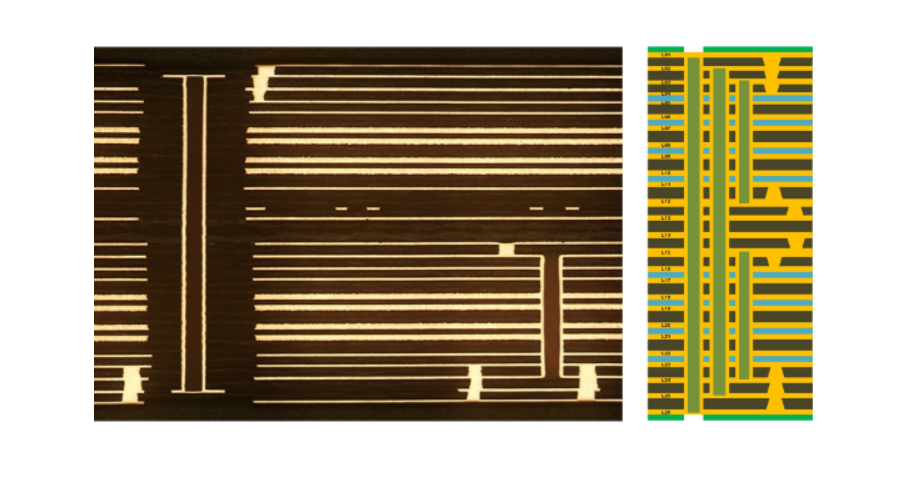
Daeduck Electronics' core business is the manufacture of semiconductor package substrates. As AI server proliferation has driven a sharp increase in demand for HBM packaging, the company's standing as a PKG substrate supplier has risen considerably. Its deliberate shift away from mobile and PC-oriented HDI boards towards higher-margin end markets—servers, AI infrastructure, and automotive electronics—is widely credited as the primary driver of recent earnings improvement. In May 2026, the company announced a capital expenditure programme worth 213 billion won (approximately $155m) to expand production capacity in anticipation of sustained AI-related demand.
*Financial performance, 2021–2026*
Year | Revenue (bn won) | Operating profit (bn won) | Net profit (bn won) | Key developments
2021 | ~850 | ~75 | ~55 | HDI boards in strong growth phase
2022 | ~920 | ~60 | ~45 | Global IT demand weakens
2023 | ~880 | ~40 | ~30 | Semiconductor downturn
2024 | ~960 | ~80 | ~60 | AI demand rebounds; recovery takes hold
2025 | ~1,100 | ~140 | ~100 | HBM and AI substrates surge
2026 (E) | ~1,300+ | ~180+ | — | Blowout Q1; capital expenditure accelerates
*Figures are based on regulatory filings and market consensus estimates; final figures may differ.*
First-quarter 2026 results were widely expected to exceed market forecasts by a considerable margin. Analysts attributed the outperformance to a combination of surging AI semiconductor demand and a tightening in PKG substrate supply, and responded by revising full-year earnings estimates upwards in successive reports.
Value-Up Milestones
*2023 — Dividend policy formalised*
Even as the semiconductor industry suffered a cyclical downturn in 2023, Daeduck Electronics maintained its dividend, signalling a commitment to shareholder returns. During this period, the broader Daeduck Group is understood to have begun substantive discussions about raising its payout ratio, with the holding company serving as the vehicle for coordinating group-wide dividend policy.
*January 2024 — National Pension Service designates Daeduck as a value-up candidate*
According to reports from early 2026, South Korea's National Pension Service—the country's largest institutional investor—sold down holdings in AI component suppliers and rotated into stocks identified as low price-to-book (PBR) value-up candidates. Daeduck Electronics, which had traded below one times book value for an extended period, was listed among the prime beneficiaries of this reallocation. Its persistently depressed PBR had made it a natural starting point for value-up discussions.
*2024 — The dividend-as-succession controversy*
The Daeduck Group's practice of selling subsidiaries' stakes to fund special dividends drew criticism from market observers, who questioned whether the arrangement served the interests of ordinary shareholders or primarily those of the founding family's third-generation heirs. Reporting by IB Tomato in April 2026 highlighted concerns that the structure—in which the holding company disposes of subsidiary stakes and channels the proceeds to shareholders via dividends—could effectively function as a mechanism for financing the succession of the owner family's third-generation daughters.
*April 2026 — Bumper Q1 earnings flagged; controlling shareholder sells shares*
In April 2026, as news circulated that first-quarter results would far exceed consensus expectations, it emerged that the controlling shareholder had sold a portion of their stake during the period of sharp share-price appreciation. The transaction, disclosed through a regulatory filing, attracted attention from minority shareholders, who viewed it as the dominant shareholder cashing in at precisely the moment when the investment case appeared strongest. Some market participants interpreted the sale as a recurring illustration of the misalignment between controlling and minority shareholder interests.
*May 2026 — 213bn won capital expenditure announced*
Daeduck Electronics disclosed a 213 billion won investment in new production facilities, framed as a pre-emptive response to anticipated growth in semiconductor demand. The investment is intended to substantially expand capacity for AI- and HBM-related PKG substrates. Analysts noted that the scale of capital spending would inevitably constrain free cash flow in the near term, with implications for the company's capacity to sustain dividend payments.
*June 2026 — Analyst upgrade and governance backlash coincide*
In mid-June 2026, a brokerage research report attracted considerable attention with its assessment that Daeduck Electronics was entering a new performance tier, citing the long-term structural growth of AI infrastructure investment and accelerating HBM packaging demand as its central arguments. Almost simultaneously, the corporate governance watchdog Governance Watch published a critical investigation into the Daeduck Group's shareholder-return policies, arguing that they were structured in ways that disproportionately benefited the third-generation heirs. A separate issue—reported losses of tens of billions of won on the group's investment in Wisol, an affiliated component maker—also surfaced during this period. The episode was notable for the sharpness with which bullish earnings momentum and governance risk came into simultaneous focus.
Challenges and Assessment
*Outstanding structural challenges*
Analysts and governance specialists have identified three principal hurdles that Daeduck Electronics must clear if it is to be recognised as a credible value-up story.
First, the sustainability of shareholder returns. With 213 billion won committed to capital expenditure, the question of how dividend payments will be funded is pressing. Returns that depend on the one-off disposal of subsidiary stakes are, by their nature, irregular and non-recurring—a shaky foundation for a durable shareholder-return programme.
Second, governance transparency. Concerns that shareholder-return policies may be functioning as a vehicle for family succession financing will persist unless the company moves to strengthen its independent board oversight and to articulate explicit, publicly disclosed criteria for its capital-return decisions.
Third, investment discipline at the group level. Reported losses of several tens of billions of won on the group's investment in Wisol raise legitimate questions about Daeduck's approach to allocating capital across its corporate family, and about the rigour of its risk management. These concerns sit alongside the otherwise encouraging performance of the core electronics business, and weigh on broader investor confidence in the group.
*Overall assessment*
Daeduck Electronics occupies a strategically advantageous position in semiconductor PKG substrates, one of the industries most directly exposed to the structural growth of AI infrastructure. The improvement in earnings through 2025 and into 2026 has made a meaningful rerating increasingly plausible. Yet the structural discount embedded in the share price by governance concerns and the opacity of shareholder-return policies is unlikely to disappear without concrete remedial action. The stock's strong performance in the first half of 2026 reflects genuine excitement about earnings momentum, but the long-term trajectory of the share price will ultimately depend on whether the interests of controlling and minority shareholders can be convincingly aligned.
Controversies and Limitations
*Shareholder return or succession vehicle?*
The Daeduck Group's high-dividend policy has a superficially shareholder-friendly appearance. On closer examination, however, its structure invites scepticism. According to a June 2026 investigation by Governance Watch, the arrangement—in which the holding company disposes of subsidiary stakes and distributes the proceeds as dividends—channelled material financial resources to the controlling family in ways that may materially assist the financing of a third-generation ownership transfer. Critics argue that this does not constitute genuine value creation for ordinary shareholders, and that it cannot reasonably be described as a value-up policy in the spirit of the government programme.
*The controlling shareholder's well-timed share sale*
The decision by the controlling shareholder to sell a portion of their holding at the peak of a share-price rally—triggered by the anticipation of exceptionally strong first-quarter 2026 results—sent an uncomfortable signal to minority investors. It reinforced perceptions of information asymmetry between the controlling family and the wider shareholder base, and prompted renewed criticism of a corporate structure in which the principal beneficiary of a rising share price can, at their discretion, monetise that gain ahead of other investors.
*Wisol losses and the cost of group diversification*
Losses estimated in the tens of billions of won on the group's investment in Wisol, an affiliate in the wireless component sector, have raised questions about the Daeduck Group's capacity for disciplined capital allocation and its management of subsidiaries. These concerns are separate from the strong operating performance of Daeduck Electronics itself, but they bear on the group's overall credibility with investors and on the efficiency with which shareholder capital is being deployed.
*The tension between growth investment and capital returns*
The 213 billion won capital expenditure commitment is a rational strategic response to a structurally growing market, and has been broadly welcomed as such. Its consequence, however, is a meaningful reduction in near-term free cash flow, which directly constrains the resources available for shareholder returns. The absence of a clearly articulated, medium-term capital allocation framework—one that specifies how growth investment and shareholder distributions will be balanced—remains a significant gap that the company has yet to address.
Key Metrics Summary
Year | DPS (won) | Share buybacks | Operating profit (bn won) | PBR (x) | Key value-up issue
2021 | — | — | ~75 | ~1.2 | HDI high-growth period
2022 | — | — | ~60 | ~0.9 | IT demand softens
2023 | — | — | ~40 | ~0.7 | Downturn; dividend maintained
2024 | — | — | ~80 | ~0.9 | Low-PBR value-up discussions
2025 | — | — | ~140 | ~1.1 | AI demand materialises
2026 (E) | — | — | ~180+ | — | 213bn won capex; succession controversy
*Dividend and buyback figures to be updated upon confirmation from regulatory filings. PBR figures are year-end estimates.*