Company Overview
DL is a diversified holding company operating across construction, chemicals, and energy. It was created in March 2021 when Daelim Industrial restructured itself through a corporate split, separating its holding-company functions from its operating businesses. Its two principal subsidiaries are DL E&C, a general contractor, and DL Chemical, a speciality chemicals producer. The group is listed on the KOSPI, South Korea's main stock exchange.
DL has long been regarded as one of the more reluctant practitioners of shareholder returns among South Korea's large holding companies. A persistently low price-to-book ratio (PBR), compounded by the structural discount that markets apply to holding companies, has drawn sustained pressure on DL to do more for its shareholders—particularly since 2023, when the government launched its "Korea Value-up" initiative to address the so-called Korea Discount, the chronic gap between the intrinsic and market value of Korean companies. With both construction and chemicals facing a simultaneous downturn, how DL responds to demands for better capital allocation has become one of the market's central questions.
Since the corporate restructuring, the gap between the combined value of DL's subsidiary stakes and the holding company's own share price has persisted—and it is precisely this gap that has animated the value-up debate. Investment analysts estimate that DL's shares have traded at a discount of roughly 50% to net asset value (NAV) for an extended period. In that sense, DL has become a frequently cited symbol of the structural discount afflicting Korean holding companies.
Business Foundations and Financial Performance
*Group structure*
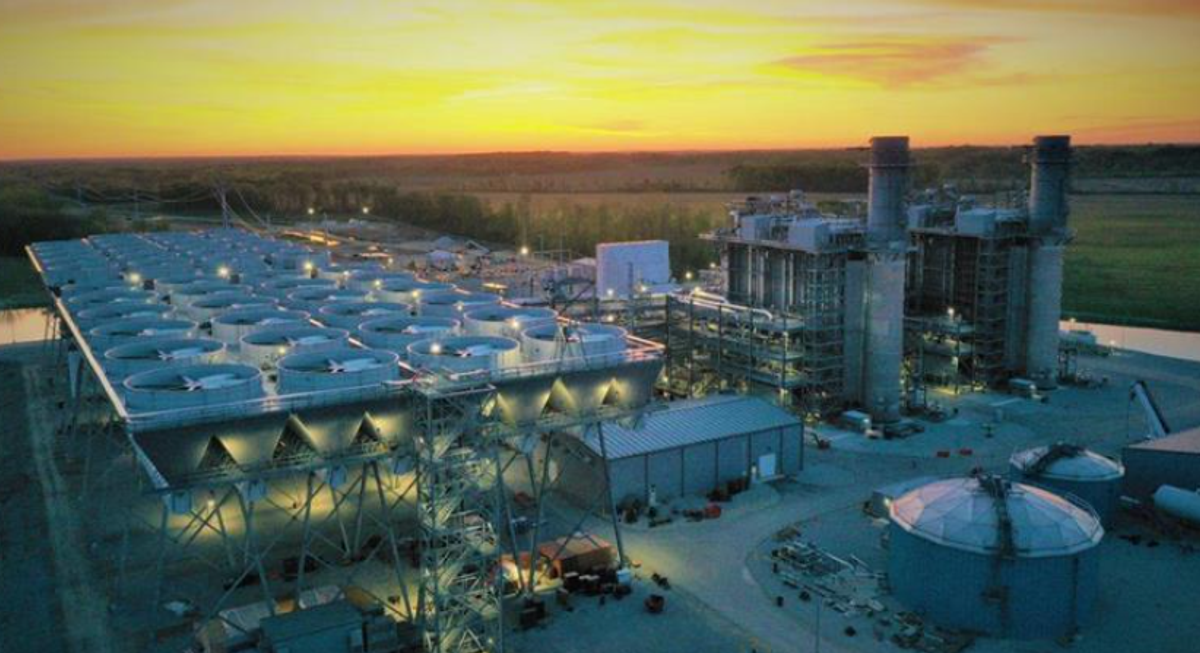
DL's two main earnings engines are DL E&C and DL Chemical. DL E&C is a full-service contractor covering residential housing, industrial plant construction, and civil engineering; it benefited substantially from South Korea's housing boom in the early part of this decade. DL Chemical focuses on speciality products such as polybutene and synthetic rubber, and dramatically expanded its global footprint in 2022 by acquiring Kraton, a US-based speciality chemicals firm.
The holding company itself derives income primarily from dividends paid up by its subsidiaries, supplemented by returns from property and energy investments. Because its cash flows are so closely tied to subsidiary performance, DL's finances are acutely sensitive to swings in construction and chemical markets.
*Financial results by year*
The table below summarises key operating profit figures (in South Korean won) and the ordinary dividend per share for DL's holding entity.
Year | DL (holding) operating profit | DL E&C operating profit | DL Chemical operating profit | Dividend per share (ordinary)
2021 | c. ₩160bn | c. ₩470bn | c. ₩220bn | ₩4,000
2022 | c. ₩120bn | c. ₩380bn | c. ₩140bn | ₩4,000
2023 | c. ₩80bn | c. ₩210bn | c. ₩60bn | ₩4,000
2024 | c. ₩70bn | c. ₩150bn | c. ₩50bn | ₩4,000
*Figures are based on regulatory filings and broker estimates; some are rounded.*
*Deteriorating conditions and margin pressure*
From the second half of 2022, a sharp slowdown in South Korea's property market caused DL E&C's operating profit to fall steeply. The sector was battered by risks in project-finance lending to real-estate developers, compounded by rising construction costs and a cooling new-home sales market—pressures from which DL E&C was not immune. Meanwhile, DL Chemical's acquisition of Kraton coincided with a global downturn in petrochemicals, leaving the expected synergies largely unrealised, at least in the near term. The deteriorating profit picture has direct implications for DL's capacity to return cash to shareholders, fuelling scepticism about whether meaningful progress on value enhancement is possible in the near future.
Value-up Milestones
*March 2021 — Corporate split and formation of the holding company*
The separation of Daelim Industrial into the holding company DL and the operating subsidiaries DL E&C and DL Chemical was presented as a move to sharpen each business's strategic focus and improve corporate transparency. In practice, the holding company's shares began trading at a substantial discount to the sum of its subsidiary stakes almost immediately after the restructuring, and market participants questioned whether the reorganisation had delivered any genuine uplift in shareholder value.
*January 2022 — Completion of the Kraton acquisition*
DL Chemical completed its acquisition of Kraton Corporation for approximately ₩2.4 trillion (roughly $1.9bn at the time), one of the largest overseas deals ever undertaken by the group. The transaction signalled the group's ambitions for global expansion, but it also loaded the balance sheet with significant new debt. Some analysts warned that the aggressive use of capital would leave less room for shareholder distributions.
*2023 — Government value-up programme takes shape; DL is conspicuously quiet*
South Korea's financial authorities began designing a corporate value-up programme aimed at encouraging—and eventually requiring—listed companies with PBR ratios below 1.0 to publish plans for improving their valuations. DL's PBR was estimated at the time to be in the 0.3–0.4 range, placing it squarely in the programme's sights. Yet DL produced no concrete shareholder-return plan or value-up disclosure during this period, drawing criticism for its passivity.
*February 2024 — Korea Value-up Programme formally launched*
The Financial Services Commission officially launched the value-up programme, putting listed companies under growing pressure to publish capital-allocation and shareholder-return strategies. Investor relations events and annual general meetings became venues for pointed questioning of DL's management. The criticism centred on two issues: the per-share dividend had been frozen at ₩4,000 for several consecutive years, and the company had made scarcely any use of share buybacks or cancellations as tools of capital return.
*Second half of 2024 — Exclusion from the KRX Korea Value-up Index*
When the Korea Exchange unveiled the constituents of its newly created KRX Korea Value-up Index—designed to track companies regarded as leaders in shareholder value creation—DL was not among them. Analysts attributed the exclusion to weak scores on shareholder-return rates, capital efficiency, and share-price performance. The omission was widely read as a pointed market verdict on the inadequacy of DL's efforts to date.
*2025 — Regulatory pressure mounts over treasury-share disclosures*
The government and financial regulators moved to require all listed companies holding treasury shares to disclose plans for their retention or disposal. DL had yet to present any clear roadmap for its treasury shares, and analysts noted that incoming mandatory-disclosure rules would expose the company to additional shareholder pressure if concrete plans remained absent.
Challenges and Assessment
*The tasks ahead*
DL's most pressing challenge is to close the holding-company discount. Experts broadly agree that no value-up disclosure will translate into a sustained share-price re-rating unless the structural gap between NAV and market capitalisation is addressed.
Three specific priorities stand out. First, DL needs to strengthen the holding company's cash flows by encouraging larger upstream dividends from its subsidiaries, then passing those proceeds through to shareholders—creating a virtuous cycle that the current structure has failed to generate. Second, the debt accumulated to finance the Kraton acquisition must be reduced to restore financial health and, in turn, increase the subsidiaries' capacity to pay dividends. Third, the company must signal its commitment to shareholders more credibly—whether by gradually raising the dividend, announcing a share-cancellation programme, or both.
Beyond these capital-allocation questions, DL E&C's earnings are unlikely to normalise without a recovery in South Korea's construction sector, leaving DL partly at the mercy of external conditions. If the government proceeds with planned reforms to the Commercial Act and mandatory treasury-share disclosures from 2026 onwards, DL will face increasingly little room to avoid setting out a detailed, time-bound shareholder-return plan.
*Overall assessment*
DL's approach to value enhancement fits a pattern that market observers recognise across many of South Korea's large holding companies: structural reform—in this case, the transition to a holding-company model—without the accompanying change in shareholder-return culture. The absence of meaningful progress on dividend policy or treasury-share utilisation has undermined market confidence.
That said, the strategy of portfolio diversification and global expansion is not without merit. If the Kraton acquisition eventually delivers the profitability gains that were originally envisaged for DL Chemical, it could provide the material foundation for a more credible value-up effort. Markets are watching closely to see whether management will use any earnings recovery as an opportunity to demonstrate a genuine shift in its approach to capital distribution.
Controversies and Structural Constraints
*The entrenched holding-company discount*
The most fundamental problem facing DL is that the holding-company discount appears to be structural rather than cyclical. A holding company has legal rights to dividends and voting power at its subsidiaries, but if it fails to channel the resulting value efficiently to its own shareholders, the market will struggle to treat the holding entity as an independent value-creating business in its own right. In DL's case, tax leakage and administrative costs as dividends pass through the holding company on their way to end investors add another layer of discount that is difficult to eliminate entirely.
*Rigid dividend policy*
Maintaining the per-share dividend at ₩4,000 for multiple consecutive years can reasonably be interpreted as a lack of commitment to shareholder returns. In an environment of rising prices and interest rates, a frozen nominal dividend represents a real-terms cut, and risks accelerating the exit of long-term shareholders. The contrast with peer holding companies that have deployed special dividends or share cancellations to demonstrate shareholder-return intent is a recurring source of criticism.
*Financial burden from the Kraton deal*
The Kraton acquisition materially increased leverage across the DL group. With the global chemicals cycle turning downwards in the aftermath of the deal, the anticipated synergies have yet to materialise to any significant degree. High financial leverage constrains the subsidiaries' capacity to pay dividends upward, which in turn limits the holding company's ability to return cash to its own shareholders—a self-reinforcing cycle that makes the discount difficult to break.
*Risk of box-ticking compliance*
Critics have noted that the government-led value-up programme has, in some cases, prompted companies to publish disclosures that satisfy the formal requirements while containing little of substance. Should DL respond with only high-level statements of intent—without quantified targets or a credible implementation timetable—it is likely to find the market's scepticism undiminished. With guidelines for strengthened value-up disclosures on KOSDAQ (South Korea's secondary market) expected around July 2026, and with the potential knock-on effect on KOSPI-listed companies, DL faces growing pressure to develop a more rigorous and specific disclosure strategy.
Key Data Summary
Year | Dividend per share (ordinary) | Share buybacks/cancellations | DL (holding) operating profit | DL E&C operating profit | DL Chemical operating profit | DL (holding) PBR (estimated)
2021 | ₩4,000 | Negligible | c. ₩160bn | c. ₩470bn | c. ₩220bn | c. 0.4x
2022 | ₩4,000 | Negligible | c. ₩120bn | c. ₩380bn | c. ₩140bn | c. 0.35x
2023 | ₩4,000 | Negligible | c. ₩80bn | c. ₩210bn | c. ₩60bn | c. 0.3x
2024 | ₩4,000 | Negligible | c. ₩70bn | c. ₩150bn | c. ₩50bn | c. 0.3x
*PBR figures and certain operating-profit data are based on broker estimates and public disclosures; they may differ from final audited results.*