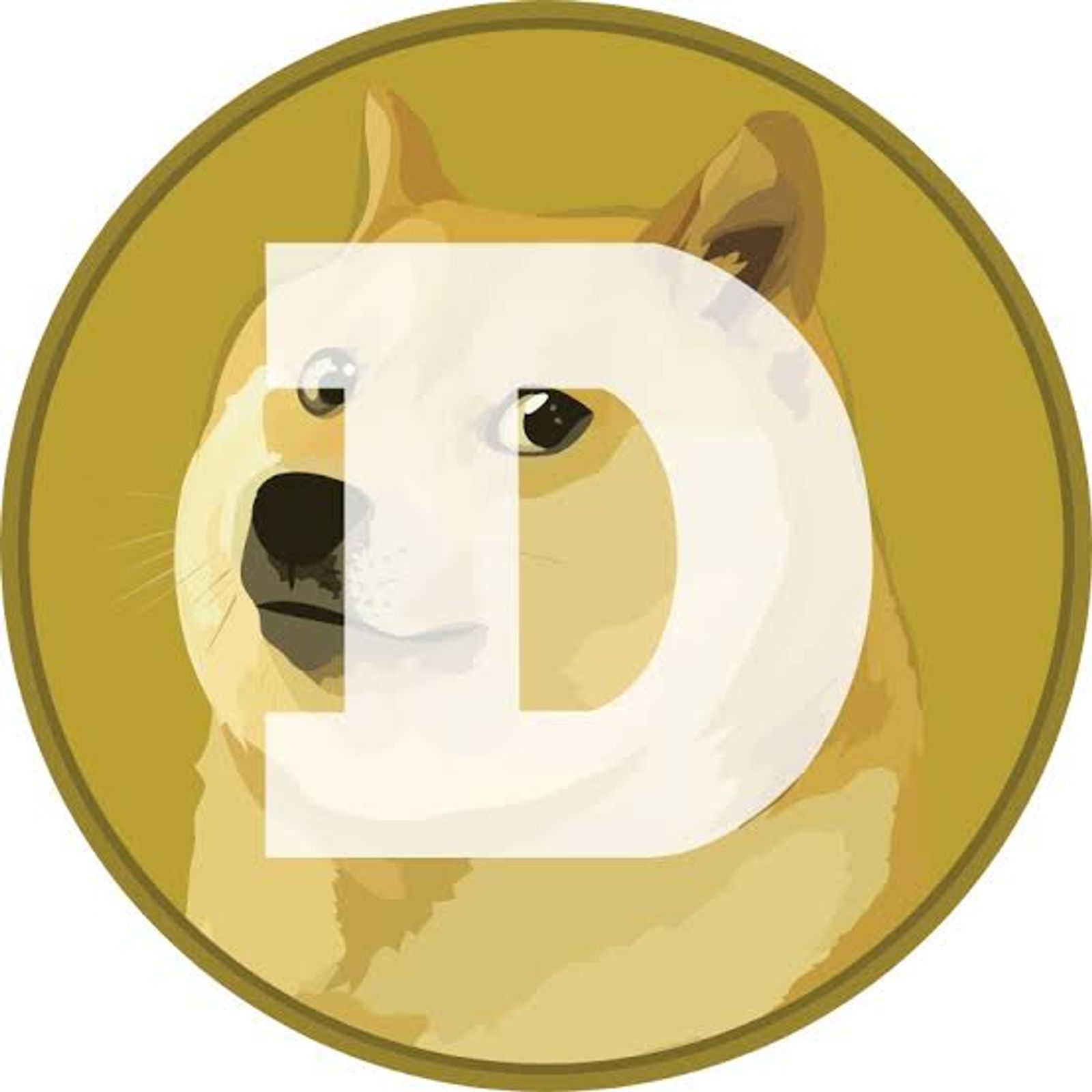
Dogecoin (DOGE) was created on 6th December 2013 by software engineers Billy Markus and Jackson Palmer as a parody of Bitcoin. It took its name and identity from the "Doge" meme then sweeping the internet—photographs of a Shiba Inu dog accompanied by deliberately ungrammatical captions. Technically, it is a fork of Litecoin and uses a proof-of-work consensus mechanism. Unlike Bitcoin, it has no supply cap: roughly five billion new coins are minted each year, giving it an inherently inflationary structure. As of July 2026, it ranks somewhere between seventh and tenth by market capitalisation among all crypto assets.
Origin story
Dogecoin was, quite literally, a joke. In November 2013, Jackson Palmer posted a tongue-in-cheek tweet saying he was going to invest in Dogecoin—a coin that did not yet exist. The response was warmer than he expected, so he and Billy Markus built it. Development took three hours.
The early Dogecoin community had little interest in solemnity. It was a place to share internet humour and send small tips to one another. Yet it also displayed a surprisingly earnest generosity. In 2014 the community raised $30,000 to fund the Jamaican bobsled team's trip to the Sochi Winter Olympics, another $55,000 to sponsor a NASCAR driver, and ran a separate campaign to finance clean water access in Kenya. A coin born as a prank had somehow fostered a community that did genuine good.
After an initial surge following its December 2013 launch, Dogecoin spent roughly seven years in quiet obscurity. Then, in late 2020, Elon Musk began mentioning it on Twitter. In January 2021, a single tweet from Musk declaring Dogecoin "the people's crypto" sent its price up 800% in a single day. A TikTok challenge in February 2021 triggered another explosion. On 1st May 2021, the coin hit an all-time high of $0.73, briefly pushing its market capitalisation above $80 billion and making it the fourth-largest crypto asset in the world. A joke had become, by one measure, a major financial instrument.
Musk's relationship with Dogecoin went well beyond casual promotion. When he appeared on Saturday Night Live in May 2021 and called the coin a "hustle," the price crashed 30% within minutes—erasing gains that had accumulated in anticipation of his appearance. He later integrated Dogecoin as a payment method for Tesla merchandise and SpaceX goods. In early 2024, when the incoming Trump administration appointed Musk to lead a new advisory body called the Department of Government Efficiency—abbreviated, by coincidence or design, as DOGE—the coin's price surged on the name alone. At that point, Dogecoin had ceased to function as an independent asset; it had become an extension of Musk himself.
Palmer, for his part, had already walked away. He left the project in 2015, and in 2021 took to Twitter to deliver a blunt verdict on the industry he had helped create: "Cryptocurrency is controlled by a powerful cartel of wealthy technologists and capitalists who use it to exploit ordinary people." It was an arresting spectacle—the man who invented Dogecoin denouncing everything Dogecoin had come to represent.
What it actually does
Dogecoin is designed for micropayments and tipping. Transaction fees run to roughly $0.03, and settlements are confirmed within a minute. Beyond Tesla and SpaceX merchandise, it is accepted for purchases from the Dallas Mavericks NBA team's online store. There is ongoing speculation about its potential integration with "X Money," the payments feature being developed on Musk's social-media platform X (formerly Twitter). A Dogecoin spot ETF has also been launched. As of 2026, the coin counts more than 8.17 million holders.
Structural problems
Dogecoin's most fundamental weakness is its unlimited supply. With five billion new coins entering circulation every year, there is no scarcity to underpin long-term value appreciation—the very opposite of Bitcoin's hard cap of 21 million coins. Critics argue that in an asset with perpetually expanding supply, sustained price growth is structurally implausible.
Its dependence on Musk is equally dangerous. A coin whose price can swing by tens of percent on a single tweet has no internal anchor; its value rests on the whims of one individual. The moment Musk's interest wanes, the coin's most important support pillar disappears. That moment may already be arriving: as Musk's Dogecoin references have thinned in 2026, the price has fallen more than 70% from its peak.
Assessment
Dogecoin is the strangest object in the history of crypto. It was created as a joke and became real. It achieved a top-ten market capitalisation without a single meaningful technical innovation. Its founder left and it survived anyway. All of this is attributable, in the final analysis, to one person. Dogecoin is less a cryptocurrency than a real-time gauge of Elon Musk's enthusiasm. If you believe in Musk, you have a reason to hold it. If you do not, you have none.
Dogecoin will not change the world—and it knows it. But it has demonstrated that a meme can shake one. That, perhaps, is enough to earn it a place in the historical record.
Investment risk: ★★★★☆ (High) Technical maturity: ★★☆☆☆ (Low) Ecosystem scalability: ★★☆☆☆ (Low) Overall interest: ★★★★☆ (High)