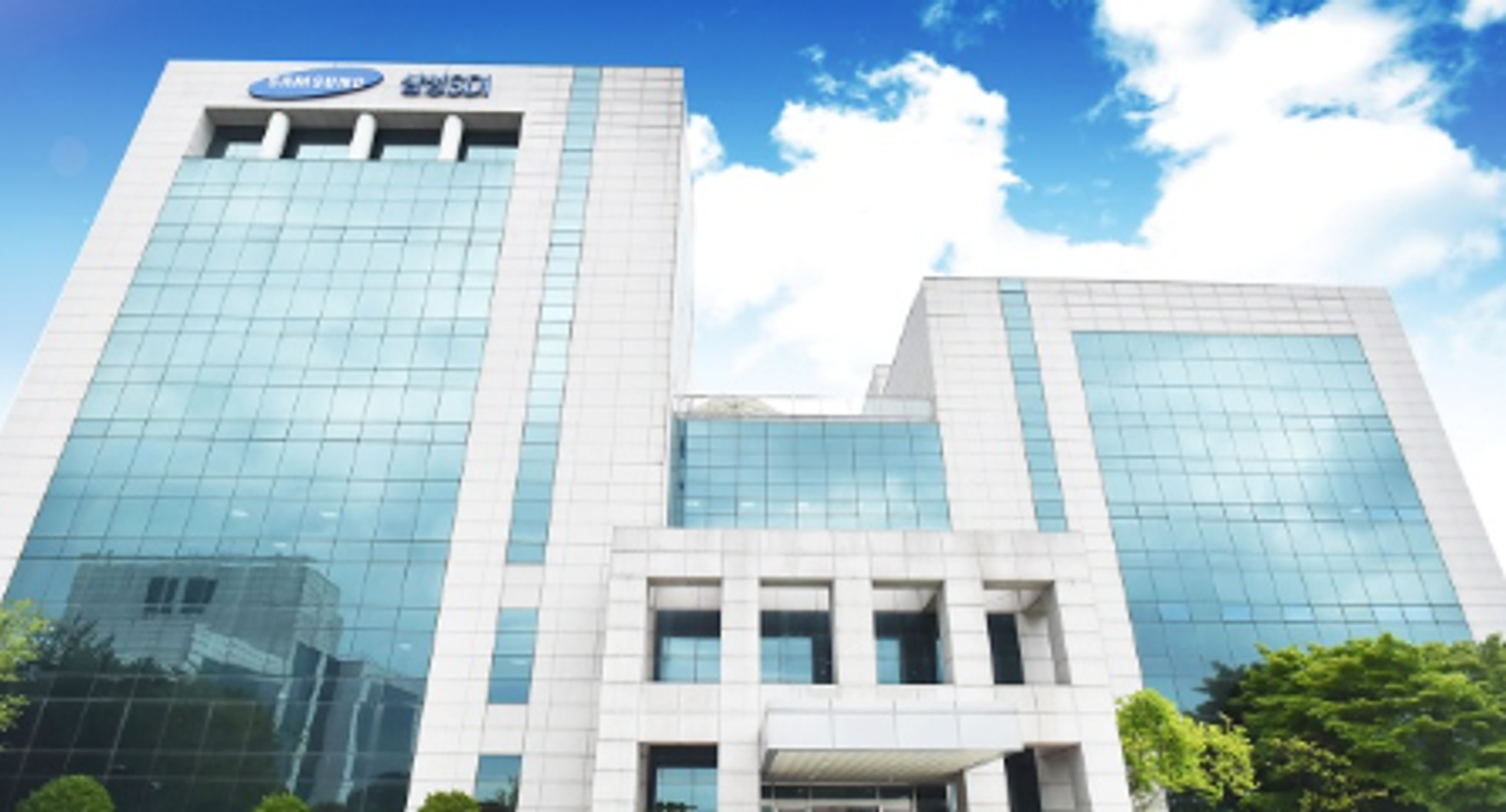
DS Investment Securities has maintained its "buy" rating on Samsung SDI (KOSPI: 006400) while raising its target price from 840,000 won to 940,000 won, implying an upside of 67.3% from the closing price of 562,000 won on 7th October 2026.
Third-quarter earnings expected to trounce consensus
DS Investment Securities forecasts Samsung SDI's third-quarter results (July–September 2026) to show revenue of 4.012 trillion won, up 6.5% quarter-on-quarter and 31.5% year-on-year, with operating profit of 257.5 billion won — a 26.4% sequential improvement and a return to profit compared with a loss in the same period a year earlier. That operating profit figure is roughly 95% above the market consensus of 131.8 billion won.
The principal reason for the outsized beat is a one-off gain. Approximately 150 billion won in settlement proceeds related to the acquisition of a stake in Synergy Cells — a joint venture with American carmaker General Motors — is expected to be recognised within the automotive segment. This reflects a minimum-purchase-volume settlement and should not be treated as a recurring item. Stripping it out, the firm estimates company-wide operating profit at 107.5 billion won, with the battery division contributing 63.7 billion won (including the American Advanced Manufacturing Production Credit, or AMPC).
Core business improving beneath the surface
Even after removing the one-off gain, the underlying trend is encouraging. The energy storage system (ESS) segment is forecast to grow revenue by 35% quarter-on-quarter, partly as previously deferred domestic shipments resume. The small-battery segment is expected to swing back to profit, driven by higher utilisation rates for high-output products. The automotive segment will see revenue fall around 10% sequentially as exports of American-made cells to Europe wind down, but this drag is expected to be offset by the strength of ESS and small batteries. Notably, this is the first quarter without a tariff rebate tailwind, making the return to underlying profitability all the more significant.
Fourth quarter: American volumes and a new LFP line
The outlook for the fourth quarter is also positive. DS Investment Securities expects ESS revenue to surge 50–60% quarter-on-quarter. Whereas third-quarter growth was driven primarily by catch-up domestic shipments, the fourth quarter will benefit from the addition of American volumes as Samsung SDI's lithium-iron-phosphate (LFP) production line in Indiana enters mass production in October. Expanding domestic American output will also lift the AMPC tax credit to 150.1 billion won in the fourth quarter. Even excluding the AMPC, the battery division is expected to swing to an operating profit of 27.5 billion won.
A meaningful annual turning point
Taking these factors together, DS Investment Securities has raised its full-year 2026 operating profit forecast by 42%, from 37.3 billion won to 530.3 billion won. The significance of this revision is best understood in context: Samsung SDI reported an operating loss of 1.7217 trillion won in 2025, following a year in which it had only narrowly stayed in the black with a profit of 36.3 billion won in 2024. The battery market downturn and a sharp drop in orders from major vehicle manufacturers pushed the company deep into the red last year. A return to profitability in 2026 would therefore represent a genuine strategic inflection point.
Order momentum and longer-term catalysts
Order prospects for the fourth quarter are also brightening. In North America, Samsung SDI is in advanced discussions for additional long-term ESS supply contracts beyond those already in place. In Europe, the company is targeting multiple contracts for prismatic-format batteries — including LFP variants — before year-end. Should the EU's Industrial Acceleration Act finalise its local-content requirements, European carmakers would have a strong incentive to source battery cells from non-Chinese suppliers, a development from which Samsung SDI stands to benefit.
On the balance-sheet side, Samsung SDI plans to deploy 4.5 trillion won raised from a partial sale of its stake in Samsung Display to fund the Synergy Cells acquisition and capacity expansion in the United States. Synergy Cells is considering converting two production lines — with a combined annual capacity of 10 gigawatt-hours — to ESS output, with operations targeted to begin in the second half of 2028.
Valuation methodology
The revised target price of 940,000 won is derived by applying an EV/EBITDA multiple of 15.5 times to a projected 2027 EBITDA of 4.91 trillion won. The multiple represents the average trough valuation recorded during Samsung SDI's expansion phase between 2019 and 2022.
Risks to watch
Several variables warrant attention. The 150-billion-won Synergy Cells settlement that underpins the strong third-quarter forecast is a one-off item; from the fourth quarter onward, underlying competitive performance will determine results. The extent and duration of the shortfall in automotive volumes — stemming from the loss of BMW orders — remains uncertain. A weaker Korean won against the dollar poses a latent risk to profitability; while the current quarter appears to have absorbed currency moves within planned parameters, greater volatility could have a material impact. Finally, readers should note the degree of estimation uncertainty implicit in DS Investment Securities' own track record: its target price for Samsung SDI stood at 540,000 won in October 2024, was cut to 250,000 won in early 2025, and has now been raised to 940,000 won — a pattern that reflects the pronounced sensitivity of battery-sector forecasts to shifts in industry conditions.