Company overview
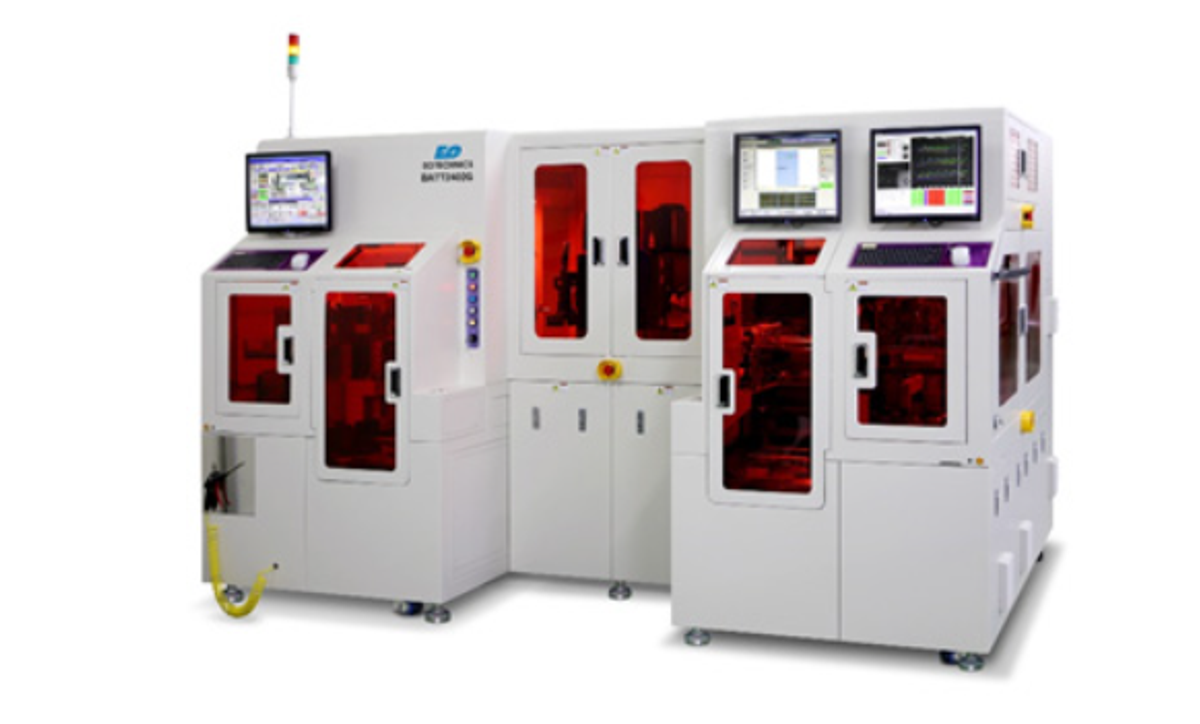
EO Technics (KOSDAQ: 101390) is a specialist manufacturer of laser-based equipment used in semiconductor packaging, display manufacturing, and lithium-ion battery production. Founded in 1993 and listed on the KOSDAQ—South Korea's technology-focused stock exchange—the company has built a commanding domestic market share in laser marking, cutting, and drilling systems for semiconductor packaging. Its anchor customers include Samsung Electronics and SK Hynix, the country's two semiconductor giants, and the company has ridden the long-term trend towards more sophisticated memory chips and advanced packaging.
Sung Kyu-dong, the founder and executive chairman, has steered the company for more than three decades. His continued grip on management offers swift decision-making but also raises familiar concerns about the adequacy of minority-shareholder protections and the independence of capital-allocation decisions—a structural tension common to South Korea's founder-controlled firms.
Since 2024, when Seoul launched its corporate "Value-Up" programme to narrow the persistent discount at which Korean equities trade relative to book value, investors have paid closer attention to EO Technics as one of KOSDAQ's more prominent technology names. Yet the company has yet to publish a clear roadmap for eliminating its price-to-book (PBR) discount, and the market is growing impatient.
Business fundamentals and financial performance
*Core product lines*
EO Technics' revenues are generated across three main categories: laser marking systems, laser cutting and drilling equipment, and laser annealing systems. Laser marking tools for semiconductor packaging have traditionally been the company's bread and butter, but a surge in demand for advanced packaging—driven in large part by artificial-intelligence chip architectures—has been shifting the revenue mix towards laser drilling and wafer-processing equipment. The company also expanded into laser electrode-notching machines for battery manufacturers, though that segment's contribution has fluctuated as the electric-vehicle supply chain has gone through its own correction.
*Financial results*
The table below summarises annual performance (figures in billions of Korean won, approximate):
Year | Revenue | Operating profit | Operating margin | Net profit
2020 | ₩180bn | ₩26bn | 14.4% | ₩22bn
2021 | ₩250bn | ₩43bn | 17.2% | ₩37bn
2022 | ₩320bn | ₩62bn | 19.4% | ₩53bn
2023 | ₩260bn | ₩32bn | 12.3% | ₩27bn
2024 | ₩310bn | ₩48bn | 15.5% | ₩40bn
*Note: Figures are estimates based on disclosed data; minor discrepancies with audited accounts may exist.*
The 2022 peak reflected a buoyant semiconductor capital-expenditure cycle and record investment by the company's key customers. The downturn in 2023—when the global chip industry entered a sharp inventory correction—halved operating profit. A recovery is now under way, supported by AI-related demand for advanced packaging, with 2024 results coming in well above the trough.
*Balance sheet and cash*
EO Technics carries little or no net debt and maintains a consistently healthy cash balance. That financial discipline is admirable, but the excess liquidity also dilutes return on equity (ROE), depressing the share price relative to book value—precisely the problem the Value-Up programme is designed to solve.
The shareholder-return record
*2021–22: Gradual dividend growth*
In its earlier years EO Technics prioritised reinvestment over distributions. From 2021 onwards, rising profits prompted a gradual increase in the dividend, though this reflected earnings growth rather than any deliberate shift in capital-allocation philosophy.
*2023: Holding the line through the downturn*
Despite operating profit falling by nearly half in 2023, the company chose to maintain its dividend rather than cut it. This defensive commitment to payouts offered some reassurance to long-term investors during a difficult period.
*2024: The Value-Up moment—so far, mostly rhetoric*
Since the Financial Services Commission formally launched its Value-Up initiative in 2024, EO Technics is understood to have begun internal deliberations on how to lift its PBR. Whether these discussions have resulted in any formal public disclosure remains unclear. What is certain is that institutional investors have become more vocal in their demands, and foreign investors have periodically been net buyers of the stock.
*2025–26: A market divided*
As of 27th May 2026, EO Technics ranked among the most heavily shorted stocks on KOSDAQ by both absolute value and as a share of trading volume—a sign that some investors are sceptical about the earnings outlook or current valuation. At the same time, the company reportedly featured in the top 20 stocks by net foreign buying in June 2026, suggesting that longer-term overseas investors retain confidence in the underlying business. The two signals coexist awkwardly, and reflect an investor community that is waiting to be convinced.
Summary of shareholder-return metrics
Year | DPS (KRW) | Buyback/cancellation | Operating profit | Est. PBR (x) | Dividend yield
2020 | ~₩500 | Not confirmed | ₩26bn | ~2.5x | ~0.5%
2021 | ~₩700 | Not confirmed | ₩43bn | ~4.0x | ~0.4%
2022 | ~₩900 | Not confirmed | ₩62bn | ~3.2x | ~0.6%
2023 | ~₩900 | Not confirmed | ₩32bn | ~2.8x | ~0.8%
2024 | ~₩1,000 | Not confirmed | ₩48bn | ~3.0–3.5x | ~0.7%
*Note: DPS and PBR figures are estimates based on market consensus; treasury-share data require verification against official filings.*
The dividend yield of well below 1% across the entire period underscores how little of the company's cash generation has been returned to shareholders.
Challenges and assessment
*What needs to change*
Three tasks stand out. First, EO Technics must publish a concrete, time-bound shareholder-return plan—specifying dividend targets and any intention to buy back and cancel shares—so that investors can hold management to account.
Second, the company needs to improve capital efficiency. Sitting on a large cash pile without deploying it either in productive investment or in distributions keeps ROE persistently low and the PBR discount stubbornly wide.
Third, governance must improve. An independent board with meaningful oversight is a prerequisite if the company is to convince sceptics that its Value-Up commitments are more than window dressing. Under the current founder-dominated structure, the risk is that shareholder-return policy remains a function of one man's preferences rather than a systematic obligation to all investors.
*Overall verdict*
EO Technics is a genuine technology leader with defensible market positions, a sound balance sheet, and credible long-term growth drivers in advanced semiconductor packaging and AI infrastructure. But from a Value-Up perspective it falls into an uncomfortable category: a company with the means to reward shareholders more generously, but without the institutional discipline or public commitment to do so. The coexistence of heavy short interest and intermittent foreign buying captures the market's ambivalence perfectly. Until EO Technics translates internal deliberations into binding, measurable commitments on dividends, buybacks, and governance reform, it will remain a stock watched rather than owned with conviction.
Controversies and structural limitations
*Owner governance risk.* More than 30 years of unbroken control by the founding chairman gives the company operational agility but leaves minority shareholders exposed. If capital-allocation decisions continue to reflect personal preference more than fiduciary obligation, the structural discount is unlikely to narrow.
*Treasury shares: cancellation versus disposal.* A controversy that has unsettled South Korean markets more broadly is the tendency of some firms to sell, rather than cancel, repurchased treasury shares—diluting the value-enhancement effect. Whether EO Technics has, or will, commit to cancellation rather than mere disposal is an open question that deserves scrutiny.
*Short-selling pressure.* The elevated short interest seen in late May 2026 is not simply a hedging artefact. It suggests that part of the market doubts either the earnings momentum or the sustainability of the current valuation. The remedy is better communication: clearer guidance on profitability and a credible, detailed account of how the company plans to sustain shareholder returns through the cycle.
*Disclosure gap.* The Korea Exchange has been actively encouraging firms to submit formal Value-Up plans. EO Technics' apparent silence on this front is itself a signal. Many KOSDAQ technology companies have used Value-Up rhetoric as a short-term share-price catalyst without following through with substantive policy changes; EO Technics risks being tarred with the same brush if it does not act soon.