Company Overview
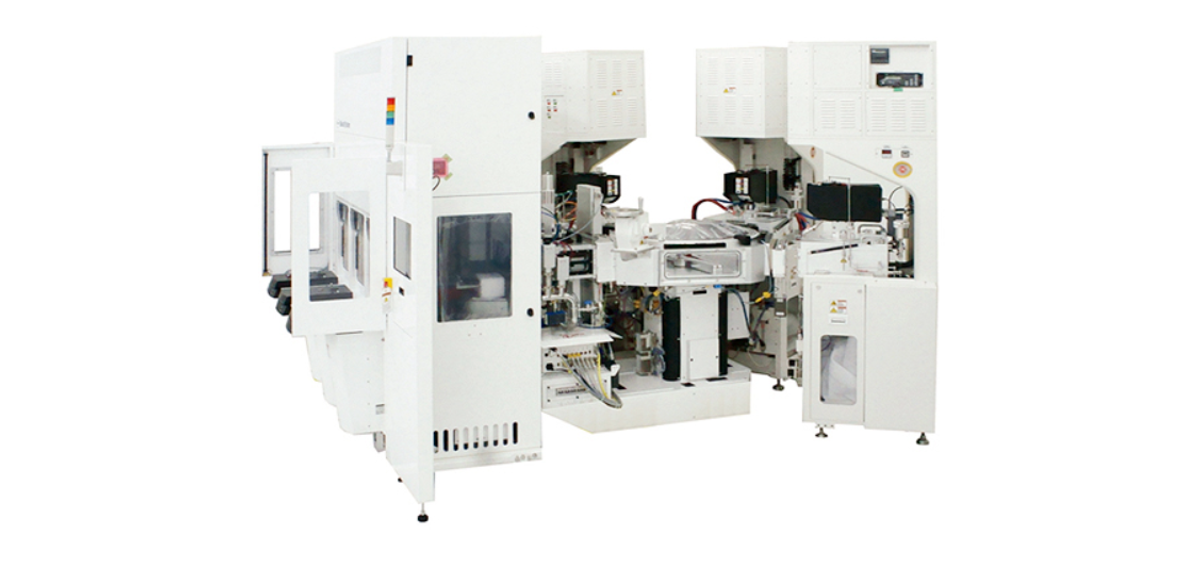
Eugene Technology is a KOSDAQ-listed specialist in semiconductor manufacturing equipment, focused primarily on thermal-processing (furnace) and thin-film deposition systems. Founded in the 1990s, the company rode South Korea's drive to develop domestically produced semiconductor equipment and has secured Samsung Electronics and SK Hynix — the country's two dominant chipmakers — as its core customers. It is particularly well regarded for steadily expanding its domestic market share in low-pressure chemical vapour deposition (LP-CVD) equipment.
Within the context of South Korea's broader "Value-Up" movement — a government-led initiative to close the persistent valuation discount afflicting Korean-listed companies, known as the "Korea Discount" — Eugene Technology occupies an awkward position. Despite solid fundamentals by KOSDAQ semiconductor-equipment standards, its price-to-book ratio (PBR) has for years languished below sector peers. Since 2024, when the Financial Services Commission and Korea Exchange formally launched the Value-Up programme, questions about Eugene Technology's shareholder-return policies and corporate governance have moved to the fore. In April 2026, renewed media attention on Eom Pyeong-yong, the company's founder and chief executive, prompted fresh scrutiny of how far the company was genuinely pursuing higher corporate value under an owner-managed structure.
Business Foundation and Financial Performance
Core Business Structure
Eugene Technology's revenues are broadly split between equipment sales and after-sales maintenance services. Its flagship batch-type furnace systems are used in DRAM and NAND flash manufacturing to deposit oxide, nitride, and polysilicon thin films. Because revenues are directly tied to chipmakers' capital-expenditure cycles, earnings volatility is structurally high.
More recently, rising expectations of a recovery in semiconductor investment — driven by demand for high-bandwidth memory (HBM) and next-generation DRAM to support artificial-intelligence applications — have drawn attention to the company's order momentum. A broader tailwind for Korean equipment makers has reinforced this interest: PSK Holdings, a KOSDAQ peer, hit a 52-week high in June 2026, reflecting sector-wide optimism and providing a positive backdrop for debate about Eugene Technology's own re-rating potential.
Annual Financial Performance
Year | Revenue (KRW bn, approx.) | Operating Profit (KRW bn, approx.) | Operating Margin (%, approx.) | Note
2020 | ~150 | ~20 | ~13 | Early recovery in equipment cycle
2021 | ~220 | ~42 | ~19 | Beneficiary of semiconductor super-cycle
2022 | ~250 | ~48 | ~19 | Record-level results
2023 | ~180 | ~22 | ~12 | Hit by semiconductor downturn
2024 | ~200 | ~30 | ~15 | Gradual recovery
2025 | ~230 | ~38 | ~16 | Rebound driven by AI semiconductor demand
*All figures are approximations based on disclosed data and market estimates, and may differ from final audited results.*
Financial Soundness
Eugene Technology has traditionally operated with little or no debt. Supported by robust cash generation, the company has sustained in-house research and development spending and continues to invest in facilities for next-generation equipment. This financial firepower is frequently cited as evidence that the company could meaningfully expand its shareholder returns. Yet some institutional investors have long complained that management has consistently prioritised reinvestment over distributions — a pattern that has contributed to the stock's persistent discount.
Value-Up: Key Developments
Second Half of 2023 — Korea Discount Debate Puts Equipment Makers in the Spotlight
As debate about the Korea Discount intensified in the second half of 2023, the relatively meagre shareholder returns offered by KOSDAQ semiconductor-equipment companies were identified as a key driver of undervaluation. Eugene Technology was no exception: its PBR had at times fallen to or below one times book value, and its payout ratio relative to earnings drew criticism from market participants.
First Half of 2024 — Government Programme Raises Expectations
When the Financial Services Commission and Korea Exchange officially unveiled their Value-Up support measures in early 2024, the question of whether high-quality KOSDAQ equipment makers — including Eugene Technology — would participate became a live market issue. Institutional investors grew increasingly vocal in demanding announcements on dividend increases and share buy-backs and cancellations. The company is understood to have conducted an internal review of its shareholder-return direction in response.
Second Half of 2024 — A Modest Step on Dividends
During the financial year 2024 closing process, Eugene Technology is reported to have raised its per-share dividend slightly compared with the prior year. The market's verdict was largely underwhelmed: analysts noted that the payout ratio remained well below those of global equipment-industry peers, and investors who had been hoping for a clear signal — such as a committed share buy-back and cancellation programme — were left disappointed.
2025 — AI Semiconductor Cycle Revives the Value-Up Conversation
Renewed optimism about memory investment, fuelled by AI-driven demand, improved earnings expectations for Eugene Technology in 2025 and reignited calls from shareholders and analysts to upgrade its capital-return policy in line with better results. The backdrop was further coloured by rising foreign-investor interest in Korean equities more broadly — Citigroup, among others, sharply raised its KOSPI target — which heightened scrutiny of KOSDAQ equipment companies' governance and shareholder-return practices.
April 2026 — Founder in Focus; Governance Under the Microscope
In April 2026, detailed profiles of founder and chief executive Eom Pyeong-yong appeared in domestic media, reigniting market debate about the company's owner-managed governance structure. Analysis focused on whether a founder who serves concurrently as the chief executive can be subject to meaningful independent oversight, and how such a structure influences decisions on shareholder returns. Some experts noted that while founder-led management can lend strategic consistency and long-term stability, it often impedes progress on minority-shareholder rights — and that Eugene Technology needed to demonstrate more active change on that front.
First Half of 2026 — Short-Selling Pressure Highlights Credibility Gap
In February 2026, reports that Eugene Technology ranked among the most heavily short-sold stocks on KOSDAQ attracted attention. Some market observers interpreted the short interest not merely as a reflection of cyclical uncertainty, but as a symptom of the ambiguity surrounding its shareholder-return commitments. The episode underscored a broader point: companies that fail to articulate a convincing Value-Up strategy become easier targets for short sellers, and proactive investor communication is therefore a matter of practical self-defence as well as good governance.
Challenges and Assessment
Challenges Ahead
The most pressing task for Eugene Technology, if it is to build genuine credibility as a Value-Up participant, is to give its shareholder-return policy substance and consistency. Incremental dividend increases are no longer sufficient. Investors and analysts are calling for the company to disclose a medium-to-long-term payout-ratio target and to present a comprehensive capital-allocation framework that includes explicit commitments on share buy-backs and cancellations.
On governance, the priorities are strengthening the role and independence of outside directors and improving board diversity — both of which would help counterbalance the founder-centric decision-making structure. Enhanced ESG disclosure and a materially improved sustainability report would also help the company meet the transparency standards demanded by global institutional investors.
Given the inherently cyclical nature of semiconductor capital expenditure, the central question is straightforward: how will the company share surplus cash flows with shareholders during upturns? Establishing a clear and credible answer to that question is widely seen as essential to rebuilding market trust.
Overall Assessment
Eugene Technology has consistently demonstrated the ability to generate profits from a well-defined niche — domestically produced semiconductor equipment — and its debt-free balance sheet leaves little doubt that it has the capacity to reward shareholders far more generously than it does at present. Yet the gap between financial capacity and actual distributions has been a persistent drag on the valuation.
Market participants broadly agree that if Eugene Technology can capitalise on the AI semiconductor investment cycle to lift earnings while simultaneously upgrading its capital-return policy, there is meaningful scope for a re-rating of its PBR. How quickly and decisively management chooses to move, however, remains the critical variable.
Controversies and Structural Limitations
Opaque Decision-Making Under an Owner-Managed Structure
The most pointed governance critique concerns whether shareholder-return decisions are being made with adequate transparency and independent oversight in a structure where the founder serves as chief executive. The April 2026 media coverage of Chairman Eom prompted questions about whether the board's independent directors exercise genuine checks on management. The parallel with Wonik Group — another Korean semiconductor-materials conglomerate whose stock has been left behind by the AI-hardware rally, partly owing to founder-related governance concerns — is not lost on observers who see similar risk embedded in Eugene Technology's premium.
Short-Selling Pressure and the Trust Deficit
Eugene Technology's appearance near the top of KOSDAQ short-selling league tables in early 2026 was interpreted by some analysts as more than a simple bet on cyclical weakness. The absence of a coherent Value-Up commitment, they argued, creates an information vacuum that short sellers are well-placed to exploit. The episode reinforces the case for active and transparent investor communication as a form of corporate self-protection.
Cyclical Dependency and the Limits of Dividend Sustainability
Eugene Technology's revenues and profits are tightly coupled to its customers' capital-expenditure decisions. During the semiconductor downturn of 2023, earnings fell sharply, and the company's capacity to maintain or grow shareholder returns was accordingly constrained. This structural dependency makes medium-to-long-term dividend stability inherently difficult to promise — and inherently difficult for investors to believe, even when management professes the intention to deliver it.
The Gap with Global Peers
Applied Materials, Tokyo Electron, and other leading global semiconductor-equipment companies maintain high payout ratios and run active share-cancellation programmes as a matter of course. Within Korea, KOSDAQ peers such as PSK Holdings have been moving in the same direction through their own Value-Up programme commitments. Eugene Technology's relative positioning on this dimension has become increasingly difficult to defend.
Summary of Key Figures
Year | Dividend per Share (KRW, est.) | Payout Ratio (%, est.) | Share Buy-back & Cancellation | Operating Profit (KRW bn, est.) | PBR (x, est.)
2020 | ~200 | ~15 | Negligible | ~20 | ~1.0–1.5
2021 | ~300 | ~15 | Limited | ~42 | ~1.5–2.5
2022 | ~350 | ~15 | Limited | ~48 | ~1.2–2.0
2023 | ~250 | ~20 | Negligible | ~22 | ~0.8–1.2
2024 | ~300 | ~20 | Small-scale under review | ~30 | ~1.0–1.5
2025 | ~350 | ~20 | Under consideration | ~38 | ~1.2–1.8
*All figures are approximations based on disclosed data and market estimates. Definitive figures should be verified through Korea's Financial Supervisory Service electronic disclosure system (DART).*