Company overview
FADU is a South Korean fabless semiconductor company—one that designs chips but outsources their manufacture—specialising in enterprise solid-state drive (SSD) controller chips for data centres. In August 2023 it listed on the KOSDAQ market under South Korea's "technology special listing" scheme, which allows companies with promising technology but limited profits to access public capital markets. The debut quickly turned sour: allegations of pre-listing revenue inflation and a sharp deterioration in results sent the share price far below its offer price, ultimately triggering a formal listing-eligibility review by the Korea Exchange (KRX).
FADU's story sits at an uncomfortable distance from the typical "value-up" narrative. Where most discussions of South Korea's corporate value-up programme centre on higher dividends, share buybacks, and better governance at large KOSPI blue-chips, FADU's more pressing question has been whether the company deserves to remain listed at all. Trading resumed in February 2026 after the KRX concluded its review, and the company's name has since appeared in disclosures linked to the Korea Value-Up Index—ushering in a new chapter, though investor scepticism remains acute.
Business model and financial performance
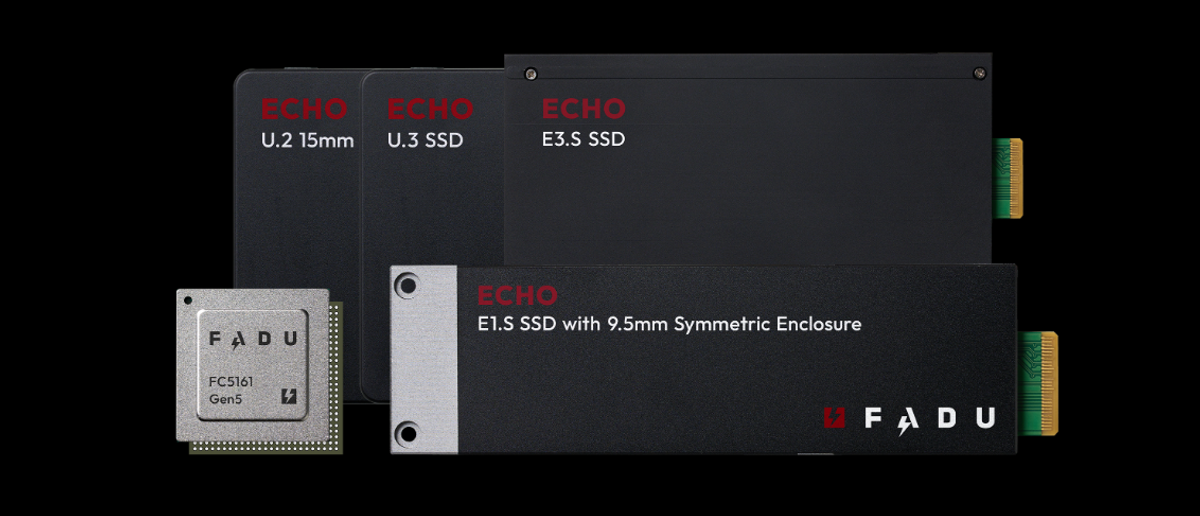
FADU's core product is an NVMe-based enterprise SSD controller chip. The company targets large NAND flash manufacturers such as Samsung Electronics and SK Hynix, as well as finished SSD vendors, positioning itself to benefit from surging data-centre construction and the build-out of artificial-intelligence infrastructure. As a pure fabless operation FADU carries relatively low fixed costs, but its revenues are heavily concentrated among a small number of customers—a structural vulnerability that has amplified its difficulties.
Financial results before and after listing diverged sharply, fuelling the credibility crisis. The table below summarises the trajectory based on publicly available information; precise figures should be verified against filings on the Financial Supervisory Service's DART disclosure system.
Year | Revenue | Operating profit | Key developments
2022 | c. ₩50bn+ | Turning profitable | Preparing for technology-track listing
2023 | Sharp decline | Swung to loss | Post-listing earnings collapse; revenue-inflation allegations
2024 | Weakness continued | Loss widened | KRX listing-eligibility review begins; trading suspended
2025 | Recovery attempted | Loss narrowing (estimated) | Review ongoing; suspension extended
2026 | Recovery hoped for | Profitability in question | Trading resumes February; Value-Up Index disclosures
*Figures are estimates based on publicly available information.*
Chronology of key events
*August 2023 — KOSDAQ technology-track listing*
FADU debuted on KOSDAQ using South Korea's technology special listing scheme, which waives normal profitability thresholds in favour of an assessment of technological merit. The offering attracted a full valuation on the strength of the enterprise SSD controller market's growth prospects. Within weeks, however, reported results fell dramatically short of the forecasts presented to investors during the roadshow, and the share price collapsed.
*Second half of 2023 — Revenue-inflation allegations and the collapse of confidence*
The gap between pre-listing investor-relations projections and actual reported revenues drew immediate regulatory scrutiny. The Financial Supervisory Service launched an investigation, and the Korea Exchange initiated its listing-eligibility review process. The episode became a widely cited illustration of structural weaknesses in the technology special listing scheme—specifically, the adequacy of post-listing oversight of companies admitted on the basis of technological promise rather than demonstrated earnings.
*2024 — Trading suspension and listing-eligibility review*
The KRX suspended trading in FADU shares while the eligibility review proceeded. During this period FADU reportedly submitted a business reconstruction plan and proposals for strengthening internal controls. The prolonged suspension caused mounting losses for retail investors who were unable to sell their holdings, reigniting debate about investor-protection safeguards for technology-track listings.
*February 2026 — Trading resumes after the company clears the review*
In February 2026 the KRX concluded that FADU met the conditions for continued listing, and trading resumed. On the first day back, the shares were highly volatile as the market worked to establish a fair price. The outcome reignited industry-wide discussion about the technology special listing scheme and the case for reform.
*March–May 2026 — Appearances in Value-Up Index disclosures*
FADU's name appeared in a series of notable regulatory disclosures in March and May 2026, some connected to the Korea Value-Up Index. Whether these appearances reflected concrete steps towards inclusion in the index or were incidental references remains unclear and warrants further verification.
*22 May 2026 — Institutional selling despite a 9.94% single-day gain*
On 22nd May 2026, institutional investors were net sellers of FADU shares even as the price rose 9.94% on the day. The divergence between price momentum and institutional behaviour underlined the continuing instability of the stock since trading resumed.
*May–June 2026 — Value-Up Index disclosures and emerging investment interest*
In late May and June 2026, FADU appeared alongside companies such as Celltrion, Samsung Securities, and HD Hyundai Marine Engine in major disclosures related to the Korea Value-Up Index. Some brokerage channels began flagging the stock as an investment idea. Analysts cautioned, however, that it was essential to distinguish between a genuine improvement in underlying fundamentals and a short-term, liquidity-driven price movement.
Challenges ahead
Three tasks stand between FADU and a credible value-up story.
The first is restoring earnings credibility. The revenue-inflation allegations inflicted lasting damage to market trust. Only a sustained track record of meeting or exceeding consensus forecasts—quarter after quarter—can begin to repair it.
The second is diversifying its customer base. Heavy reliance on a handful of clients means that a reduction in orders from any one of them can destabilise the entire revenue line. Winning new customers and broadening the product portfolio, in step with the expansion of AI data-centre infrastructure, is a strategic priority.
The third is articulating a shareholder-return policy. Consecutive years of losses have left FADU with no room for dividends or buybacks. Once profitability is restored, the market will expect a clear and credible plan for returning capital to shareholders.
Assessment
FADU is an awkward fit for the Korea Value-Up Programme as originally conceived. The programme was designed to help fundamentally sound but undervalued companies raise their market worth through better capital allocation and governance. FADU's primary challenge has been survival and legitimacy, not value recognition.
That said, the resumption of trading in 2026 has returned it to the radar of investors in KOSDAQ technology stocks. The enterprise SSD controller market continues to benefit from AI infrastructure investment, and if FADU can demonstrate genuine technological competitiveness and a durable return to profit, there is a plausible path to becoming a genuine exemplar of value creation in the fabless semiconductor sector.
Controversies and limitations
*Structural flaws in the technology special listing scheme*
The FADU affair has become the most prominent recent illustration of the technology special listing scheme's weaknesses. The scheme serves a legitimate purpose—giving innovative companies access to capital before they are profitable—but the post-listing monitoring framework has repeatedly been criticised as inadequate. Investors suffered severe losses because the results disclosed after listing bore little resemblance to the projections presented before it. The debate over strengthening the scheme has intensified since trading in FADU resumed.
*Retail-investor losses and erosion of confidence*
During the extended trading suspension, retail investors were locked in, unable to exit their positions. The episode prompted criticism of investor-protection arrangements for technology-track listings and calls from some retail-shareholder groups for regulatory reform. The damage to sentiment extended well beyond FADU itself, casting a shadow over the KOSDAQ market more broadly.
*Questions about the suitability of Value-Up Index inclusion*
When FADU's name began appearing in Value-Up Index disclosures in the second half of 2026, questions arose about whether the association was appropriate. The value-up programme is meant to highlight companies with stable dividends, improving governance, and a coherent plan for raising corporate value. Critics argued that linking a company with a history of consecutive losses and a listing-eligibility review to the index could undermine the programme's credibility rather than enhance it.
*Lack of earnings visibility*
The inherent characteristics of the fabless business model—quarterly order volatility and dependence on the procurement schedules of a small number of anchor customers—make it difficult to forecast results with confidence. FADU has yet to demonstrate that it has entered a stable, self-sustaining phase of revenue generation. Until it does, attracting long-term institutional investors will remain difficult.
Summary of key metrics
Year | Operating profit | Dividend | Share buyback | P/B ratio | Key events
2022 | Profitable (est.) | None | None | — | Listing preparation
2023 | Swung to loss | None | None | Sharp fall from offer price | Technology-track listing; earnings shock
2024 | Loss continued | None | None | Low P/B territory | Trading suspended; eligibility review
2025 | Loss narrowing (est.) | None | None | — | Review ongoing
2026 | Profitability uncertain | None | None | Recovery unclear | Trading resumes; Value-Up disclosures
*Some figures are estimates based on publicly available information. Precise data should be verified against DART filings.*