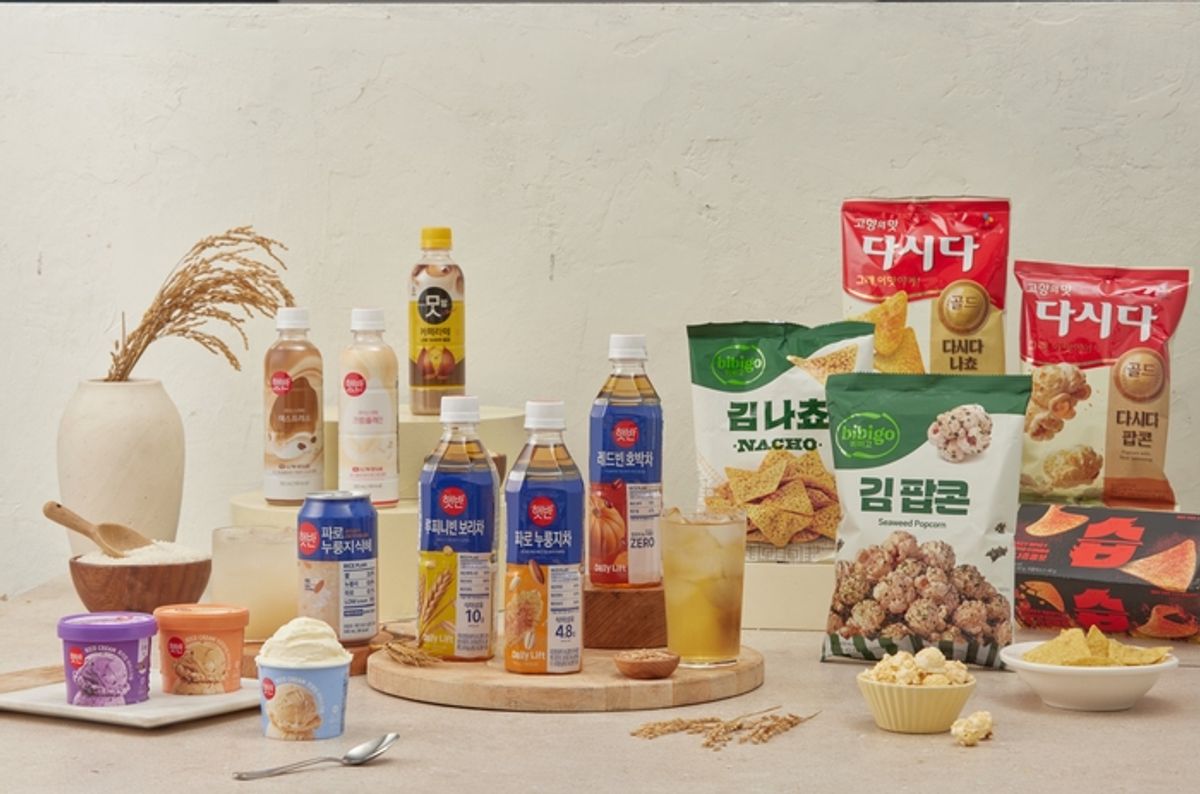
CJ CheilJedang, one of South Korea's largest food conglomerates, is pushing its two most recognisable brands — Bibigo and Hetbahn — into the ice-cream and frozen-dessert market. The move represents a deliberate strategy of "brand migration": using established intellectual property (IP) to enter adjacent categories rather than building new brands from scratch. Whether it works could set the template for how South Korea's food majors grow in a maturing domestic market.
Why now, and why ice cream?
Bibigo, launched in 2013, has grown into a global megabrand across traditional Korean food categories — dumplings, rice soup, kimchi. By 2023, its frozen-dumpling line alone generated more than 1 trillion won (roughly $750m) in global sales. Hetbahn, CJ's ready-cooked rice brand, has held over 70% of the domestic instant-rice market for years. Both brands carry something more valuable than market share: deep consumer trust and emotional familiarity.
CJ appears to have calculated that deploying these assets in a new category would dramatically reduce the marketing expenditure and consumer-acquisition costs that any genuine newcomer would face. Academic research on brand extension supports the logic: products launched under a strong parent brand typically achieve initial purchase-conversion rates 20–30% higher than those sold under an unfamiliar name.
The target market is also attractive in its own right. Despite persistent inflation, South Korea's ice-cream and frozen-dessert sector has maintained annual revenues of around 2 trillion won, buoyed by growing demand for premium dessert experiences.
Two routes into the freezer aisle
There are broadly two ways CJ might translate the identities of Bibigo and Hetbahn into frozen confectionery. The first is a visually driven collaboration — using brand logos and characters to give products a collectible, lifestyle-goods quality, independent of any direct flavour connection to the parent product. The second, more ambitious approach would embed the actual flavour profiles of Bibigo's dumplings or kimchi into a dessert format: Korean-fusion ice cream, in effect.
The latter has international precedents. Japan's Calpis parlayed its cultish soft-drink brand into a long-running ice-cream line by transferring a recognisable taste identity to a new format. Oreo, the American biscuit brand, built an entire sub-segment of the global frozen-dessert market simply by replicating its signature cream-sandwich flavour in ice-cream form — consumers knew precisely what they were getting, which is why the extension landed without confusion.
The risk, however, is what brand theorists call category-fit dissonance. Research from Seoul National University's consumer-behaviour department found that the greater the perceived distance between a parent brand's core associations and the new category it enters, the higher the risk of brand dilution — a weakening of the original brand's identity in consumers' minds. Rice and dumplings are meal-time staples; ice cream is an indulgent treat. Closing that psychological gap will require deft positioning.
Reshaping the competitive landscape
The domestic ice-cream market is currently split between two incumbents: Lotte Wellfood (formerly Lotte Confectionery) and Binggrae. Binggrae has shown how legacy brands can be reinvigorated: it successfully re-engaged younger consumers by marketing its Melona bar as a lifestyle and merchandise property. If CJ enters the category with Bibigo and Hetbahn, most analysts expect the result to be not a direct assault on the existing duopoly, but the creation of an entirely new premium segment built around Korean culinary identity.
CJ also arrives with structural advantages that a true new entrant would lack. The company already commands extensive shelf space across hypermarkets, convenience stores and online channels, and its frozen-food logistics infrastructure can be repurposed directly for ice-cream distribution. Its negotiating leverage with convenience-store chains — a critical battleground for impulse purchases — is considerably greater than any challenger starting from zero.
A bridgehead for K-dessert overseas?
Some analysts see this as more than a domestic category play. Bibigo is sold in over 40 countries, including the United States, across Europe and in China. CJ could use existing brand recognition in those markets as a platform for introducing Korean-style frozen desserts — riding the broader global wave of interest in Korean culture and cuisine. CJ Group has formally identified the commercialisation of K-culture IP across its food businesses as a medium-to-long-term growth engine.
The obstacle is cold-chain logistics. Industry estimates suggest that building a global supply chain for frozen-dessert products costs three to five times more than for ambient, shelf-stable goods. Meaningful international expansion in ice cream is therefore likely to be a distant ambition rather than a near-term priority.
The market will deliver its verdict
CJ CheilJedang's foray into ice cream matters beyond the category itself. It is a live test of whether a food brand's IP can function as a genuinely portable asset — one capable of travelling across product categories on the strength of emotional consumer loyalty — or whether it remains, at heart, a label that belongs only to the shelf it was born on.
If the experiment succeeds, it will provide a new playbook for South Korea's food conglomerates and lend credibility to aggressive brand-extension strategies. If it backfires — diluting the carefully cultivated identities of two flagship brands — it will serve as a cautionary tale about the limits of stretching consumer trust. The answer is expected to emerge from sales data in the second half of 2026. Bibigo and Hetbahn have conquered the dinner table; the freezer is another matter entirely.