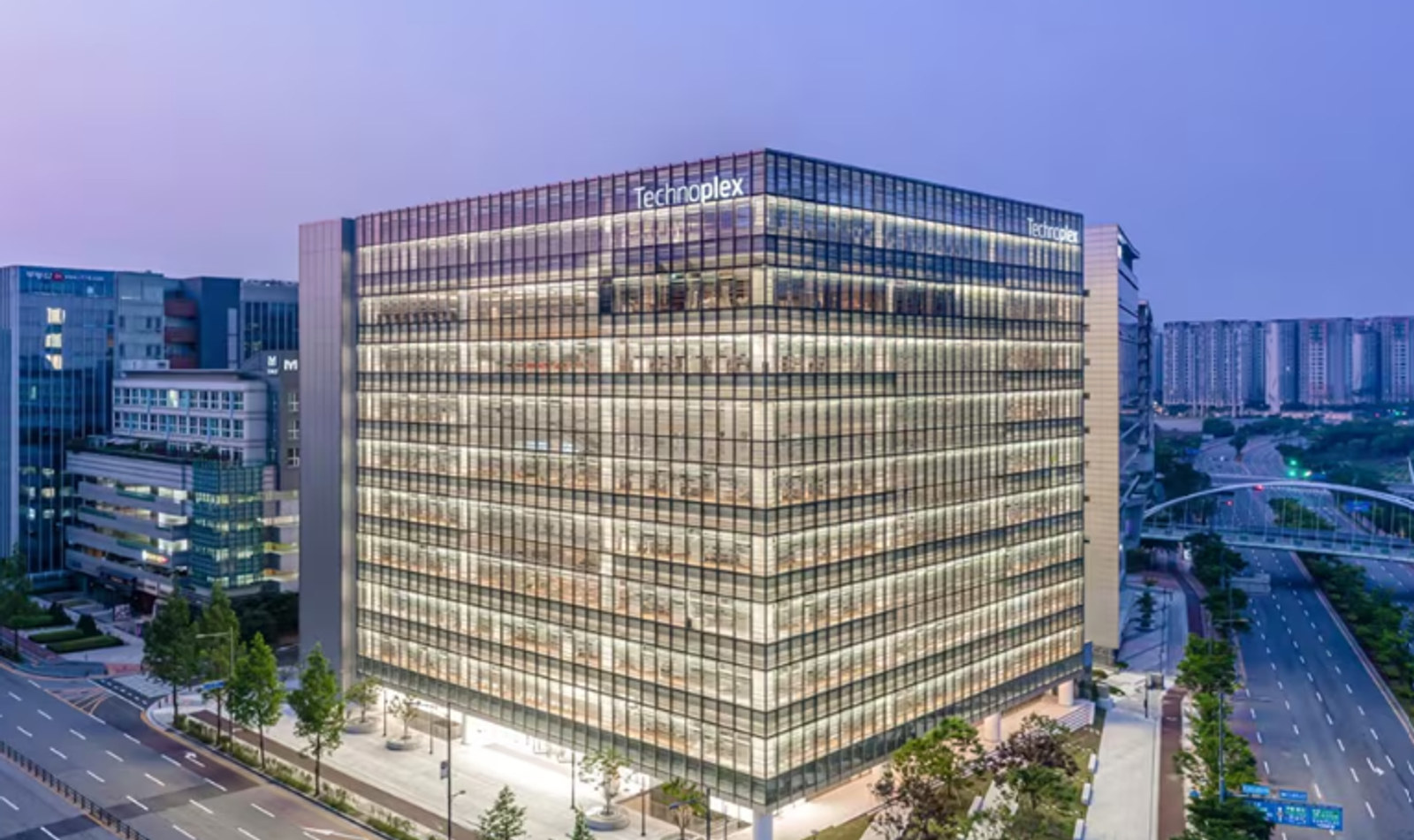
Company Overview
Hankook Tire & Technology is the undisputed leader in South Korea's tyre industry and a significant force in the global market. Listed on the KOSPI — South Korea's main stock exchange — the company manufactures tyres for passenger cars, trucks and buses, and operates production facilities in Hungary, the United States and Indonesia to serve customers worldwide. In early 2025 it was named one of Korea's most admired companies, reaffirming a strong brand reputation.
Yet the backdrop to any discussion of corporate-value improvement is complicated. Governance concerns surrounding its holding company, Hankook Technology Group, a substantial financial burden from the acquisition of Hanon Systems, and a persistently low price-to-book ratio — a textbook symptom of the so-called "Korea discount" — are all intertwined. As the South Korean government has pushed its "Value-Up" programme to encourage listed companies to improve returns and governance, scrutiny of Hankook Tire's shareholder-return policies and governance reforms has intensified.
(Note: The Korean government's Value-Up programme, launched in 2024, urges KOSPI-listed companies to trade closer to book value through better disclosure, improved governance and higher shareholder returns, in a deliberate echo of Japan's similar initiative at the Tokyo Stock Exchange.)
Business Foundations and Financial Performance
Structural Strengths of the Tyre Business
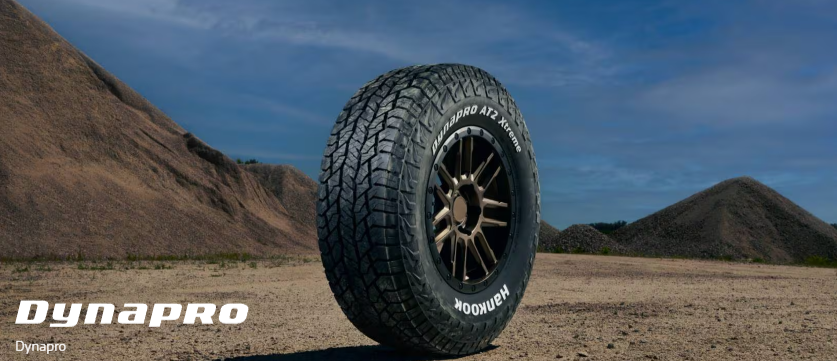
Building on its dominant share of the domestic market, Hankook Tire has constructed an extensive production and distribution network across Europe, North America and Asia. The company is investing in premium tyre lines and developing tyres tailored for electric vehicles (EVs), positioning itself ahead of the shift to new mobility. Its factory expansion in Tennessee is regarded as a critical piece of infrastructure for its North American growth strategy.
Financial Performance by Year
Year | Revenue (KRW bn) | Operating Profit (KRW bn) | Operating Margin (%) | Net Profit (KRW bn)
2021 | c.7,000 | c.650 | c.9.3 | c.520
2022 | c.8,400 | c.720 | c.8.6 | c.580
2023 | c.8,700 | c.1,050 | c.12.1 | c.810
2024 | c.8,600 | c.980 | c.11.4 | c.650
*Figures are estimates based on regulatory filings; consolidated basis.*
The Hanon Systems Acquisition and Its Financial Cost
In 2024 Hankook Tire spent approximately KRW 1.7 trillion (roughly $1.3bn) to acquire a controlling stake in Hanon Systems, a specialist in automotive thermal-management systems. The strategic rationale was to extend its portfolio into EV components and evolve from a pure tyre company into a diversified automotive parts group. The financial consequences were swift and painful, however: interest expenses subsequently surged to roughly seven times their previous level, prompting a wave of concern among analysts. Brokerages including Daeshin Securities and Hanwha Investment & Securities cut their target prices for the stock, citing the cash drain and increased leverage arising from the deal.
Value-Up: Key Milestones
January 2021 — Merger Controversy: Governance Tensions Emerge
In early 2021 a proposed merger involving Hankook Technology Group, the holding company, and its operating subsidiary drew public criticism. Minority shareholders and market participants questioned whether the transaction structure was designed primarily to benefit the controlling family at the expense of ordinary investors. The episode has since been cited as the starting point for ongoing debates about governance reform at the company, and is widely regarded as having contributed to the discount at which the shares trade relative to their book value.
May 2024 — Hanon Systems Acquisition Completed: Diversification at a Price
The completion of the Hanon Systems deal in 2024 gave Hankook Tire in-house capability in thermal management — a technology central to EV performance. Management presented this as transformative, setting the company on a path beyond tyres towards a broader automotive components group. The market response was more sceptical. The KRW 1.7 trillion outlay visibly constrained the company's capacity to return capital to shareholders, and several brokerages lowered their target prices, warning of near-term damage to shareholder value.
July 2024 — Sustainability Report: Framing ESG as a Value Driver
In July 2024 Hankook Tire published a sustainability report setting out a roadmap to carbon neutrality by 2050, with emissions-reduction targets spanning its entire supply chain. The report formalised the company's position that ESG management is central to long-term value creation — a signal that its Value-Up ambitions extend beyond the financial to encompass non-financial metrics as well.
February 2025 — Named Among Korea's Most Admired Companies
In February 2025 Hankook Tire was selected as the representative company in the tyre sector in a survey of Korea's most admired companies. The recognition bolsters brand credibility and adds to the intangible assets underpinning the company's long-term valuation case.
August 2025 — Dividend Increase Announced: A Show of Intent on Returns
In August 2025 Hanwha Investment & Securities published a positive assessment of Hankook Tire's plans to raise its dividend, interpreting the move as a concrete expression of commitment to the government's Value-Up agenda. Analysts were not entirely convinced, however: concerns simultaneously arose about additional borrowing linked to participation in a Hanon Systems rights issue, leaving the durability of a higher dividend open to question.
April 2026 — Interest Costs Surge: Financial Strain Becomes Tangible
By April 2026, the cumulative impact of the Tennessee factory expansion and the Hanon Systems acquisition had become plain in official filings: interest expenses had risen to approximately seven times their prior level. The disclosure confirmed that Hankook Tire's aggressive expansion carries a clear financial cost and, in the context of the Value-Up programme, translated directly into reduced room for shareholder distributions.
Challenges and Assessment
Key Challenges
First, reconciling debt reduction with shareholder returns. The spike in interest costs arising from the Hanon Systems acquisition and the Tennessee expansion is structurally eroding the funds available for dividends. Delivering sustainable returns in the spirit of the Value-Up programme will require both an acceleration of debt repayment and a sustained improvement in operating cash flow.
Second, improving governance transparency. Market scepticism about the relationship between the holding company and the operating subsidiary, and about the decision-making power of the controlling family, remains a persistent source of the discount applied to the shares. Investors are looking for a more shareholder-friendly board composition, more substantive oversight from independent directors, and greater transparency in disclosure.
Third, demonstrating tangible synergies from Hanon Systems. If the EV-component synergies that justified the acquisition do not materialise in the financial results, the rationale for deploying KRW 1.7 trillion will come under serious challenge. Markets are waiting to see the benefits of integration reflected in the numbers.
Overall Assessment
Hankook Tire's core tyre business is genuinely strong, underpinned by formidable operational capabilities and a global manufacturing footprint. Its stated intent to raise dividends and its growing emphasis on ESG management are consistent with the aims of the Value-Up programme. However, the Hanon Systems deal has, for now, constrained both financial health and the capacity for shareholder returns. A considerable period is likely to pass before the benefits of the company's long-term diversification strategy are felt by ordinary shareholders. Management's central task is to find a sustainable balance between building for the future and delivering for investors in the present.
Controversies and Limitations
Governance Uncertainty and Minority Shareholder Protection
The relationship between Hankook Technology Group and Hankook Tire & Technology embeds complex governance risks. Suspicions raised during the 2021 merger debate — that the proposed structure favoured the controlling shareholder — have never been fully dispelled. Critical questions persist about whether minority shareholders are adequately protected and whether their interests are genuinely represented in major decisions.
Shareholder Value at Risk from the Hanon Systems Deal
The KRW 1.7 trillion acquisition absorbed a substantial portion of the cash generated by the core tyre business. The string of target-price cuts from brokerages reflects a shared concern that the deal damaged short-term shareholder value. Compounding the uncertainty is the fact that Hanon Systems itself is facing headwinds from a slowdown in global EV market growth, which clouds the return on the investment.
Structurally Constrained Capacity for Value-Up
The sevenfold rise in interest costs disclosed in April 2026 exposes a structural limit on Hankook Tire's ability to execute its Value-Up commitments. With aggressive capital expenditure and higher debt burdens proceeding simultaneously, the scope for direct shareholder-return measures such as dividend increases or share buybacks is inherently restricted. The episode illustrates the gap between the company's stated intentions and its practical capacity to deliver.
Business Uncertainty in an EV Transition Era
The tyre business itself must adapt to the paradigm shift towards electric vehicles. Pre-emptive investment in EV-specific tyre development and manufacturing is necessary but will itself require further capital expenditure. Maintaining a consistent shareholder-return policy in an environment of elevated uncertainty is no easy task.
Key Metrics Summary
Year | DPS (KRW) | Share Buybacks | Operating Profit (KRW bn) | P/B Ratio (x)
2021 | c.1,000 | Partial | c.650 | c.0.5
2022 | c.1,100 | Limited | c.720 | c.0.4
2023 | c.1,500 | Limited | c.1,050 | c.0.5
2024 | c.1,600 | Undisclosed | c.980 | c.0.4–0.5
2025 | Increase announced | Under consideration | TBC | TBC
*P/B ratios are estimates based on year-end closing prices. Dividend figures include estimates based on regulatory filings. Buyback scale reflects publicly available information only.*
Hankook Tire & Technology possesses a robust core business and a credible global expansion strategy. Yet complex governance and the financial weight of a transformative acquisition are impeding its ability to turn Value-Up intentions into Value-Up outcomes. The virtuous cycle — in which a genuine commitment to higher dividends and stronger ESG credentials is validated by improved financial metrics — has yet to be established. Until it is, the market's full confidence will remain elusive.