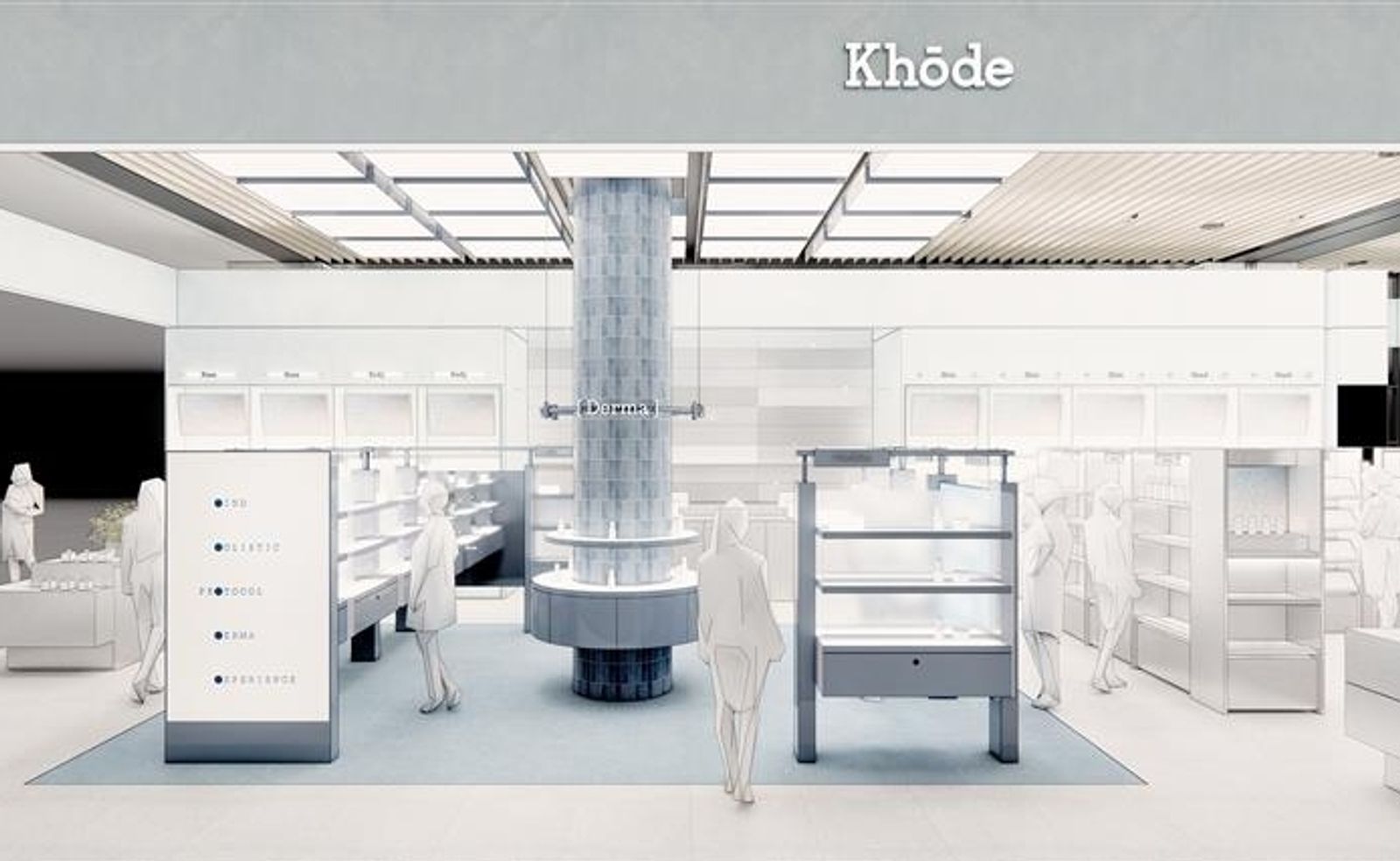
Hyundai Department Store is introducing a specialist derma-beauty edit shop called COODE to its Pangyo branch in Bundang, Seongnam, south of Seoul. The move goes beyond a routine cosmetics concession: it represents a deliberate attempt to bring the fast-growing market for science-backed, functional skincare into the department-store channel.
Derma-beauty: from niche to mainstream
Derma-beauty — a portmanteau of dermatology and beauty — refers to skincare products formulated around low-irritant, clinically active ingredients. In South Korea, the category has expanded rapidly. According to the Korea Health Industry Development Institute, the functional cosmetics market has grown at roughly 10% a year since the early 2020s, driven by consumers who scrutinise ingredient lists with the diligence of pharmacists.
Demand accelerated sharply after the Covid-19 pandemic, when prolonged mask-wearing triggered skin problems across a broad swathe of the population. Global brands such as La Roche-Posay, Bioderma and Cetaphil now share the market with fast-rising Korean labels including Dr.G and Atopalm, together forming the two pillars of the segment.
Why Pangyo matters
Hyundai's Pangyo branch occupies a strategically enviable position. Located adjacent to Pangyo Techno Valley — South Korea's answer to Silicon Valley — it draws professionals in their thirties to fifties from the technology and knowledge-economy sectors, as well as affluent families from the neighbouring Bundang and Wirye districts. The store has long been regarded as fertile ground for premium brands, having steadily upgraded its food hall and luxury fashion offer.
Industry analysts argue the demographic fit is near-perfect. "Pangyo consumers are highly sensitive to ingredients and efficacy, and relatively indifferent to price," said one retail consultant. "It is about as good a location as you could choose for a derma-beauty edit shop." COODE's arrival looks like a natural extension of the store's broader premiumisation drive.
The case for the multi-brand format
COODE's decision to operate as a curated multi-brand shop rather than a single-label counter is significant. The edit-shop format reduces the effort consumers must expend comparing products — a meaningful advantage in derma-beauty, where shoppers typically want to weigh ingredients and match formulations to their skin type before committing. Curation, in other words, directly supports conversion.
The model has ample precedent abroad. France's parapharmacie chains and America's Ulta Beauty have both built substantial customer loyalty by assembling broad ranges of derma and functional products under one roof. Ulta recorded revenues of approximately $11bn in 2023, demonstrating the commercial scale that a well-executed multi-brand beauty retailer can achieve.
A structural shift in department-store beauty
Hyundai's move reflects a wider strategic rethink across South Korea's department-store industry. Beauty floors have traditionally been organised around the individual counters of prestige cosmetics houses. But the rise of health-and-beauty chains and the explosive growth of online beauty platforms have left department-store beauty sales relatively stagnant by comparison.
Rivals have already responded. Lotte Department Store launched Beauté, and Shinsegae — one of South Korea's big three department-store groups — introduced Chicor in 2016, gradually expanding it into a successful draw for younger shoppers. COODE attempts to go further by anchoring itself to a clear and differentiated concept: derma and functional beauty, rather than beauty in general.
Cautious optimism from the industry
Reaction within the beauty industry has been broadly positive. "The derma category has high repurchase rates and strong brand loyalty," noted one brand executive. "For whoever operates the shop, that points to a relatively stable revenue base." Sceptics, however, raise a legitimate challenge: online platforms and bricks-and-mortar chains such as Olive Young have already made derma products widely accessible. The burden on COODE will be to demonstrate what a department-store setting can offer that those channels cannot.
What comes next
Hyundai has chosen Pangyo as a testbed. If COODE performs well, a roll-out to other branches seems likely; if it struggles to differentiate itself, the experiment will be quietly shelved. Given that derma-beauty appears to be on a durable structural growth trajectory, a successful launch would have implications well beyond a single store — potentially reshaping Hyundai's entire approach to beauty retail.
The broader industry direction is already becoming clear. Department-store beauty spaces are evolving from simple points of sale into experiential destinations offering skin consultations, ingredient analysis and personalised skincare regimens. Whether COODE becomes the benchmark for that transformation will be closely watched by the whole sector.