Company overview
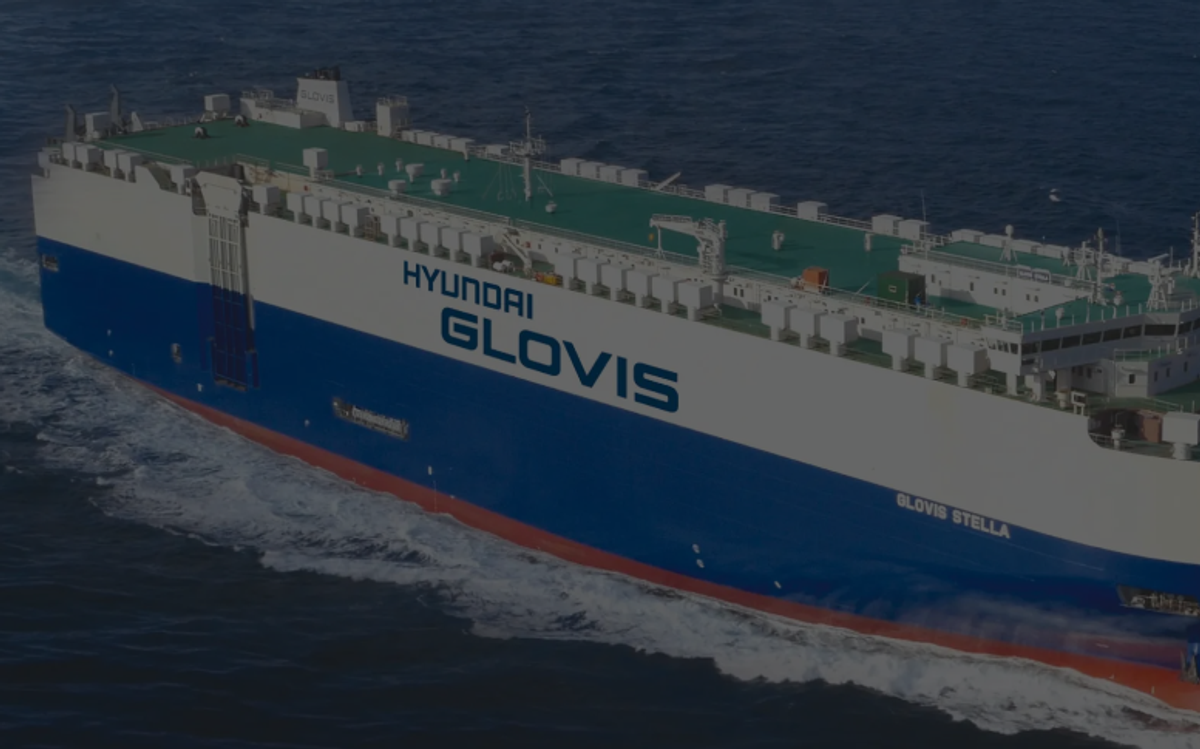
Hyundai Glovis is the logistics and shipping arm of Hyundai Motor Group, one of South Korea's largest conglomerates (known as chaebol). It operates across three main divisions: ocean shipping for finished vehicles using Pure Car and Truck Carrier (PCTC) vessels; integrated land-based logistics and supply-chain management; and a distribution and trading business covering used cars and commodities such as steel and petrochemicals.
Founded in 2001, the company has grown in lockstep with Hyundai Motor and Kia's global manufacturing and sales expansion. It listed on the KOSPI, South Korea's main stock exchange, in 2005, and has since become one of the most valuable logistics companies in the country by market capitalisation. Its position as a structurally important node in the group's ownership architecture has made it a focal point for investors since South Korea's corporate value-up programme was launched in 2024.
The debate about Hyundai Glovis's valuation rests on two foundations. The first is earnings growth, driven by a structural shortage of car-carrier vessels globally. The second is governance: whether the company can raise its price-to-book ratio (PBR) and shareholder returns from levels that have historically lagged peers. With the government's value-up initiative providing the political backdrop, Hyundai Glovis has moved to formalise its shareholder return commitments alongside other major group affiliates including Hyundai Motor and Hyundai Mobis.
Business and financial performance
*Three business pillars*
The PCTC shipping division has been the engine of recent earnings growth. Since 2022, a surge in global vehicle volumes combined with a shortage of available car-carrier vessels has pushed freight rates sharply higher. This tailwind is expected to continue into the second half of 2026, when a new tranche of vessel deliveries is due to add further carrying capacity.
The company's financial performance over the past five years reflects this momentum:
Year | Revenue (trn KRW) | Operating profit (trn KRW) | Operating margin (%) | ROE (%)
2020 | ~15.0 | ~0.45 | ~3.0 | ~8.0
2021 | ~18.2 | ~0.60 | ~3.3 | ~9.5
2022 | ~23.4 | ~1.00 | ~4.3 | ~14.0
2023 | ~26.1 | ~1.15 | ~4.4 | ~13.5
2024 | ~27.0 | ~1.20 | ~4.4 | ~13.0
2025 | ~28.0+ (est.) | ~1.30+ (est.) | ~4.6 (est.) | Double-digit
*Note: 2025 figures are estimates based on public filings and media reports; final results may differ.*
The return on equity (ROE) numbers are particularly significant in the context of South Korea's value-up programme. Sustaining double-digit ROE is uncommon among listed logistics companies in Korea, and it has become the headline metric in Hyundai Glovis's investor communications.
*Vessel expansion and second-half momentum*
As of the first half of 2026, Hyundai Glovis has been steadily adding PCTC vessels to its fleet. According to reports from June 2026, the entry into service of new car carriers in the second half of the year is expected to boost earnings further by expanding transport capacity. Meritz Securities raised its target price for the stock to 340,000 won in June 2026, describing the period as one in which "differentiated earnings growth and shareholder returns are achievable."
Value-up milestones
*2024 — Joining the government's value-up programme*
When the South Korean government unveiled its Corporate Value-up Support Programme in early 2024 — modelled loosely on Japan's efforts to encourage companies trading below book value to improve capital efficiency — Hyundai Motor Group affiliates were among the first to respond. Hyundai Glovis formally announced medium-to-long-term targets for shareholder returns, signalling plans to raise its dividend payout ratio and pursue buybacks combined with share cancellation. From this point, institutional and foreign investors began tracking its compliance with these commitments closely.
*October 2025 — Weathering Trump-era trade risks*
The return of Donald Trump to the White House reintroduced tariff and trade-war concerns that rattled global carmakers. Reports from October 2025, however, assessed that Hyundai Glovis's value-up programme was advancing smoothly despite the turbulence. Analysts noted that the company's PCTC contracts are structured on medium- to long-term terms, providing a natural buffer against short-term disruptions to trade flows.
*November 2025 — Group-wide investor day highlights double-digit ROE*
In November 2025, the major Hyundai Motor Group affiliates coordinated a series of investor disclosures and communications. Hyundai Glovis's double-digit ROE was singled out as a standout figure: few listed logistics companies in Korea sustain returns at this level consistently. The episode drew comparisons with Hyundai Mobis, which had separately moved to strengthen its own shareholder returns as part of an effort to close its valuation discount. Hyundai Glovis used the occasion to elaborate on its plans for improving capital efficiency.
*February 2026 — Mandatory share cancellation legislation advances*
In February 2026, a bill requiring companies to cancel treasury shares within a defined period of their purchase passed a subcommittee of the National Assembly's Legislation and Judiciary Committee. The measure, which has since continued through the legislative process, would codify what Hyundai Glovis has already been doing voluntarily. The company's pre-emptive approach — running buybacks and cancellations in parallel — earned it credit for acting ahead of any legal obligation.
*March 2026 — Record results and heavy investment draw international attention*
Reports from March 2026 noted that Hyundai Glovis was managing to post record earnings while simultaneously committing to large-scale investment in new PCTC vessels — a combination that attracted interest from global institutional investors in logistics and shipping. Several brokerages cited the company as a leading example of value-up execution within the logistics sector.
*May 2026 — Divergence within the logistics sector*
A survey of the logistics industry's value-up progress in May 2026 highlighted a widening gap between companies actively engaged in the programme and those that were not. Hyundai Glovis was placed firmly in the former category, its relative scale and profitability giving it a structural advantage over smaller peers that lack the earnings base to sustain meaningful distributions.
*June 2026 — Meritz Securities raises target to 340,000 won*
Meritz Securities published a report in June 2026 upgrading its target price for Hyundai Glovis to 340,000 won. The bank argued that the company was entering a phase in which the simultaneous expansion of dividends and share cancellations could act as a catalyst for a re-rating of the stock.
Key shareholder return data
Year | DPS (KRW) | Buyback/cancellation | Operating profit (est., trn KRW) | PBR (x, est.) | ROE (%)
2020 | ~2,500 | Minimal | ~0.45 | ~0.8 | ~8.0
2021 | ~3,000 | Minimal | ~0.60 | ~1.0 | ~9.5
2022 | ~4,000 | Initiated | ~1.00 | ~1.1 | ~14.0
2023 | ~5,000 | Expanded | ~1.15 | ~1.0 | ~13.5
2024 | ~6,000 (est.) | Ongoing | ~1.20 | ~1.0 | ~13.0
2025 | Increasing (est.) | Cancellation ongoing | ~1.30+ | Improving | Double-digit
2026 (target) | Further increase | Regulatory compliance | Record est. | Reflects 340,000 won target | Double-digit
*Note: Dividend per share and PBR figures are based on published reports and broker estimates; they may differ from final disclosed figures. The 2026 target price of 340,000 won is from Meritz Securities.*
Challenges and assessment
*Structural challenges*
Three issues continue to weigh on the investment case.
First, captive revenue concentration. A substantial proportion of Hyundai Glovis's sales derives from transactions with Hyundai Motor and Kia. Unless it can meaningfully diversify its customer base and win third-party volumes, the company's earnings will remain hostage to the fortunes of its parent group.
Second, freight-rate cyclicality. The surge in PCTC rates since 2022 has been driven by a coincidence of strong vehicle demand and constrained vessel supply. As newbuild ships are delivered and supply normalises, rate compression is a real risk. The market will need to judge whether the shareholder return commitments made at peak earnings are sustainable through the cycle.
Third, the pace of PBR normalisation. The persistence of a low PBR despite double-digit ROE implies that investors are applying a discount — likely reflecting governance concerns and the captive-business model. More aggressive distributions, or demonstrably better capital allocation, will be needed to close this gap.
*Overall assessment*
Hyundai Glovis stands out within the Korean logistics sector as a comparatively active participant in the value-up programme. Sustaining double-digit ROE, steadily raising its dividend, and pairing buybacks with share cancellations are meaningful steps. Nevertheless, the market's residual discount reflects legitimate structural concerns: the company's deep entanglement with its parent group's ownership structure, its reliance on intra-group business, and the inherent cyclicality of car-carrier shipping rates.
Controversies and limitations
*A governance paradox: beneficiary or instrument?*
Hyundai Glovis is one of the Hyundai Motor Group affiliates in which the founding family holds a concentrated stake. This creates an inherent ambiguity: a rising share price benefits the controlling family's wealth directly, raising the question of whether the value-up programme is designed to serve all shareholders equally, or whether it serves the interests of the controlling shareholder first. Critics have argued that the alignment between minority shareholders and the founding family is imperfect at best.
*Bounded growth prospects*
The company's growth narrative depends largely on the continued global expansion of Hyundai Motor and Kia. A combination of accelerating electric-vehicle adoption, shifting American tariff policies, and intensifying competition in the Chinese market adds uncertainty to the parent group's outlook — and, by extension, to Hyundai Glovis's independent growth prospects. Market sentiment on this point remains cautious.
*A two-tier logistics sector*
As the May 2026 industry review made clear, value-up participation across Korean logistics is uneven. Large affiliates of major conglomerates have both the profitability and the institutional infrastructure to implement shareholder return programmes. Smaller, independent logistics companies do not. There is a risk that the value-up initiative ends up concentrating investor attention and capital further in a handful of large-cap names, widening the gap with the rest of the sector.
*Legislative uncertainty over mandatory share cancellation*
The bill to mandate share cancellation passed a legislative subcommittee in February 2026 but has not yet been enacted into law. If it becomes law in its current form, Hyundai Glovis could benefit from a short-term re-rating. The longer-term question — whether large-scale cancellation obligations would crowd out capital-intensive investment in new vessels — remains unresolved. For a business that needs to keep expanding its fleet to sustain earnings growth, the tension between returning capital and deploying it is not trivial.