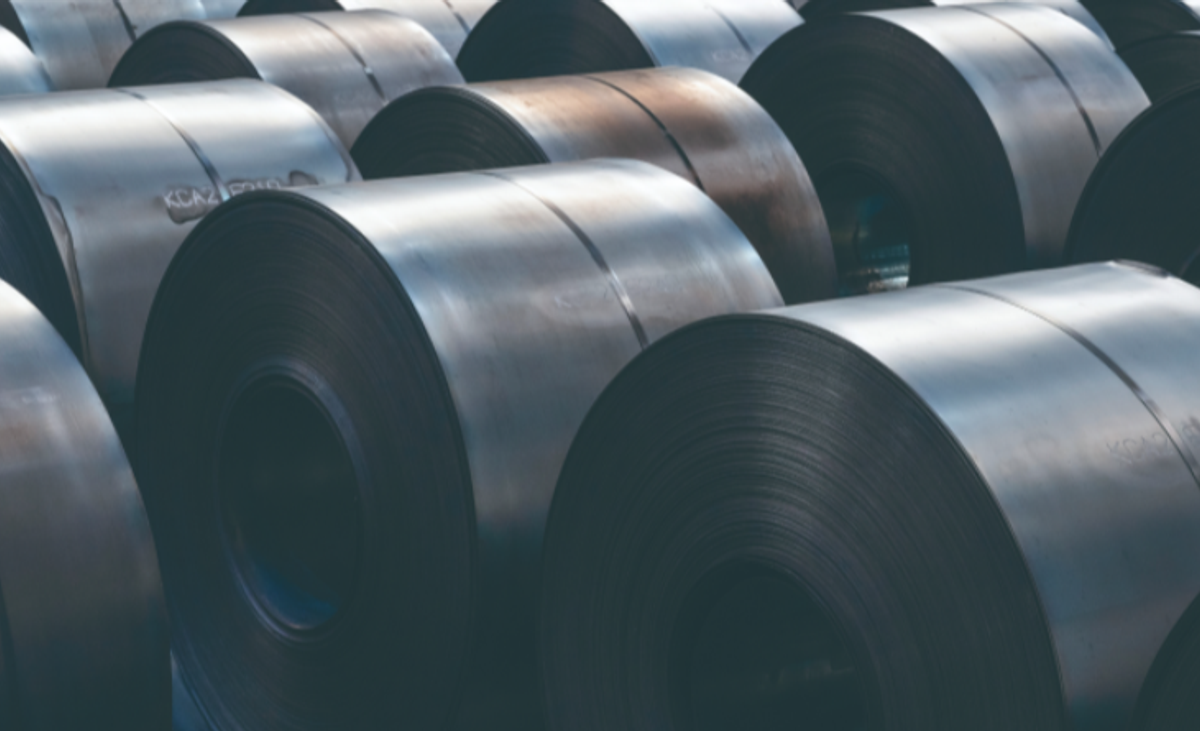
Hyundai Steel occupies a peculiar position in South Korea's industrial landscape. As the only steelmaker besides POSCO to operate an integrated blast-furnace production system, it is the captive supplier at the heart of the Hyundai Motor Group's manufacturing empire, churning out automotive steel sheet, H-beams, and rebar from three blast furnaces at its sprawling Dangjin complex on the country's west coast. That privileged position, however, comes with a structural weakness: deep reliance on intra-group transactions with Hyundai Motor and Kia blunts the company's pricing power and constrains its margins.
The company now finds itself at the centre of South Korea's broader "value-up" debate — a government-driven campaign to close the chronic discount at which Korean equities trade relative to their global peers. For most participants in that programme, the prescription is straightforward: raise dividends, cancel treasury shares, and improve governance. For Hyundai Steel, navigating those demands while funding a potential multi-trillion-won expansion into the United States and managing a cyclical downturn in steel markets amounts to a far more complicated equation.
From boom to bust
The company's recent financial history tells a familiar story for the global steel industry. A pandemic-era surge in demand pushed revenues to a record 26.1 trillion won (roughly $20 billion) in 2022, with operating profit reaching 1.1 trillion won. The hangover has been severe. By 2023, operating profit had fallen to around 580 billion won as Chinese overcapacity flooded global markets and South Korea's domestic construction sector fell into a prolonged slump. In 2024, operating profit is estimated to have collapsed further to somewhere between 200 billion and 300 billion won, with a net loss a distinct possibility. The debt-to-equity ratio, meanwhile, has crept back up to around 130%, a level that leaves little room for generosity towards shareholders.
Year | Revenue | Operating Profit | Net Profit | Debt-to-Equity
2020 | ~₩18.2tn | ~₩520bn | ~₩210bn | ~130%
2021 | ~₩24.4tn | ~₩1.9tn | ~₩1.2tn | ~110%
2022 | ~₩26.1tn | ~₩1.1tn | ~₩630bn | ~118%
2023 | ~₩22.8tn | ~₩580bn | ~₩240bn | ~125%
2024 | ~₩20tn+ | ~₩200–300bn (est.) | Possible net loss | ~130%+
*2024 figures based on preliminary results and market estimates*
Governance under scrutiny
In October 2025, Hyundai Steel's mandatory corporate governance report triggered a wave of criticism. Analysts and institutional investors pointed to two structural failings: an audit committee insufficiently insulated from the controlling Hyundai Motor Group, and a dividend payout rate well below sector peers. The report landed at a sensitive moment, coinciding with the Korea Exchange's push to tighten disclosure requirements under the value-up programme.
Two months later, the company appointed Lee Bo-ryong, a veteran of the factory floor, as its new chief executive. The choice signalled a priority shift towards cost discipline and production efficiency rather than financial engineering — an understandable response to a brutal operating environment, but one that tempered hopes for a swift improvement in shareholder returns.
The National Pension Fund steps back
January 2026 brought a notable development: the National Pension Service (NPS), South Korea's largest institutional investor and a driving force behind the value-up campaign, reclassified its stance on Hyundai Steel from active engagement to routine monitoring. On the surface, this appeared to ease pressure on management. Most industry observers read it differently — as a pragmatic acknowledgement that demanding higher payouts from a company barely breaking even is an exercise in futility. The corollary is equally clear: should steel markets recover, the NPS's demands will return with interest.
Betting on America
Also in January 2026, reports emerged that Hyundai Steel was reducing its internal financial ratios in preparation for a significant investment in a United States steelmaking facility. The move fits neatly within the Hyundai Motor Group's broader push to localise production in America, partly in response to trade policy uncertainty under the Trump administration. Yet it sharpens the tension between capital expenditure and shareholder returns. A greenfield steel plant in the United States would require several trillion won in investment — funds that cannot simultaneously be returned to shareholders through dividends or share cancellations.
The treasury-share problem
Perhaps no single issue captures Hyundai Steel's value-up paradox more vividly than its handling of treasury shares. The company has accumulated a meaningful stockpile of its own shares over the years but has consistently declined to cancel them. Unretired treasury shares are, in effect, a potential source of dilution — a fact that has not been lost on shareholders who note the yawning gap between holding shares and actually creating value by extinguishing them. Ahead of the March 2026 annual general meeting, this became the market's central preoccupation, particularly as South Korea's National Assembly began debating legislation that could make treasury-share cancellation mandatory.
Growth narrative over cash returns
At the March 2026 AGM, management laid out an ambitious strategic agenda: a carbon-reduction roadmap, the American steelworks investment, and plans to supply specialised materials for data centres, robots, and artificial-intelligence infrastructure. The presentation's message was explicit — Hyundai Steel intends to reinvent itself as a provider of advanced materials, not merely a commodity steelmaker.
That is a coherent long-term strategy, and one that draws credibly on the Hyundai Motor Group's own pivot towards electric vehicles and robotics, both of which require high-grade specialty steels. But it represents a conscious choice to pursue value creation through business transformation rather than through the direct cash returns that the value-up programme was designed to encourage.
An unanswered question
The market's scepticism is reflected in the price. Hyundai Steel's shares trade at an estimated price-to-book ratio of between 0.2 and 0.3 times — among the deepest discounts to book value of any significant South Korean manufacturer. At those levels, the stock prices in not just cyclical adversity but a structural doubt about whether capital deployed in the business will ever generate adequate returns for outside shareholders.
Whether the company's American ambitions and materials-technology pivot can close that discount remains genuinely uncertain. Three obstacles stand out. First, governance: so long as the board is perceived as insufficiently independent from the controlling group's interests, institutional investors will apply a discount for the risk that minority shareholders' interests come second. Second, timing: multi-year capital programmes tend to defer rather than accelerate improvements in shareholder returns. Third, the macro environment: steel prices, Chinese export volumes, and American trade policy are all variables beyond the company's control, and all three are moving in uncomfortable directions.
Hyundai Steel's value-up story, in short, is less a tale of shareholder-friendly reform than a wager on long-cycle industrial transformation. That may ultimately prove the right bet. But for investors who bought into the value-up narrative hoping for near-term cash returns, it is a different proposition entirely.