IBK Investment & Securities initiated coverage of Samsung Heavy Industries (KOSPI: 010140) on September 15th with a buy recommendation and a target price of 37,000 won — implying upside of 67.4% from the closing price of 22,100 won on September 14th.
A portfolio built to weather the cycle
The central investment thesis rests on Samsung Heavy's ability to construct both LNG carriers and floating liquefied natural gas production units (FLNG) simultaneously — a combination no other shipbuilder can match. Although both businesses sit within the LNG value chain, their order cycles are driven by different forces. LNG carrier demand is sensitive to shipping volumes, tonne-miles, and vessel supply-demand dynamics, whereas FLNG projects are driven by natural gas consumption, liquefaction capital expenditure, and LNG project economics. The result is a natural hedge: weakness in one business can be cushioned by strength in the other.
Valuation
IBK derived its target price by applying a price-to-earnings multiple of 19.8 times to its forecast 2027 earnings per share of 1,851 won. That multiple represents a 40% discount to the average 33.1 times P/E of South Korea's three largest shipbuilders, reflecting concerns about a moderation in sector earnings growth. Even so, the brokerage expects Samsung Heavy to sustain double-digit profit growth through 2028.
Earnings set to surge
For the current financial year (2026), IBK forecasts revenues of 12.95 trillion won, up 21.6% year on year, with operating profit of 1.34 trillion won — a 55.7% increase — and an operating margin of 10.4%. Operating profit would thus surpass the one-trillion-won mark just one year after coming in at 862 billion won in 2025. The drivers are the resumption of launches from a second dry dock, expanded collaboration with Pax Ocean, and growing revenue recognition from high-value contracts secured since 2024. Measured from the 503 billion won recorded in 2024, operating profit would more than double in just two years.
Near-term pain in LNG carriers
The LNG carrier market is currently in a state of short-term oversupply. Orders for large LNG carriers of 140,000 cubic metres and above peaked at 175 vessels in 2022 before declining, and order intake has continued to fall in the first half of 2026. Spot charter rates for 174,000-cubic-metre carriers briefly collapsed to a record low of $7,500 per day in early 2025.
IBK nonetheless argues that the picture will change from 2030 onwards, driven by a wave of new American liquefaction capacity. Global LNG production capacity is projected to reach 820 million tonnes per annum by 2031 — a 54.2% increase on 2025 levels — with 44.2% of that expansion coming from the United States. Because American export terminals are farther from Asian buyers than those of any other major LNG exporter, the same volume of production requires more vessels to transport it. This so-called tonne-mile effect should structurally boost demand for LNG carriers.
Scrapping could accelerate the recovery
Ironically, the current period of depressed freight rates may hasten the fleet's renewal. Older steam-turbine vessels, which consume far more fuel than modern ships, quickly become uneconomical when rates fall. A record 15 LNG carriers were scrapped in 2025 — every one of them a steam-turbine vessel — and a further six were demolished in the first half of 2026. With more than 200 steam-turbine ships still in service, accelerating scrapping could tip the market into undersupply by 2030.
FLNG: a near-monopoly position
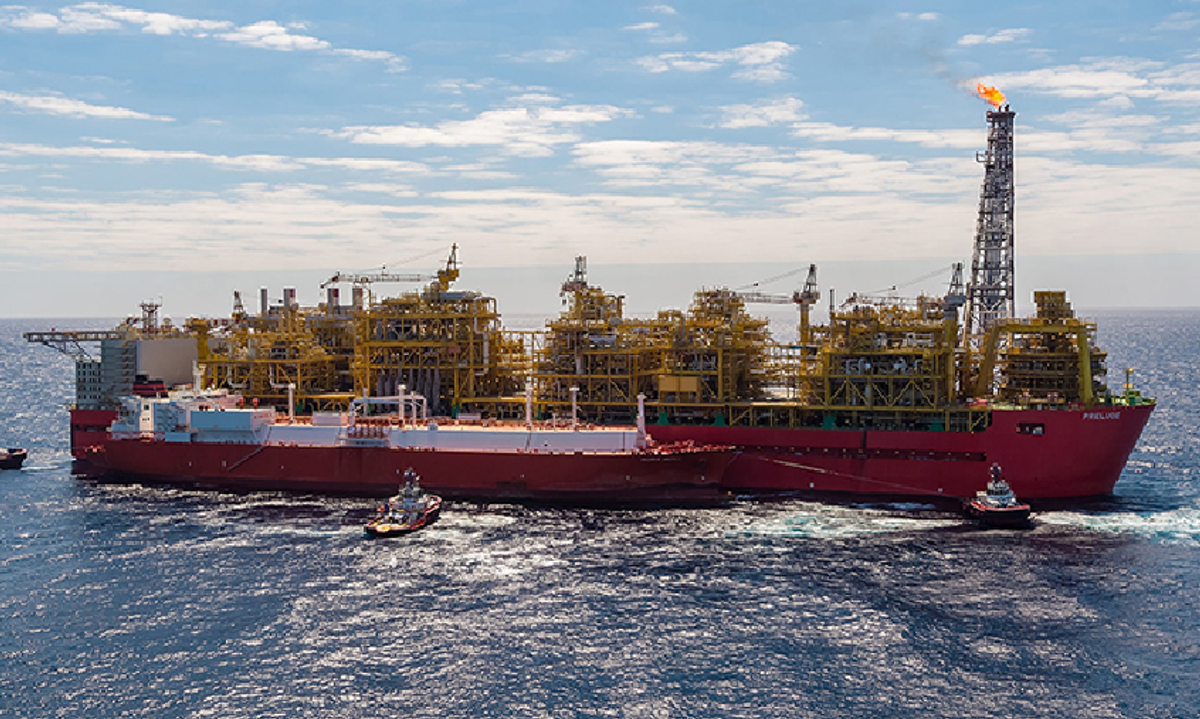
Samsung Heavy's standing in the FLNG market is particularly formidable. The company has won seven of the eleven FLNG newbuild orders ever placed worldwide and is the only builder to have constructed large-scale FLNG units exceeding three million tonnes per annum of capacity. It is currently building three FLNG units simultaneously — Cedar LNG, ZLNG, and Coral Norte — and is in advanced negotiations over two further projects, Delfin Unit 2 and Ksi Lisims, both of which are targeting a final investment decision before year-end. Securing both would allow Samsung Heavy to exceed its offshore order target for the year. The company has already surpassed its commercial shipbuilding target of $5.7 billion. As of end-August, its order backlog stood at $35.5 billion, representing more than three years of work.
Risks to the thesis
Investors should note that this assessment reflects the view of a single brokerage. Samsung Heavy's shares have fallen 36% from their 52-week high of 34,400 won and have underperformed the market by 41% over the past six months. Should the LNG carrier glut prove more prolonged than expected, or if final investment decisions on American LNG projects are delayed, the anticipated 2030 supply-demand inflection could be pushed back. It is also worth noting that Samsung Heavy operates a 100% currency-hedging policy on its dollar revenues, meaning that a weaker won does not immediately translate into higher reported earnings — a factor that sets it apart from peers who benefit more directly from exchange-rate movements.