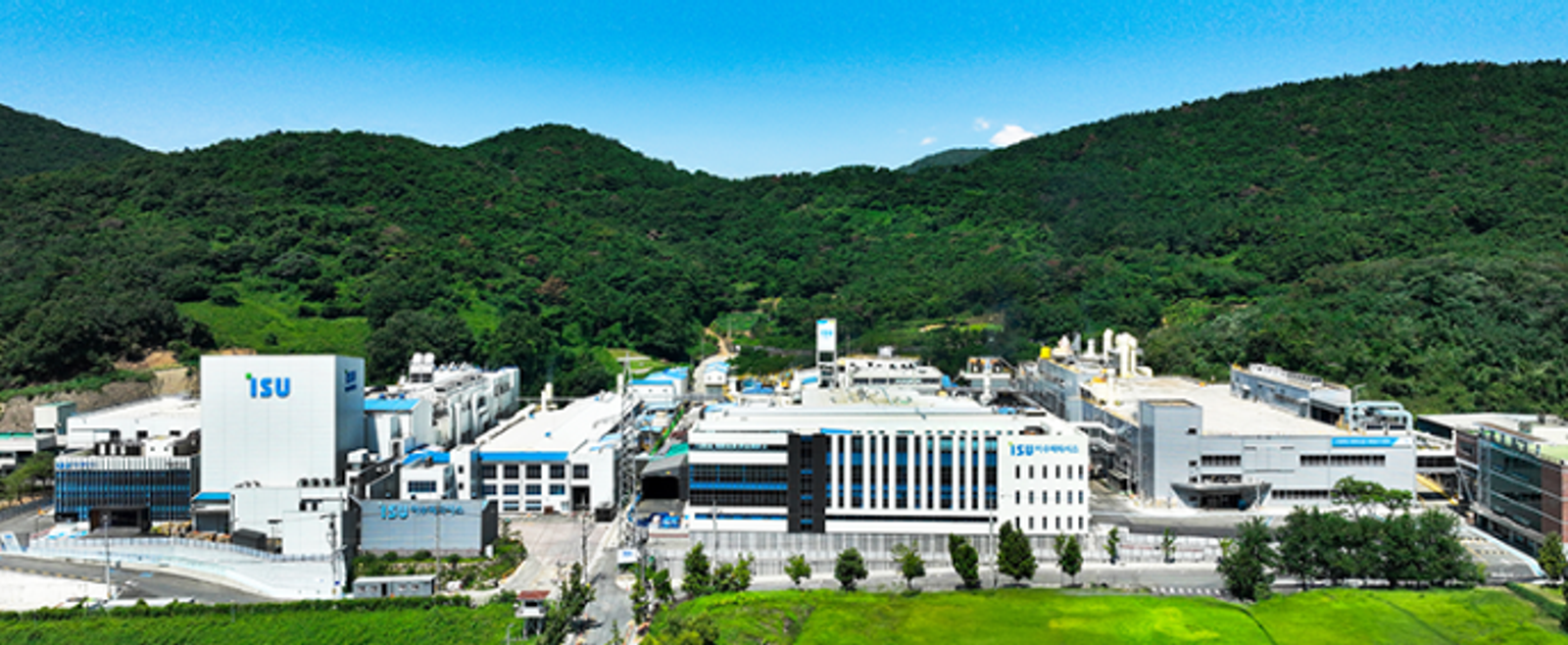
Company Overview
ISU Petasys is a printed circuit board (PCB) manufacturer belonging to the ISU Group, one of South Korea's mid-sized conglomerates. The company is widely regarded as the domestic leader in high-layer multi-layer boards (MLBs), a technically demanding segment of the PCB market. Founded in 1977, it has spent nearly half a century supplying critical components to high-value industries including network equipment, servers, defence, and aerospace.
Several forces have combined to thrust ISU Petasys into the centre of South Korea's corporate governance debate. The surge in demand for high-layer PCBs, driven by the expansion of artificial intelligence infrastructure, has propelled earnings growth. At the same time, a low price-to-book ratio (PBR) and a relatively modest dividend record have left the company exposed to growing pressure for stronger shareholder returns. When the South Korean government formally launched its "Corporate Value-up Programme" in 2024 — aimed at narrowing the persistent valuation gap known as the "Korea Discount" — ISU Petasys found itself having to strike a new balance between reinvesting for growth and rewarding investors.
That pressure has intensified as several threads converged: discussions around the first periodic rebalancing of the Value-up Index in 2026, the National Pension Service's (NPS) growing interest in low-PBR stocks, and a notable increase in foreign investor buying.
Business Profile and Financial Performance
Business Model and Competitive Position
ISU Petasys specialises in ultra-high-layer PCBs with 40 or more layers. The technical barriers to entry in this segment are formidable, and once a supplier is embedded in a customer's supply chain, contracts tend to be long-lasting. The company's principal customers are global network equipment makers, and the proliferation of AI servers and data centres is generating direct incremental demand for the high-speed switching equipment those boards support. Stable supply agreements in defence and aerospace provide a degree of insulation from cyclical downturns.
The company's decision to maintain its production base in South Korea, rather than shift manufacturing offshore, has been a source of quality differentiation. Its principal constraint is capacity: production facilities remain limited relative to those of global peers, requiring continuous capital investment to keep pace with rising orders.
Financial Performance by Year
Since the AI boom and the associated surge in data-centre investment took hold in earnest in 2023, ISU Petasys has been on a clear upward trajectory. By 2026, analysts are raising the possibility that annual revenues could exceed 2 trillion won (roughly $1.5bn), and brokerages have repeatedly revised their target prices upward.
Year | Revenue (est.) | Operating Profit (est.) | Operating Margin | Key Developments
2022 | ~700bn won | ~50bn won | ~7% | Pre-AI investment baseline
2023 | ~1tn won+ | ~80bn won | ~8% | Sharp rise in network equipment demand
2024 | ~1.3tn won | ~120bn won | ~9% | High-layer PCB orders fully ramped
2025 | ~1.6tn won | ~150bn won | ~9–10% | Capacity expansion under way
2026E | 2tn won+ | ~200bn won | ~10%+ | Full benefit of expanded capacity
*All figures are based on brokerage research and market estimates and may differ from officially reported results.*
One brokerage report characterising first-quarter 2026 performance used the phrase "quietly getting on with it" — a nod to steady, unspectacular execution. In January 2026, SK Securities pushed back against investor concerns about order momentum, reaffirming that growth remained intact.
Value-up Programme: Key Milestones
2024 — Government Programme Launch and Initial Response
When the South Korean government unveiled its Corporate Value-up Programme, ISU Petasys came under immediate scrutiny. Its PBR was below the market average, and critics argued that dividend payouts had not kept pace with earnings growth. The company is understood to have begun reviewing options for gradually expanding its shareholder-return policy around this time.
July 2025 — Treasury Share Cancellations Enter the Spotlight
Analysis published in July 2025 showed that the aggregate paid-in capital of South Korean listed companies had contracted for the first time in a decade, as treasury share cancellations gathered pace as a preferred capital-return tool. ISU Petasys attracted market attention regarding its own approach to treasury shares. Across the industry, capital allocation strategy — specifically the ability to pursue growth investment and shareholder returns simultaneously — was becoming a key criterion by which investors assessed companies.
December 2025 — Foreign Investors Take Notice
Year-end analysis of trading patterns confirmed that ISU Petasys was among the stocks attracting the greatest foreign investor interest. The combination of strong earnings momentum as an AI beneficiary and a relatively undemanding valuation was seen as the draw. The growing foreign ownership stake raised expectations that pressure for higher dividends and more active shareholder returns would intensify.
January 2026 — NPS Rebalances Towards Low-PBR and Value-up Stocks
Reports in January 2026 indicated that the National Pension Service — South Korea's sovereign wealth fund and one of the largest shareholders in many listed companies — had been trimming positions in AI materials and components stocks while building exposure to low-PBR and value-up candidates. ISU Petasys, combining a low-PBR profile with AI-driven growth momentum, was cited as a potential beneficiary of the rebalancing. That same month, SK Securities published a report dismissing investor concerns as overblown and reiterating its confidence in order-led growth.
March 2026 — Value-up Index Rebalancing
In March 2026, Korea Exchange completed the first periodic rebalancing of its Value-up Index, adding 27 stocks including Hyundai Rotem and Samsung Securities. ISU Petasys's potential inclusion was closely watched. During this period, foreign investors were reported to have been net buyers of ISU Petasys on a weekly basis, alongside Doosan Enerbility — a sign that index inclusion expectations were providing positive price momentum.
May 2026 — Dividend Expansion Confirmed
In May 2026, reports emerged confirming both continued earnings growth and a formal commitment to expanding dividends. First-quarter results reviewed by brokerages showed the growth trajectory intact. The combination of a path to revenues exceeding 2 trillion won through capacity expansion and an improving shareholder-return policy began to crystallise into a coherent investment narrative. Analyst coverage at this time, under the headline "ISU Petasys Catches the AI Wave," gave concentrated attention to the company's growth story.
Challenges and Assessment
Challenges Ahead
The most fundamental challenge ISU Petasys faces within the Value-up framework is balancing capital expenditure with shareholder returns. Ongoing investment in production capacity makes it financially difficult to pursue dividend increases and treasury share cancellations simultaneously. Investors are understood to be pressing for a clear roadmap showing how shareholder returns can be gradually improved without compromising the company's growth trajectory.
The second challenge concerns governance transparency. As a member of the ISU Group, the company is subject to the scrutiny that markets routinely apply to listed subsidiaries of Korean conglomerates — particularly around the fairness of related-party transactions, board independence, and the protection of minority shareholders. Since the Value-up Programme evaluates governance improvement as a core criterion alongside financial returns, ISU Petasys's progress in this area will face ongoing assessment.
Third, the company must establish a credible growth path beyond 2 trillion won in revenues. AI infrastructure investment has a cyclical character, and there are calls for greater product diversification and a broader customer base to reduce dependence on any single demand cycle.
Overall Assessment
Market sentiment towards ISU Petasys is broadly constructive. The dominant view is that as one of South Korea's materials and components companies most directly exposed to the structural expansion of AI data centres, its growth credentials are not in doubt.
On the value-up dimension, a stated commitment to expanding dividends is regarded as a positive signal. If dividend growth is linked to earnings performance, the shareholder return ratio should improve organically. The reservation is that the company has so far been reluctant to deploy more aggressive tools such as treasury share cancellations.
The sustained buying by foreign and institutional investors is interpreted as a sign that ISU Petasys's value-up story is gaining broader market acceptance.
Controversies and Limitations
Are Dividends Really Adequate?
The debate over whether dividend payouts are keeping pace with earnings growth has not been resolved. Critics point out that while operating profit has more than doubled in a few years, dividend increases have been comparatively modest. If the payout ratio remains low, the company risks being judged as falling short of the spirit of the Value-up Programme.
The Structural Tension Between Capex and Returns
In a business requiring continuous capacity expansion, a substantial portion of free cash flow is absorbed by capital expenditure. This creates a structural constraint that makes aggressive share buybacks, treasury share cancellations, or large special dividends difficult to execute regardless of intent. Some analysts believe a meaningful step-up in shareholder returns will only become feasible once the current investment cycle — running through 2026 and into 2027 — draws to a close. That remains, for now, a working assumption rather than a commitment.
Dependence on the AI Cycle
The extent to which ISU Petasys's growth is tied to the AI infrastructure investment cycle represents a latent risk. The order-slowdown concerns raised by some investors in January 2026 — which SK Securities dismissed as a misreading of the situation — illustrate the point. Should AI investment become more concentrated among fewer equipment makers, or should global technology giants revise their data-centre spending plans, ISU Petasys's earnings momentum would not be immune to the consequences.
Governance and Conglomerate Risks
Governance risks arising from the company's position within the ISU Group have not been fully allayed. The concerns common to listed subsidiaries of Korean conglomerates — the appropriateness of intra-group transactions, the independence of the board, and limits on the founding family's influence — remain live issues for ISU Petasys. Given that the Value-up Programme treats governance reform as a central criterion, analysts argue that a clearer and more explicit commitment from the company is needed.
Summary Data
Year | DPS (est.) | Treasury Share Policy | Operating Profit (est.) | PBR (est.) | Key Value-up Events
2022 | Low | Inactive | ~50bn won | Below 1x–low 1x | Pre-Value-up era
2023 | Modest increase | Inactive | ~80bn won | 1–2x | Earnings growth takes hold
2024 | Gradual increase | Under review | ~120bn won | ~2x | Government Value-up Programme launched
2025 | Upward trend maintained | Growing market interest | ~150bn won | ~2x | Foreign buying accelerates; treasury share cancellations in focus
2026E | Expansion formally confirmed | Under active consideration | ~200bn won | ~2x | Value-up Index inclusion debate; dividend expansion confirmed
*All figures are based on brokerage research and market estimates and may differ from officially reported results.*