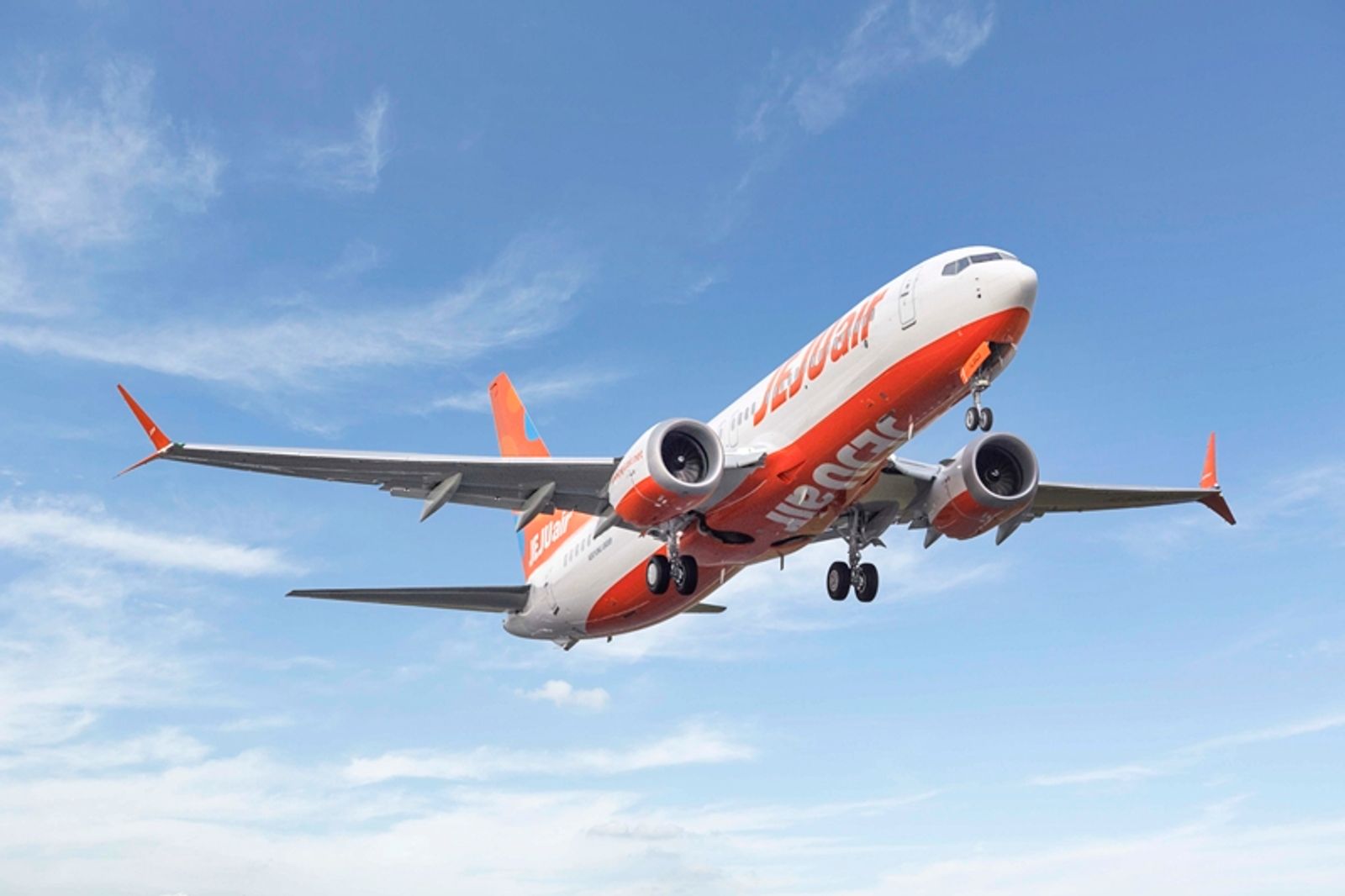
Company Overview
Jeju Air (KOSPI: 089590) was founded in 2005 as South Korea's first low-cost carrier (LCC) and operates as a subsidiary of the Aekyung Group, one of the country's mid-sized conglomerates. For much of its history it held the top position in the domestic budget-airline market, leveraging bases at Gimpo and Incheon airports to dominate short-haul routes to Japan and South-East Asia. It has long been regarded as the benchmark for the Korean LCC industry.
Yet its journey towards the government-backed "Value-Up" programme — an initiative designed to close the persistent valuation gap between Korean equities and their global peers — has been anything but straightforward. A pandemic-induced collapse in earnings, a catastrophic runway accident at Muan International Airport in December 2024, and a subsequent leadership controversy have repeatedly exposed the gap between stated intentions and actual delivery. A Value-Up disclosure published in December 2024 set out targets of a 25% return on equity (ROE) and a 35% dividend payout ratio by 2027, but market scepticism remains deep.
As rivals close in and structural cost pressures mount, Jeju Air's ability to honour its Value-Up commitments has become one of the most closely watched questions among investors in Korean aviation stocks.
Business Foundation and Financial Performance
*Business structure and market position*
Jeju Air follows a classic LCC model, operating a single aircraft type — the Boeing 737 family — to maximise cost efficiency. Domestic routes and short-haul international services to Japan and South-East Asia form the core of its revenues, supplemented by ongoing efforts to diversify into cargo and ancillary services. An attempt to acquire Eastar Jet in 2019 was ultimately abandoned. Since then, the competitive landscape has shifted dramatically: a proposed acquisition of Asiana Airlines by HDC Hyundai Development Company collapsed, and the eventual approval of Korean Air's merger with Asiana has raised serious questions about the emergence of a consolidated LCC rival beneath the combined carrier.
*Financial performance by year*
Jeju Air suffered severe losses during the pandemic but returned to profitability in 2023, riding a strong recovery in passenger demand. The Muan accident in late 2024 inflicted fresh damage, and 2025 results are understood to have deteriorated sharply as a consequence.
Year | Operating profit (KRW bn) | Net profit (KRW bn) | Key developments
2019 | approx. –42 | approx. –58 | Eastar Jet acquisition attempt abandoned
2020 | approx. –296 | approx. –314 | Pandemic impact; rights issue executed
2021 | approx. –220 | approx. –240 | International routes virtually suspended
2022 | approx. –68 | approx. –70 | Gradual recovery in second half
2023 | approx. 180 | approx. 120 | Return to profit; dividend resumption discussed
2024 | approx. 80 | approx. –several bn | Muan accident (December) factored in
*Figures are estimates based on regulatory filings and press reports; some may differ from audited results.*
*Post-pandemic reconstruction*
From the second half of 2022, the resumption of Japan and South-East Asia routes drove a sharp recovery in load factors and revenues. By 2023 Jeju Air was posting operating profits close to record levels, leading the broader LCC sector's rebound. That recovery provided the foundation for the December 2024 Value-Up disclosure — though the Muan accident, which followed just days later, delivered a severe blow to the company's finances and management credibility alike.
Value-Up: Key Milestones
*December 2024 — Value-Up disclosure: "ROE 25% and a 35% payout ratio by 2027"*
On 13 December 2024 Jeju Air published its Value-Up disclosure, announcing the resumption of dividends from 2025 and setting medium-term shareholder-return targets of a 25% ROE and a 35% payout ratio by 2027. The announcement coincided with heightened market interest in discussions about a potential consolidation among budget carriers, and initial reactions were broadly positive. Management pledged a phased return to dividend payments from 2025 alongside measures to improve capital efficiency and lift the price-to-book ratio (PBR).
*December 2024 — Muan airport disaster: Value-Up plans hit an immediate obstacle*
On 29 December 2024, barely a fortnight after the Value-Up disclosure, a Jeju Air aircraft crashed while landing at Muan International Airport, causing mass casualties. The accident dealt simultaneous blows to the company's financial position and its brand reputation, casting a shadow of uncertainty over the entire Value-Up timetable.
*November 2025 — Chief executive reappointed despite poor performance*
As calls for management accountability mounted in the aftermath of the Muan disaster, Jeju Air proceeded to renew the mandate of its chief executive, Kim E-bae. The decision to retain the head of a company reporting weak results and facing scrutiny over the accident prompted questions in some quarters of the market about the independence of the board and the robustness of its governance.
*January 2026 — Dividend pledge effectively abandoned: clouds gather*
Press reports in January 2026 indicated that Jeju Air was effectively unable to follow through on its commitment to resume dividends in 2025, as promised in the Value-Up disclosure. The contrast with Korean Air, which was simultaneously moving to address its own opaque dividend practices, amplified the reputational damage to Jeju Air's Value-Up credibility.
*March 2026 — Broken promise confirmed; rival Jin Air resumes dividends*
Reports in March 2026 confirmed that Jeju Air would again fail to pay a dividend, while competitor Jin Air — a budget carrier affiliated with Korean Air — was resuming its dividend for the first time in seven years. The spectacle of the sector's market leader missing shareholder-return commitments in consecutive years, even after a formal Value-Up disclosure, elevated investor trust to an urgent priority.
*June 2026 — Aviation stocks rebound on geopolitical détente*
In June 2026, expectations of a ceasefire agreement and broader geopolitical easing lifted aviation stocks across the board. Jeju Air participated in the rally, but analysts identified actual earnings improvement and dividend delivery as the critical tests for any durable re-rating.
Challenges and Assessment
*Outstanding challenges*
The first and most pressing task is restoring credibility to the Value-Up disclosure. Having failed to pay dividends in both 2025 and 2026, Jeju Air must demonstrate genuine earnings recovery and financial stabilisation before its 2027 payout-ratio target of 35% can be taken seriously. Markets will require concrete implementation roadmaps and interim progress disclosures, not merely headline targets.
Second, managing the aftermath of the Muan accident remains unresolved. Legal liabilities, compensation costs, and reputational damage are likely to weigh on the balance sheet for years. Transparent handling of the accident and credible safety reforms are regarded as prerequisites for restoring confidence in the company's governance.
Third, responding to a consolidated LCC competitor will demand strategic clarity. If the merger of the budget-carrier subsidiaries beneath the combined Korean Air-Asiana entity proceeds, the competitive landscape could be fundamentally redrawn. Maintaining the top market position while simultaneously improving profitability and creating capacity for shareholder returns will require careful management.
Fourth, capital efficiency must improve if the ROE target of 25% is to be reached. That will require a sharper focus on high-margin routes, further cost discipline, and a reduction in excess capital. Share buybacks and cancellations have been mentioned as additional tools under consideration.
*Overall assessment*
The direction of Jeju Air's Value-Up initiative is broadly correct. Even allowing for the inherent volatility of LCC economics, a commitment to closing the "Korea Discount" — the chronic undervaluation of South Korean equities relative to international peers — is consistent with national policy priorities and welcomed in principle.
However, a major accident immediately after the disclosure, followed by two years of broken promises, has seriously undermined confidence in management's ability to execute. With Jin Air demonstrating by contrast that dividend resumption is achievable, Jeju Air's Value-Up programme risks being remembered as little more than an aspirational statement. Whether the company meets its 2027 targets will be the definitive verdict on its shareholder-return ambitions.
Controversies and Structural Limitations
*The irony of timing*
The Value-Up disclosure and the Muan accident were separated by just two weeks. The fact that a pledge to enhance shareholder returns was already on the public record when fundamental questions were being raised about safety management threw the gap between corporate rhetoric and operational reality into sharp relief. Some investors and analysts argued that Jeju Air had not adequately reflected its actual investment in safety or its true financial capacity in the disclosure.
*Governance questions raised by the CEO's reappointment*
The decision to renew Kim E-bae's mandate in November 2025, despite poor financial performance and unresolved accident liability, drew criticism from a governance perspective. Observers questioned whether the board was exercising genuine independent oversight of management and whether shareholder-protection mechanisms were functioning effectively.
*Structural cost pressures and the realism of the targets*
From 2025 onwards, concerns grew that regulations imposed by the Korea Fair Trade Commission — requiring budget carriers to maintain seat supply and limiting fare increases — could structurally impair LCC profitability. In an environment where regulatory changes feed directly into margins, doubts about the achievability of a 35% payout ratio surfaced even within the industry.
*The non-binding nature of Value-Up disclosures*
A broader limitation of South Korea's Value-Up programme itself is that disclosures carry no legal force; they are voluntary commitments. The Jeju Air case has become a prominent example of the programme's structural weakness: monitoring of compliance is inadequate, and investors have few remedies when commitments go unmet.
Key Metrics Summary
Year | Dividend payout ratio | Buyback / cancellation | Operating profit (KRW bn) | PBR (x) | Key Value-Up event
2020 | — | — | approx. –296 | N/A | Pandemic; rights issue
2021 | — | — | approx. –220 | N/A | International routes suspended
2022 | — | — | approx. –68 | N/A | Gradual recovery (H2)
2023 | — | — | approx. 180 | approx. 1.5x | Return to profit; Value-Up discussions begin
2024 | — | — | approx. 80 | approx. 0.8–1.0x | Value-Up disclosure; Muan accident
2025 (target) | Dividend restart pledged | Under review | — | — | Commitment confirmed unmet
2027 (target) | 35% | Not disclosed | — | — | ROE target of 25%
*PBR figures are year-end estimates; some are based on press reports rather than audited data.*