Company Overview
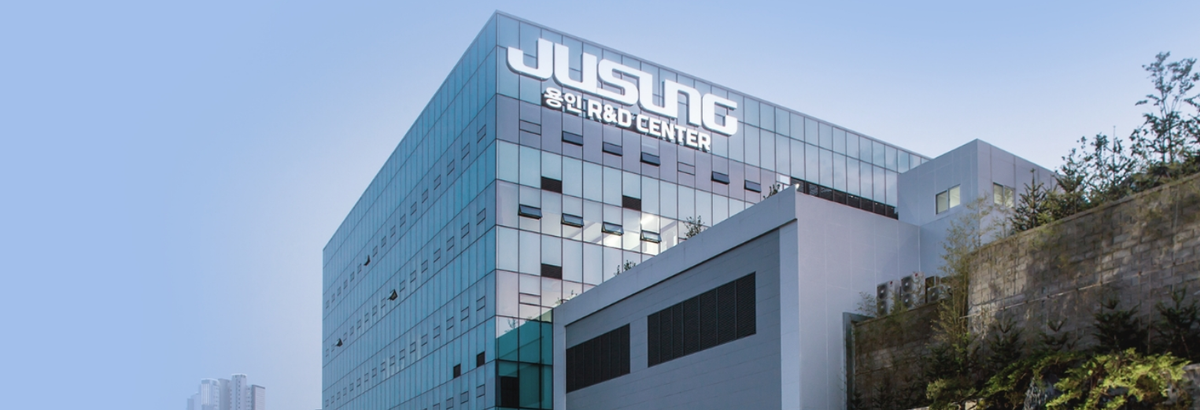
Jusung Engineering, founded in 1993 and listed on South Korea's KOSDAQ exchange, specialises in semiconductor and display manufacturing equipment. The company is best known for its atomic layer deposition (ALD) equipment — a technology that deposits ultra-thin films with atomic-level precision — and counts Samsung Electronics and SK Hynix, the country's dominant memory chipmakers, among its principal customers. The firm has long been controlled by its founder, Hwang Chul-joo, who serves as both chairman and chief executive.
Jusung came to prominence in Korea's corporate-governance debate — colloquially known as the "value-up" movement — following a sweeping shareholder-return announcement in early 2026. For a small-to-mid-sized equipment maker listed on KOSDAQ, a single shareholder-return package exceeding 40 billion won was considered extraordinary. Subsequent inclusion in the Korea Exchange's Korea Value-Up Index only amplified the attention. Investors are now watching closely to see whether the company can sustain its commitment to shareholder value amid the inherent volatility of semiconductor industry cycles and rapid technological change.
Business Foundations and Financial Performance
*Core business: ALD equipment at the heart of semiconductor manufacturing*
The bulk of Jusung's revenues derives from thin-film deposition equipment for semiconductors, with ALD tools at the centre. As DRAM and NAND flash memory chips shrink to ever-smaller geometries, ALD — which can lay down films just atoms thick with exceptional uniformity — has become an indispensable process step. The global ALD equipment market is forecast to grow at an annual rate of 8.3%, and Jusung, as a leading domestic supplier, is well placed to benefit.
The company also generates revenue from display equipment, though the centre of gravity has steadily shifted towards semiconductors. A key structural vulnerability is customer concentration: revenue is closely tied to the capital-expenditure cycles of Samsung Electronics and SK Hynix, meaning Jusung's results can swing sharply when either company tightens its investment budget.
*Financial performance by year*
Year | Operating Profit | Revenue | Key Developments
2021 | Return to profit | Growing | Entered semiconductor boom
2022 | Margins improved | Increased | Expanded DRAM miniaturisation orders
2023 | Weaker | Slightly lower | Customers cut capex
2024 | Recovery | Rebounding | Responding to HBM and next-generation memory demand
2025 | Continued improvement | Growth resumed | ALD order intake expanded
*Note: Some figures are market estimates. Precise data should be verified via the Financial Supervisory Service's DART disclosure system.*
The company's earnings are structurally exposed to semiconductor industry cycles. Having weathered a downturn in 2023, Jusung saw orders and profits recover in tandem during 2024 and 2025.
Value-Up Milestones
*February 2026 — A 43.3 billion won shareholder-return package*
On 10th February 2026, Jusung announced plans to cancel treasury shares worth approximately 40.9 billion won and to pay a cash dividend alongside it, bringing the total shareholder-return package to roughly 43.3 billion won. The cancellation represented approximately 50% of the company's treasury share holdings — an unusually large single-event commitment for a KOSDAQ-listed equipment maker. Share cancellations reduce the share count, boosting the value of each remaining share, and were widely welcomed as a tangible benefit to minority shareholders.
The simultaneous cash dividend was equally notable. Taken together, the two measures signalled an intention to improve dividend yields and broaden the company's appeal to long-term investors. The company is reported to have described the decision as an act of "appreciation towards shareholders and employees alike."
*March 2026 — Shareholder meeting formalises the commitment*
At Jusung's annual general meeting in March 2026, shareholders formally approved both the share cancellation and an employee compensation plan. Chairman Hwang Chul-joo is reported to have emphasised his commitment to "management that rewards both shareholders and employees." The meeting was interpreted not as the conclusion of a one-off exercise but as the institutionalisation of a sustained shareholder-return policy, with market participants beginning to speculate about higher dividend pay-out ratios and further share cancellations in future years.
*March–April 2026 — Three tailwinds converge*
By April 2026, brokerage research reports were beginning to upgrade their assessments of Jusung. Analysts highlighted the convergence of three favourable factors: the 8.3% annual growth forecast for the global ALD equipment market; a strengthening order book from semiconductor customers; and the reinforced shareholder-return policy. The period is seen as the point at which Jusung's technical credentials and its shareholder-value efforts began to be recognised simultaneously, with many analysts pencilling in a re-rating in the second half of the year.
*May–June 2026 — Inclusion in the Korea Value-Up Index*
On 28th May 2026, the Korea Exchange reconstituted its Korea Value-Up Index — a benchmark designed to track companies with credible corporate-governance improvement plans — confirming that it would prioritise firms that had made and acted on public value-up disclosures, rather than simply selecting stocks on the basis of low price-to-book ratios. Jusung met the criteria and was added to the index.
The market's reaction was immediate. On 4th June 2026, the day after the inclusion took effect, Jusung's shares surged 27.48% in a single session, placing it among the strongest performers in the value-up theme. Other semiconductor equipment makers rose sharply on the same day, with PSK gaining 27.37%. However, within days Jusung had also appeared on the list of most-shorted stocks on KOSDAQ, suggesting that some investors were using the spike as an opportunity to take profits or bet on a reversal.
Challenges and Assessment
*Structural challenges ahead*
For Jusung to build on its value-up record, analysts identify three principal hurdles.
First, the sustainability of shareholder returns. A single large share cancellation will not, by itself, secure market confidence. What is needed is a predictable, institutionalised framework — including explicit medium-term dividend pay-out targets and the possible introduction of quarterly or interim dividends.
Second, managing the semiconductor cycle. Because earnings are so heavily linked to the capex plans of a handful of chipmakers, there is a real risk that a future industry downturn leaves the company without the resources to maintain its shareholder-return programme. Diversifying the customer base and expanding overseas revenues are cited as essential long-term priorities.
Third, governance transparency. With a single founder-chairman dominating decision-making, questions persist about whether the board of directors exercises genuine independence and oversight. Analysts call for more robust disclosure of ESG metrics and a more meaningful role for independent directors.
*Overall assessment*
Jusung's shareholder-return actions in early 2026 were, by the standards of KOSDAQ-listed semiconductor equipment companies, genuinely unprecedented. The twin-track approach — combining share cancellations to enhance per-share value with cash dividends to improve income appeal — is better read as an attempt to build a durable long-term investor base than as a short-term share-price manoeuvre. Inclusion in the Korea Value-Up Index represents external validation of that effort.
Even so, the prevailing view in the market is that one high-profile event cannot, on its own, establish whether this is the start of a structural transformation or an opportunistic gesture. The answer will become clear only over the next two to three years, as investors observe whether the company follows through.
Controversies and Limitations
*Founder-led governance and transparency concerns*
Jusung has been run by its founder for decades, and doubts about the board's genuine independence have never fully dissipated. Critics point out that, in a company structured around a single controlling shareholder, it is difficult to determine whether a shareholder-return decision truly prioritises outside investors' interests or serves instead as a tool for defending control or enhancing the value of the founder's own stake.
A detailed analytical report published in June 2026 highlighted that Jusung faces simultaneous financial and operational risks during a period of both technological transition and governance change. Among the variables singled out as most likely to shape long-term competitiveness were the adequacy of R&D investment and the risk of talent attrition, as the pace of semiconductor process change accelerates.
*The one-off event question and short-selling pressure*
The 27%-plus single-day surge following index inclusion can plausibly be attributed to a technical, theme-driven flow of funds rather than to any reassessment of the company's underlying worth. The rapid appearance of Jusung on KOSDAQ's most-shorted list within days of that surge suggests that a portion of the market shares this sceptical reading.
*Structural limitations: customer concentration and earnings volatility*
The heavy dependence on Samsung Electronics and SK Hynix for the bulk of revenues is a structural weakness that analysts have flagged repeatedly. Every downturn in the semiconductor investment cycle risks a sharp contraction in earnings, which in turn threatens the financial headroom needed to sustain the shareholder-return programme. Ultimately, the durability of the value-up policy rests on how quickly Jusung can diversify its business and win customers beyond its current domestic base.
Key Metrics Summary
Year | Treasury Share Cancellation | Cash Dividend | Total Shareholder Return | Operating Profit (est.) | P/B Ratio (est.)
2023 | None | Modest | — | Weaker (cycle downturn) | ~1x
2024 | None | Some | — | Recovery | 1–1.5x (est.)
2025 | In preparation | Maintained | — | Improving | ~1.5x (est.)
2026 | ~40.9bn won (~50% of holdings) | Concurrent | ~43.3bn won | Continued improvement | Under re-evaluation post index inclusion
*Note: P/B ratios and operating profit figures are based on publicly available news and market estimates. Precise figures should be confirmed via DART filings and quarterly reports. 2026 figures are based on the February 2026 disclosure.*
Share price move on Value-Up Index inclusion date (4th June 2026): +27.48% Total shareholder return in 2026: approximately 43.3 billion won (40.9 billion won in share cancellations + cash dividend)