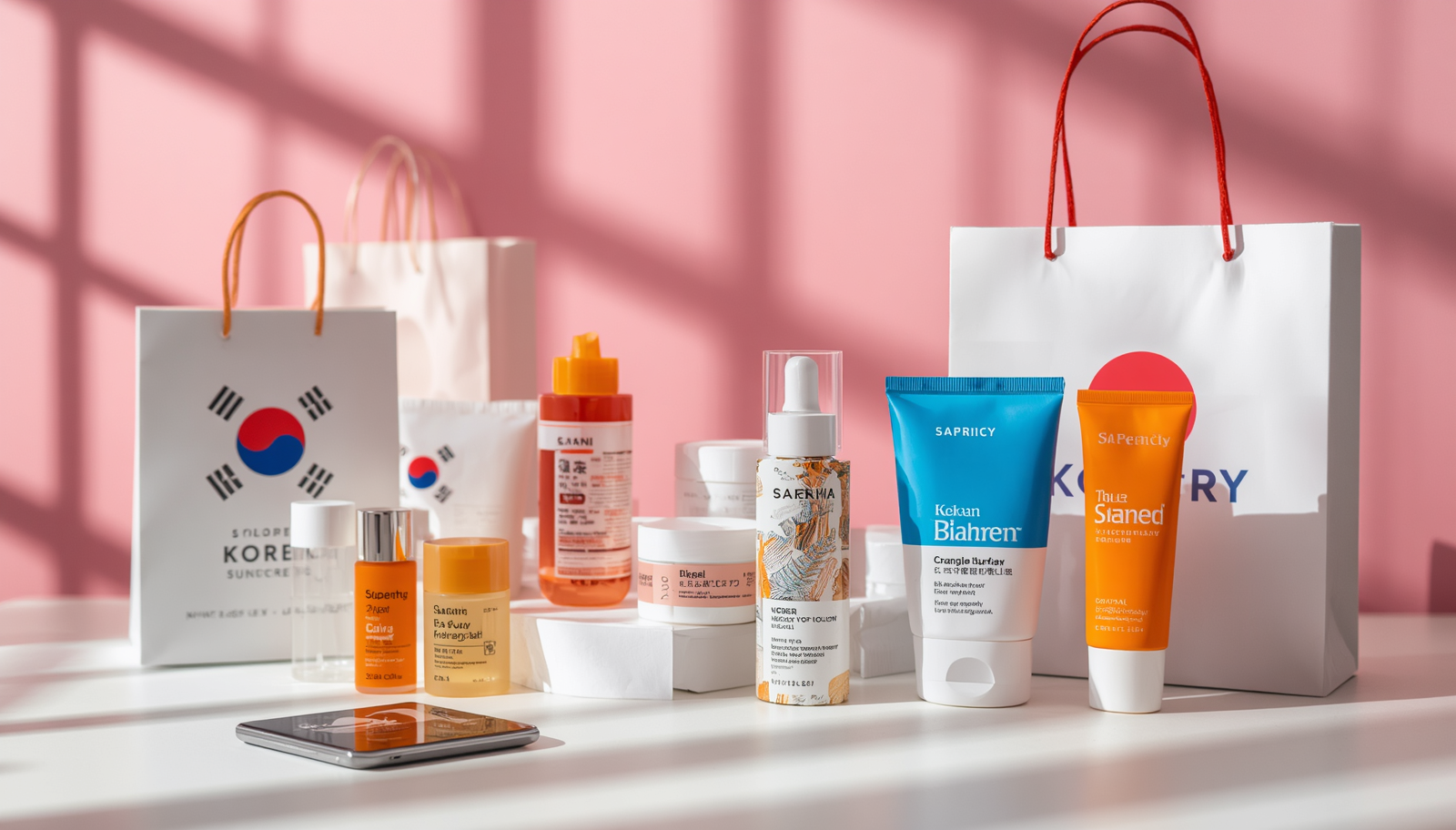
In the first half of 2026, South Korean cosmetics exports reached a record high, growing at a double-digit rate compared with the same period a year earlier, according to data from the Korea Customs Service and the Ministry of Food and Drug Safety. The more striking development, however, was a seismic shift in geography: the United States has overtaken China as the single largest destination for Korean beauty products. Exports to America surged by more than 30% year on year, while shipments to China continued a multi-year trend of stagnation or decline. What was once the industry's most glaring structural vulnerability—an overwhelming dependence on a single market—is now measurably in retreat.
The long unwind from China
At its peak, China accounted for more than half of all South Korean cosmetics exports. A cascade of shocks then eroded that dominance. The diplomatic fallout in 2016 over the deployment of the American THAAD missile-defence system in South Korea prompted Beijing to impose informal cultural and commercial restrictions, severely damaging Korean brands' access to Chinese consumers. The Covid-19 pandemic compounded the damage, and the subsequent rise of homegrown Chinese beauty brands—a phenomenon driven by a surge of nationalist consumer sentiment known as *guochao*, or "national wave"—dealt a further blow. According to the Korea Cosmetic Industry Institute, China's share of Korean cosmetics exports fell steadily after 2020, dropping to the low twenties as a percentage of the total by 2025.
The pain forced a reckoning. Established conglomerates such as Amorepacific and LG H&H (formerly LG Household & Health Care) suffered years of disappointing results and elevated market diversification to a strategic priority. Meanwhile, a new generation of small and mid-sized independent brands—COSRX, Skin1004, and Beauty of Joseon among the most prominent—bypassed traditional distribution entirely and went straight to American consumers via Amazon and TikTok Shop. Their success created a blueprint that the broader industry quickly followed.
TikTok, Amazon, and the new path to market
The engine of growth in America has been the fusion of social media and e-commerce. Skincare routines have become a high-engagement content genre on TikTok, racking up hundreds of millions of views, with Korean sunscreens, serums, and exfoliating pads recurring as viral hits. According to the market research firm Euromonitor, American consumer awareness of Korean beauty products has risen by double-digit percentage points every year since 2023.
On Amazon, K-beauty products have become fixtures in the upper ranks of the beauty bestseller lists. Sephora and Ulta, the two dominant bricks-and-mortar beauty retailers, have expanded dedicated K-beauty sections in their stores. Industry observers now describe Korean cosmetics as a pillar of the American mainstream beauty market rather than an Asian niche import.
Why American consumers are won over
Cultural groundwork laid over the previous decade has helped. The global spread of K-pop and Korean television drama in the 2010s generated broad goodwill towards Korean culture, which translated naturally into aspiration for the luminous, poreless complexion—colloquially dubbed "glass skin"—associated with Korean beauty regimens. Crucially, K-beauty's ingredient-led marketing vernacular—centred on actives, formulations, and dermatological credentials—resonated strongly with American millennial and Gen Z consumers who research purchases carefully.
The results are tangible. COSRX's Advanced Snail 96 Mucin Power Essence has accumulated hundreds of thousands of reviews on Amazon and established itself as a global bestseller. Beauty of Joseon's sunscreen has spread by word of mouth among American dermatologists, earning it a place on professional recommendation lists. K-beauty, in short, is building a loyal customer base grounded in trust rather than passing trend.
Indie brands drive a structural shift in the industry
A second notable feature of the current export boom is that independent brands are outpacing the large conglomerates in driving growth. Analysis by the Korea Health Industry Development Institute shows the number of cosmetics-exporting companies rising annually, with a pronounced "long tail" pattern emerging: smaller firms with annual export revenues below $1m are collectively accounting for a significant share of overall export growth.
This signals a broader transformation of the Korean beauty industry's structure—from a duopoly dominated by Amorepacific and LG H&H towards a more diverse ecosystem of specialised brands. The country's leading contract manufacturers, Cosmax and Kolmar Korea, are also reporting rising global orders, confirming that the benefits of the boom extend across the supply chain.
Risks: tariffs and the threat of saturation
The outlook is not without hazard. The Trump administration's aggressive tariff agenda represents a material risk; any additional duties on imported cosmetics would erode price competitiveness. Some analysts warn that a portion of the current export surge may reflect American importers building inventories ahead of potential tariff increases—which would imply a correction in the second half of the year.
The competitive response of global cosmetics giants is a second concern. L'Oréal, Estée Lauder, and their peers are already strengthening ingredient-focused and minimalist skincare lines that directly target the consumers K-beauty has cultivated. If Korean brands cannot sustain their differentiation, there is a risk that the category's current momentum fades as a transient fashion rather than enduring as a structural shift.
A formula others cannot easily replicate
Viewed against comparable cases, K-beauty's competitive position appears durable. Japanese cosmetics command high trust for quality but have been slow to adapt to digital marketing. European luxury beauty remains constrained by price in the mass market. K-beauty has succeeded by combining accessible pricing, clinically credible formulations, and potent social-media virality—a combination calibrated precisely for America's middle-market consumer. The result is that "K-beauty" now functions as a trusted category brand in its own right, conferring credibility on individual products independently of their specific labels.
Outlook: structural growth despite near-term uncertainty
Most analysts expect the structural uptrend in American demand for Korean cosmetics to persist despite near-term volatility. The Korea Cosmetic Industry Institute believes annual cosmetics exports could exceed $10bn for the first time in 2026. Demand is also rising simultaneously across South-East Asia, the Middle East, and Europe, meaning a second round of geographic diversification—this time away from excessive reliance on the United States—is already under way.
The K-beauty industry's success in overcoming its structural dependence on China carries a broader lesson for South Korea's export economy. The organic combination of digitally native brand strategy, community-driven marketing, and a flexible contract-manufacturing base has produced a durable growth formula. It is quietly adding a new pillar to a Korean export portfolio long defined almost exclusively by semiconductors and automobiles.