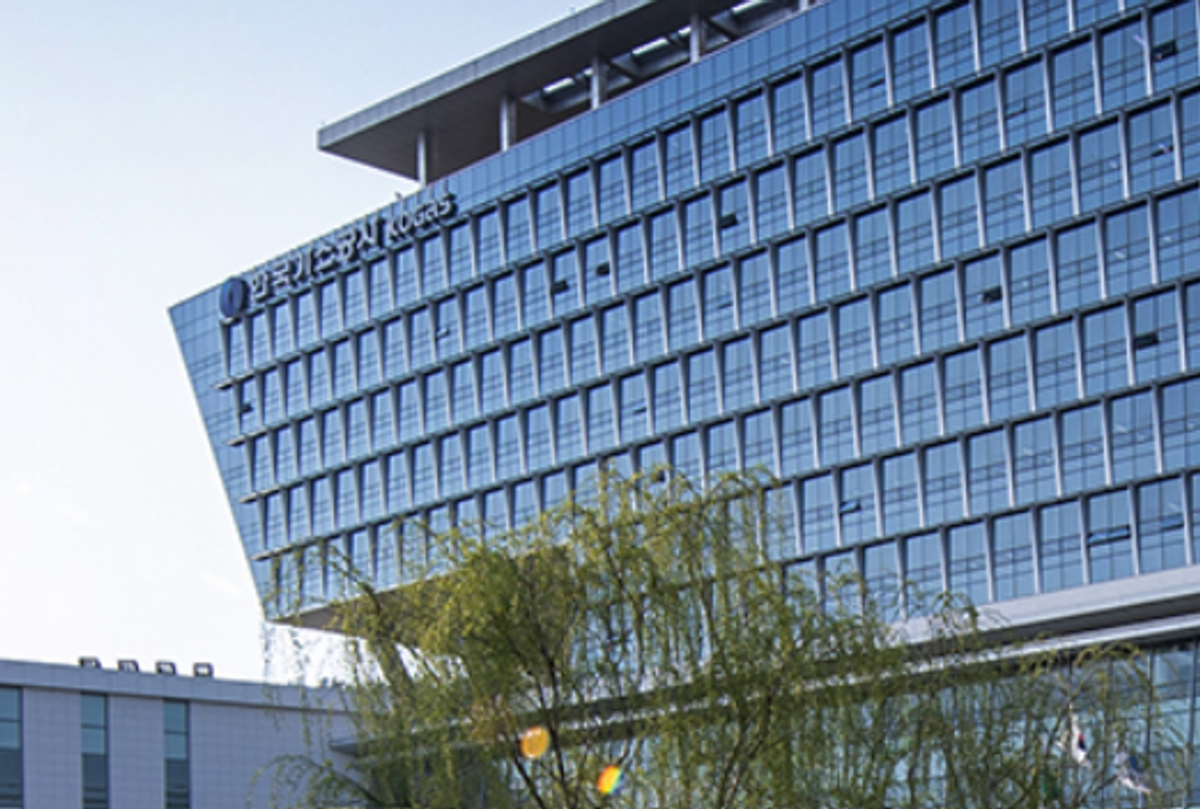
Company Overview
Korea Gas Corporation (KOGAS) is the country's dominant state-owned energy enterprise, holding a statutory monopoly over the import, storage and distribution of natural gas. Founded in 1983, it has built the backbone of South Korea's gas supply infrastructure over four decades. The government, through the Ministry of Trade, Industry and Energy, is the controlling shareholder; the company is also listed on the KOSPI, South Korea's main stock exchange, allowing participation by ordinary investors.
Since 2024, when Seoul launched its "Value-Up" programme — a government-led initiative to close the persistent valuation gap between Korean equities and global peers, often called the "Korea Discount" — KOGAS has emerged as one of the most closely watched, and most contentious, public-sector cases. Investor attention has focused on the prospects for debt reduction, overseas asset monetisation and the resumption of dividends. Yet the debate over KOGAS is fundamentally different from that surrounding private-sector Value-Up candidates. Three structural burdens — below-cost tariffs, a mountain of accumulated receivables owed by the state, and a dangerously high debt ratio — have chronically suppressed shareholder value, and none is fully within management's power to fix.
Business Model and Financial Performance
*How the business works*
KOGAS's revenues are based on a cost-plus tariff formula: the price of imported LNG plus a supply margin. In practice, however, governments have repeatedly capped end-user gas prices below cost for political reasons, particularly to suppress inflation. The resulting losses are not written off; instead, they accumulate on the balance sheet as "unrealised receivables" — in effect, a deferred claim on the government that artificially inflates the company's reported debt.
On the international side, KOGAS has diversified through stakes in major upstream projects, including the Gladstone LNG facility in Australia and the Rovuma gas block in Mozambique. Some of these investments, however, generated impairment charges during periods of low energy prices.
*Financial track record*
Year | Operating profit (KRW bn) | Net profit | Debt-to-equity ratio (%) | Dividend per share (KRW)
2020 | c.800 | c.300 | c.450 | c.1,000
2021 | c.500 | c.200 | c.500 | c.500
2022 | Deep loss (>KRW 1trn) | Large loss | >600 | 0 (suspended)
2023 | c.1,500 | Return to profit | c.500 | Nominal (under review)
2024 | Recovering | Profitable | c.430 | Limited
2025 | Improving | Profitable | 397 | Resumption under discussion
The crisis year was 2022. Russia's invasion of Ukraine sent global LNG prices to record highs, but the government froze domestic gas tariffs in the name of price stability. The gap between KOGAS's procurement costs and the prices it was allowed to charge produced the largest accumulation of unrealised receivables in the company's history, pushing its debt ratio above 600% and triggering what amounted to a financial emergency.
Value-Up Timeline: Key Developments
*October 2024 — The fundamental contradiction exposed*
As the government extended its Value-Up programme to state-owned enterprises, KOGAS became the test case for an uncomfortable question: how can a company that is structurally prevented from charging cost-covering prices credibly commit to improving shareholder returns? Industry analysts and investors coalesced around a common verdict: tariff normalisation is a precondition for any meaningful Value-Up, and without it, promises of higher dividends are empty.
*November 2025 — Asset sale signals a turning tide*
A consortium led by IMM, a South Korean private equity firm, completed the sale of Hyundai LNG Shipping for approximately KRW 3.8 trillion. Though not a direct KOGAS transaction, the deal was read as evidence that LNG-related assets were recovering market value, lending credibility to KOGAS's own plans to monetise overseas holdings.
*April 2026 — Financial restructuring formally signalled*
A significant regulatory disclosure by KOGAS in late April 2026 refocused market attention on the company's dividend policy and balance-sheet repair. The company used the occasion to formally articulate a commitment to financial restructuring, though details awaited confirmation.
*May 2026 — Government self-congratulation meets stock market scepticism*
As the government publicly praised the progress of its Value-Up programme, the share prices of KOGAS and other major state-owned enterprises continued to underperform expectations. Scepticism about the real-world effectiveness of Value-Up for public companies hardened: without tariff normalisation and receivables resolution, analysts argued, a re-rating of the stock was structurally blocked.
*June 2026 — Debt ratio reaches 397%; overseas asset recovery plan announced*
KOGAS announced that it had reduced its debt-to-equity ratio to 397%, a substantial improvement from the peak of over 600% in 2022–23. Alongside this, the company unveiled a medium-term plan to recover KRW 5 trillion from its overseas investments by 2030 through asset disposals and stake sales, with the proceeds earmarked for debt repayment and shareholder returns.
*June 2026 — A three-pillar strategy: energy security, profitability, shareholder value*
KOGAS formally presented a strategic framework balancing energy security obligations, commercial profitability and shareholder value enhancement. The plan included increased R&D spending, a sharper focus on profitable overseas operations and a review of dividend policy.
*June 2026 — The dividend debate*
A public dispute broke out over the company's dividend stance. Critics accused KOGAS of being excessively cautious; management and a number of outside analysts countered that pushing aggressive dividend payouts ahead of tariff normalisation would compromise financial stability. The episode crystallised the central dilemma of Value-Up at Korean state enterprises.
*June 2026 — The R&D problem*
Alongside reports of approximately KRW 600 billion in asset write-downs, it emerged that KOGAS spends just 0.07% of revenues on research and development. The figure prompted sharp criticism that financial pressure was starving the company of the investment needed to remain competitive in an era of energy transition — a vicious cycle in which short-term balance-sheet stress erodes long-term strategic capacity.
Challenges and Prospects
*What needs to happen*
Tariff normalisation is the single most important prerequisite. Each time governments delay price increases for political reasons, unrealised receivables re-accumulate and the debt ratio rebounds. Analysts are near-unanimous that no dividend policy can be credible or sustainable until the tariff structure is overhauled.
Overseas asset recovery must be executed as well as announced. The KRW 5 trillion target for 2030 is ambitious; global energy price volatility, political risk in host countries and the contractual structures of individual projects all introduce uncertainty. Markets will be watching the pace of actual disposals closely.
R&D investment needs to rise sharply. At 0.07% of revenues, KOGAS is investing almost nothing in future competitiveness. As financial conditions improve, channelling resources into energy-transition technologies is both a strategic and a reputational imperative.
Dividend clarity would help rebuild investor confidence. Minority shareholders have little visibility into future payouts because the controlling government shareholder ultimately determines dividend policy. A transparent roadmap linking dividend levels to specific milestones in tariff normalisation would materially improve predictability.
*Overall assessment*
KOGAS's Value-Up journey is unlike that of any private-sector company. Management cannot set the price at which the company sells its core product. That structural constraint is both the source of the problem and the limit on how far management-led initiatives can go.
Within those limits, the progress of recent years is genuine. Reducing the debt ratio from above 600% to 397%, articulating a concrete overseas asset-recovery plan and returning to profitability are meaningful achievements. The market does not dismiss the company's potential: at a price-to-book ratio of 0.2–0.3 times, KOGAS stock is deeply discounted relative to its asset base. Analysts suggest that if tariff normalisation proceeds sufficiently and the receivables backlog is resolved, a substantial re-rating is plausible.
The overriding lesson, however, is that Value-Up at KOGAS is ultimately a matter of government policy as much as corporate strategy. Until the tariff structure is fixed, the company will remain a hostage to decisions made in cabinet rather than in the boardroom.
Key Metrics Summary
Year | Operating profit (KRW bn) | Debt-to-equity (%) | Dividend per share (KRW) | Share buybacks | PBR (x)
2020 | c.800 | c.450 | c.1,000 | None | c.0.3
2021 | c.500 | c.500 | c.500 | None | 0.2–0.3
2022 | Deep loss | >600 | 0 (suspended) | None | <0.2
2023 | c.1,500 | c.500 | Nominal (under review) | None | 0.2–0.3
2024 | Recovering | c.430 | Limited | None | 0.2–0.3
2025 | Improving | 397 | Resumption under discussion | None | 0.2–0.3
2026 (H1) | Continuing improvement | c.397 | Under review | None | TBC
*Note: Some figures are market estimates rather than formally audited results. KOGAS has conducted no share buybacks or cancellations of material scale; dividends are the company's sole shareholder-return mechanism. The 397% debt-to-equity figure is based on the company's own official announcement in June 2026.*