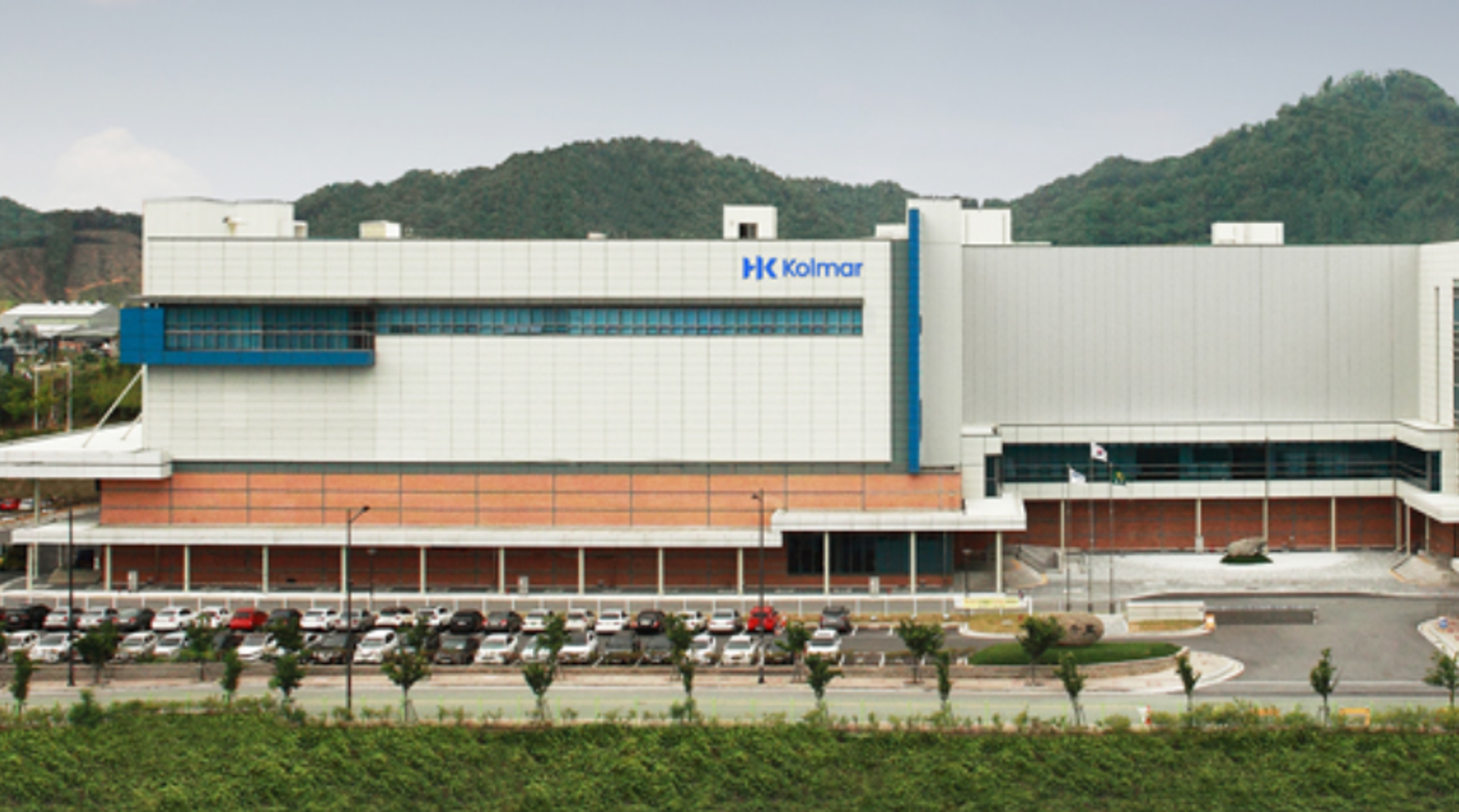
Company Overview
Korea Kolmar, founded in 1990, is South Korea's largest original design manufacturer (ODM) of cosmetics and pharmaceuticals — a business model in which the company develops and produces products to clients' specifications without selling under its own brand. It is the flagship operating subsidiary of Kolmar Group, a conglomerate headed by Kolmar Holdings, and counts domestic and international cosmetics brands among its principal customers. The company has been a prominent beneficiary of the global K-beauty wave and is listed on the KOSPI, South Korea's main stock exchange, where it has long ranked among the leading ODM firms by market capitalisation. Yet for years, a persistently low price-to-book ratio (PBR) and a timid shareholder-return policy drew criticism from investors.
The starting point for Korea Kolmar's "value-up" journey lies in the South Korean government's 2024 drive to eliminate the so-called Korea Discount — the chronic undervaluation of Korean equities relative to global peers. As financial regulators rolled out a formal value-up programme urging listed companies to improve capital efficiency and strengthen shareholder returns, Kolmar Group began publicly presenting a shareholder-return roadmap anchored by its two listed entities: Kolmar Holdings and Korea Kolmar. Complicating matters, a bitter succession dispute within the founding family thrust governance concerns into the spotlight, ensuring that Korea Kolmar's value-up journey would need to address not only operational improvement but also the thornier challenge of corporate transparency.
Business Foundation and Financial Performance
*The ODM model's strengths*
Korea Kolmar operates purely as an ODM, developing and manufacturing formulations, ingredients, and packaging to customer order. It holds a broad portfolio spanning skincare, sun-care, colour cosmetics, and pharmaceuticals. The proliferation of indie beauty brands in South Korea, the diversification of the domestic market, and the global spread of K-beauty have all driven sustained demand for ODM services. The company has also been expanding in North America through subsidiaries in the United States and Canada.
*Financial performance (approximate)*
Year | Revenue (bn KRW) | Operating profit (bn KRW) | Operating margin (%) | Dividend per share (KRW)
2020 | ~1,620 | ~70 | ~4.3 | 400
2021 | ~1,750 | ~90 | ~5.1 | 500
2022 | ~2,000 | ~110 | ~5.5 | 600
2023 | ~2,200 | ~140 | ~6.4 | 700
2024 | ~2,400 | ~170 | ~7.1 | 800
*Note: Figures are approximations based on publicly available news reports and industry estimates; some may differ from audited results.*
Both revenue and profitability have shown a steady upward trend over the five-year period, with operating margins expanding from around 4% to over 7%. The direction of travel is encouraging, even if the absolute level of returns remains modest.
*K-beauty tailwinds and North American growth*
From 2023 onwards, a surge in demand for K-beauty products, particularly in North America, improved the performance of Korea Kolmar's overseas operations. Its American subsidiary expanded its order book in sun-care products — a category that has become a calling card of Korean skincare — providing a meaningful boost to consolidated revenue growth. At home, the company has pursued a deliberate strategy of diversifying its client base across indie brands, reducing dependence on any single customer.
Value-Up Milestones
*August 2024 — Group-wide value-up disclosure*
In August 2024, Kolmar Group filed a formal value-up disclosure, committing both Korea Kolmar and Kolmar Holdings to strengthened shareholder returns. The group framed the initiative not merely as a dividend increase but as a catalyst for broader corporate growth. Three pillars were identified: improving PBR, enhancing capital efficiency, and deepening shareholder communication. The proactive disclosure, which anticipated rather than merely reacted to regulatory pressure, attracted positive attention from the market.
*August 2025 — Kolmar Holdings introduces interim dividend*
In August 2025, Kolmar Holdings paid its first interim (half-year) dividend, demonstrating concrete progress on its shareholder-return roadmap. The move — a departure from the group's previous practice of a single annual dividend — was interpreted as a commitment to providing shareholders with more predictable cash flows. Investors read it as a signal that the group intended to raise the overall quality of its shareholder-return policy, with Korea Kolmar and Kolmar Holdings acting in concert.
*February 2026 — Tax-exempt dividends introduced at both listed entities*
In February 2026, Kolmar Group enhanced shareholder returns at both Kolmar Holdings and Korea Kolmar by paying dividends from capital surplus rather than retained earnings. Under South Korean tax law, such distributions are received by shareholders free of dividend income tax, meaningfully increasing the after-tax value of the payout. The market regarded this as a qualitative improvement — not merely a larger cheque, but a more shareholder-friendly method of distribution.
*March 2026 — AGM reforms: electronic voting and board overhaul*
At its annual general meeting in March 2026, Kolmar Holdings confirmed its dividend, formally adopted an electronic AGM system, and restructured its board. Electronic general meetings lower the barriers to participation for retail shareholders, allowing them to vote remotely — a practical step towards better governance. Simultaneously, the board was reconstituted with greater emphasis on director independence. These measures generated a broadly positive response from external shareholders.
*April 2026 — Stepped-up investor relations*
In April 2026, Korea Kolmar significantly increased its investor-relations activity, participating actively in roadshows and briefings. The group used these sessions to report on value-up progress, outline capital-allocation plans, and communicate its business strategy — an effort aimed in particular at rebuilding confidence among institutional and foreign investors.
*May 2026 — Continued market communication*
Through late May 2026, Korea Kolmar maintained its disclosure cadence, continuing to appear alongside major listed companies — including LG — as one of the more active communicators in the Korean corporate disclosure calendar.
Challenges and Assessment
*Three unresolved challenges*
For Korea Kolmar to consolidate the gains from its value-up programme, three obstacles demand attention.
The first is resolving the succession dispute. Widely reported in January 2026 under the colourful Korean shorthand "father-son revolt" (부자의 난), the conflict within the founding Yoon family has cast a shadow over the entire group's governance. Commentary from corporate governance monitors described the position of Yoon Sang-hyun, the group's incumbent leader, as precarious. Without leadership stability, even the most carefully crafted shareholder-return roadmap risks losing credibility.
The second is a clearer policy on treasury shares. Progress on dividends has been real, but the company has yet to articulate a convincing plan for cancelling treasury shares — a mechanism that, by reducing the share count, can permanently enhance value for remaining shareholders. Until that gap is filled, the completeness of the shareholder-return programme remains open to question.
The third is sustaining return-on-equity (ROE) improvement as a foundation for PBR re-rating. Higher book-value multiples follow, ultimately, from higher returns on capital. That requires defending margins in a domestic ODM market that is becoming more competitive, while simultaneously stabilising the profitability of the North American operations.
*Market assessment*
The market's verdict on Korea Kolmar's value-up effort is broadly positive but firmly provisional. The tangible steps taken — tax-exempt dividends, interim dividends, electronic voting, board reform — demonstrate genuine intent. Yet the family governance risk lingers, and many analysts argue that it prevents the value-up progress from being fully priced into the shares. Side ventures, such as a memorandum of understanding with AULabs on gold nanoparticle-based cosmetics, offer a glimpse of longer-term growth ambitions, though they remain early-stage.
Controversies and Structural Constraints
*The family dispute and governance discount*
The "father-son revolt" that surfaced in January 2026 was, for a time, a bigger talking point than any earnings release or dividend announcement. Governance watchdogs warned that the group's value-up efforts risked becoming a facade without genuine resolution of the succession question. Unresolved ownership conflict gives institutional and foreign investors a reason to exit, and no amount of incremental governance reform fully compensates for uncertainty at the very top of a controlling shareholder structure.
*Doubts about the substance of shareholder returns*
Even setting aside the governance dispute, some investors question whether Korea Kolmar's overall payout ratio is high enough relative to industry peers to justify re-rating. Critics suggest that the value-up disclosure was, in part, a compliance exercise driven by government expectations rather than a fundamental change in capital-allocation philosophy. The absence of a treasury-share cancellation plan reinforces this scepticism.
*Structural vulnerabilities of the ODM model*
Korea Kolmar's business model carries inherent concentration risk: a stumble by a major client brand feeds directly into its order book. The longer-term threat from Chinese ODM manufacturers, whose cost competitiveness continues to improve, adds to margin pressure. These structural features act as a persistent drag on the valuation multiple, regardless of the company's own governance improvements.
*Misalignment between holdco and opco shareholders*
A more subtle structural issue concerns the relationship between Kolmar Holdings and Korea Kolmar as separately listed entities. Since the holding company's dividend capacity depends on income flowing up from Korea Kolmar, any deterioration in the operating subsidiary's results directly impairs the parent's ability to pay. The extent to which minority shareholders at each level are treated equitably in this arrangement warrants ongoing scrutiny.
Key Metrics Summary
Year | DPS (KRW, approx.) | Dividend structure | Operating profit (bn KRW, est.) | PBR (×, est.) | Key value-up measures
2022 | ~600 | Annual | ~110 | ~1.0 | —
2023 | ~700 | Annual | ~140 | ~1.1 | —
2024 | ~800 | Annual | ~170 | ~1.2 | Value-up disclosure
2025 | Increasing (est.) | Interim dividend introduced | Under review | Under review | Interim dividend; roadmap acceleration
2026 | Increasing (est.) | Interim + annual | Under review | Under review | Tax-exempt dividend; e-AGM; board reform
*Note: 2025–2026 figures are estimates based on publicly reported information and have not been reconciled with audited financial statements. PBR fluctuates with market conditions.*