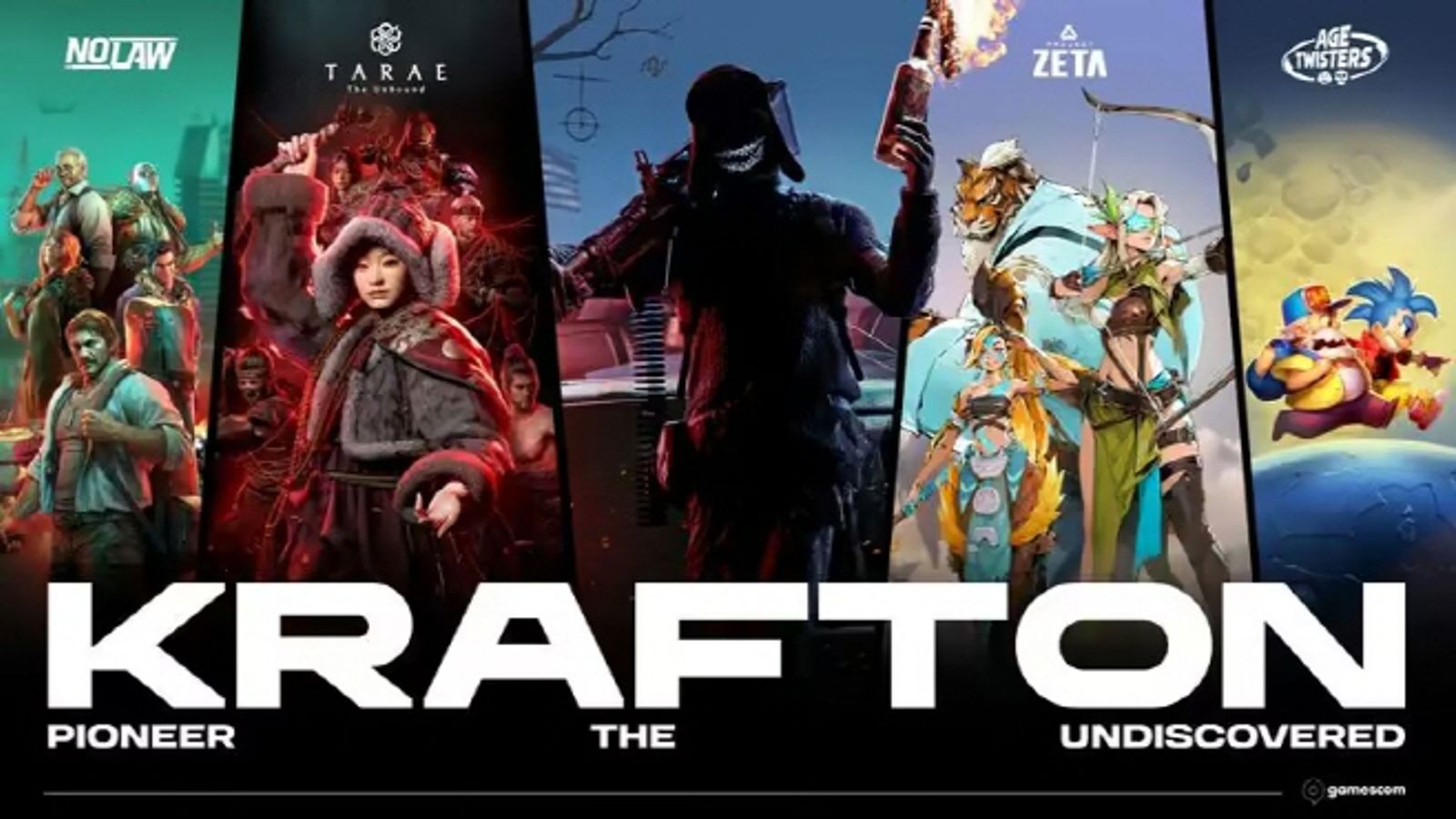
When Gamescom opens in Cologne this August, it will do so at a record scale. The annual trade show, which draws more than 500,000 visitors and over 3,000 companies from some 110 countries, is the world's largest combined consumer-and-business gaming exhibition. Its organiser, Koelnmesse, has signalled that the 2026 edition will surpass all predecessors in floor space and participating companies alike — a reflection of the full post-pandemic rebound in live events, and of heightened industry excitement around a new wave of titles incorporating generative artificial intelligence.
Into this arena step two South Korean developers with a great deal to prove: Krafton and NCSoft.
Krafton: beyond PUBG
Krafton built its global reputation on a single franchise — Battlegrounds (known internationally as PUBG), the battle-royale shooter that helped define a genre. In recent years, the company has extended that success into India through BGMI (Battlegrounds Mobile India), capitalising on one of the world's fastest-growing gaming markets. Now it is using that momentum as a springboard into Europe and North America.
Krafton's annual revenue for 2025 is estimated to have exceeded 2.5 trillion won (roughly $1.9bn), with overseas sales accounting for more than 70% of the total. Yet beyond PUBG, the company's intellectual property remains largely unknown to Western PC and console audiences. The new title it plans to showcase at Gamescom represents its most serious attempt yet to change that. The critical question is not merely whether the game is polished, but whether its design instincts speak to Western players rather than to the South Korean market that shaped them.
NCSoft: escaping the Lineage trap
NCSoft faces a more urgent reckoning. The company remains structurally dependent on its Lineage franchise — a series of massively multiplayer online role-playing games (MMORPGs) dominant in South Korea and parts of Asia — which still accounts for more than 60% of total revenue. Its attempt to enter Western markets through Throne and Liberty (TL), launched globally in 2024, drew a muted response from critics and players.
The new title NCSoft intends to present at Gamescom is reported to depart from the conventions of the MMORPG genre that the company has long relied upon. Internally, there is a growing recognition that without a clean break from what insiders call the "Lineage grammar" — deep grind mechanics, aggressive monetisation ladders, and a visual language that resonates more strongly in East Asia — meaningful Western penetration will remain structurally limited. Whether this new game represents that break is the defining question surrounding NCSoft's participation.
A structural problem for the K-games industry
The difficulties faced by Krafton and NCSoft are not unique; they reflect a persistent tension within South Korea's games industry between domestic optimisation and global applicability. Business models honed for South Korean players — including monetisation structures built around high-frequency microtransactions — have repeatedly proven alienating to Western audiences. Nexon's Dungeon & Fighter found enormous success in China while struggling in North America; Netmarble poured substantial capital into global publishing without establishing a single recognisable Western franchise.
The scale of the opportunity only sharpens the frustration. According to Newzoo, a games market research firm, the combined North American and European market was worth approximately $110bn in 2025, representing more than 45% of global revenues. Yet even the largest South Korean developers typically derive only 15–20% of their revenues from Western markets.
A crowded and formidable field
The competition at Gamescom will be fierce. Sony, Microsoft, EA, and Ubisoft will command vast floor space and media attention. More pertinent, perhaps, is the challenge posed by Chinese developers. HoYoverse and NetEase are deploying large marketing budgets to court European players. HoYoverse's Genshin Impact stands as the most instructive case study: since its 2020 launch, the title has accumulated more than $5bn in cumulative revenue, with Europe and North America together accounting for over 30% of that total. It demonstrated that games rooted in an East Asian aesthetic and design philosophy can be successfully reformulated for a global audience — a benchmark South Korean developers frequently invoke but have yet to match.
"Cultural translation, not technical polish"
Industry analysts broadly agree on what will determine the outcome for both companies at Gamescom. "Krafton and NCSoft have both reached a world-class level of technical execution," said one games industry analyst. "The question is whether the emotional tone, narrative design, and monetisation logic of their new titles align with what Western players actually expect."
A second industry participant offered a longer-term perspective. "Gamescom is not simply a showcase," he noted. "It is a business-networking event where relationships with global publishers, investors, and media are formed. The return on investment from this participation will show up not in immediate buzz, but in contracts signed six months to a year later."
A symbolic test
Gamescom 2026 will serve as a meaningful benchmark for South Korea's games industry at large — a moment to determine whether its leading companies can graduate from Asian powerhouses to genuine global players. A positive Western reception for the new titles from Krafton and NCSoft would signal not merely individual commercial promise, but a broader shift in how the international industry perceives South Korean game development.
Failure, conversely, would intensify pressure on domestic developers to rethink their Western strategies from first principles. It would also strengthen calls for government content-export policy to evolve beyond marketing subsidies — towards mandating global consumer testing from the earliest stages of game development, rather than as an afterthought. The Gamescom stage will not resolve these structural questions alone. But it will offer the clearest read yet of how far K-games have actually travelled.