Company overview
Kumho Petrochemical is one of South Korea's most prominent chemicals producers, with core operations spanning synthetic rubber, synthetic resins, phenol derivatives, and energy. Founded in 1970, the company has led the domestic synthetic-rubber market for more than half a century and sits at the centre of supply chains serving the automotive, tyre, and electronics industries. It is classified as a mid-to-large-cap chemicals stock on the KOSPI (South Korea's main stock exchange) and counts substantial foreign and institutional ownership.
Two structural factors have pushed Kumho Petrochemical to the centre of South Korea's "value-up" debate—a government-led campaign to close the persistent gap between Korean companies' book values and their market prices. First, a prolonged downturn in petrochemicals has eroded profitability while the company is still expected to maintain a credible shareholder-return policy. Second, a treasury-share holding of roughly 10% of shares outstanding—accumulated over the course of a prolonged ownership dispute within the founding family—remains undisposed of, fuelling market uncertainty. How the company handles that stake, alongside dividend levels and governance reforms, forms the three-cornered frame of its value-up story.
Business profile and financial performance
*Portfolio structure*
Kumho Petrochemical's revenues are divided among synthetic rubber (including nitrile-butadiene latex, or NB latex), synthetic resins (ABS and polystyrene, among others), phenol derivatives (bisphenol-A and epoxy resins), and an energy division. Synthetic rubber is the traditional cash engine. During the Covid-19 pandemic, a surge in demand for NB latex—used in medical gloves—drove record profits. Once that windfall faded, the combination of excess supply and weak demand sent margins sharply lower.
*Financial results by year*
Year | Revenue (bn won) | Operating profit (bn won) | Net profit (bn won) | Note
2020 | ~2,800 | ~420 | ~320 | Latex demand beginning to surge
2021 | ~4,400 | ~1,600 | ~1,300 | Record results
2022 | ~5,200 | ~900 | ~650 | Pandemic windfall unwinding
2023 | ~3,800 | ~220 | ~140 | Sharp industry downturn
2024 | ~3,600 | ~180 | ~120 | Trough conditions persist
2025 | ~3,700 | ~250 | ~180 | Early signs of gradual recovery
*Figures are estimates compiled from public disclosures and press reports; some may differ from audited results.*
*The profitability problem*
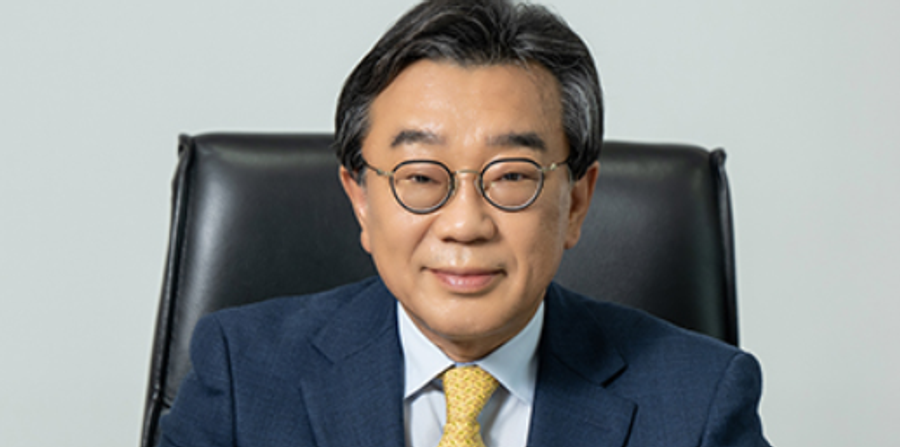
After the exceptional operating profit of roughly 1.6 trillion won recorded in 2021, Kumho Petrochemical entered a steep decline. Collapsing NB latex prices, a global chemicals recession, and a wave of Chinese overcapacity combined to devastate earnings. At the company's annual general meeting (AGM) in March 2026, chief executive Paik Jong-hoon reportedly described the year ahead as "harsher than any we have faced," identifying a structural shift to sustained profitability as the top priority. Management said it would pursue higher-value, environmentally friendly materials to improve return on equity (ROE).
The value-up timeline
*2021 — Record profits, first serious shareholder returns*
The pandemic windfall year gave Kumho Petrochemical the resources to launch a more formal shareholder-return framework, combining dividends and share buybacks. The per-share dividend was raised substantially, and the practices established in that period became the baseline against which future commitments have been measured.
*2022–23 — Holding the line through the downturn*
Even as earnings deteriorated sharply, the company chose to maintain a consistent dividend policy, managing its payout ratio at a steady level to preserve market trust. It drew credit for this consistency, though critics noted the absence of any concrete plan for the treasury shares—an omission that added to investor frustration.
*October 2025 — Activist radar locks on*
Activist investors' public campaign against LG Chem for better shareholder value prompted analysts to identify Kumho Petrochemical—alongside KCC and SK Chemicals—as a likely next target. The combination of a ~10% treasury-share position, a history of family ownership battles, and a price-to-book ratio (PBR) well below one made the company an archetypal candidate for activist pressure.
*January 2026 — The treasury-share dilemma surfaces*
The fate of the ~10% treasury stake became an explicit public debate. Press reports made clear that while cancelling those shares would boost the stock price and shareholder value, it would also weaken the founding family's ability to defend control of the company. The structural tension—treasury shares as a shareholder-return tool versus treasury shares as a governance firewall—was now plainly visible.
*March 2026 — The AGM compromise*
March 2026 is the pivotal moment in Kumho Petrochemical's value-up history. At the AGM, the company confirmed a revised governance structure and—in what the market read as a carefully hedged move—codified explicit exemptions to any treasury-share cancellation policy, formally preserving the option to use those shares for ownership-control purposes. Investors received this not as a firm commitment to cancel but as a negotiated halfway house; many analysts observed that the ultimate fate of the shares had effectively been passed to shareholders to contest.
In the same month, the company disclosed that its shareholder-return ratio for 2025 had reached 41.9%. Sustaining a return rate above 40% in difficult conditions drew a positive response, and Shinhan Investment & Securities was reported to have maintained a "buy" recommendation in a December 2025 note, citing continued earnings improvement and the quality of shareholder-return policy.
*March 2026 to present — The pivot to higher-value, greener chemistry*
In the first half of 2026, Kumho Petrochemical began spelling out concrete plans for upgrading its synthetic-rubber portfolio, expanding into eco-friendly materials, and improving efficiency in its energy division. ROE improvement has emerged as the central metric of genuine value creation, with the consensus view being that dividend increases alone cannot re-rate the stock without underlying profitability gains.
Challenges and assessment
*Three unresolved problems*
Kumho Petrochemical faces three core challenges on its value-up path.
First, it must provide a clear roadmap for the treasury shares. As long as ~10% of shares outstanding remains in an ambiguous limbo between shareholder return and control defence, market uncertainty will persist. Announcing a specific cancellation schedule—or at minimum clearly disclosing the intended purpose—is widely regarded as the prerequisite for restoring confidence.
Second, it must structurally improve ROE. Simply raising the payout ratio is not sufficient when earnings are weak. Sustainable returns to shareholders require that the underlying business generates higher profits, which in turn demands a successful transition to premium and green-chemistry products.
Third, it must strengthen governance transparency. The founding family's history of ownership conflicts continues to weigh on the governance discount applied to the stock. Greater board independence and medium-to-long-term commitments on shareholder-return policy are widely seen as necessary steps.
*Overall assessment*
Kumho Petrochemical's value-up efforts are best characterised as a tension between intent and structure. A shareholder-return ratio of 41.9% for 2025 is relatively high by South Korean petrochemicals industry standards, and the company deserves credit for maintaining that discipline through a difficult cycle. Yet the decision to codify exemptions to treasury-share cancellation has left the impression of a half-measure. In an environment of rising activist pressure, the sustainability of a strategy that simultaneously pursues defensive governance and generous shareholder returns remains an open question.
Controversies and structural limits
*The dual nature of the treasury stake: return or defence?*
The treasury-share question is the hottest issue in any discussion of Kumho Petrochemical's valuation. Taken at face value, a 10% stake represents substantial ammunition for shareholder returns. But because those shares were accumulated over nearly two decades of intra-family ownership battles, their purpose is inherently ambiguous. The criticism—that it is impossible to tell whether the stake was built up for shareholder benefit or family control—has never been convincingly rebutted. The March 2026 decision to formalise cancellation exemptions was widely interpreted as confirming the latter suspicion, which sits awkwardly with the value-up narrative.
*Activist risk and governance vulnerability*
The LG Chem campaign has signalled that activist investors are scanning the entire Korean chemicals sector. Kumho Petrochemical is particularly exposed: a sub-one PBR, a large undistributed treasury-share block, and a convoluted ownership structure together create an almost textbook activist target. Without pre-emptive governance reform, the risk is that change arrives reactively—imposed from outside rather than driven from within.
*The sustainability of cycle-dependent returns*
Kumho Petrochemical's return policy is earnings-linked. The expectations set during the 2021 supercycle are difficult to meet in leaner years without pushing the payout ratio to levels that strain the balance sheet. Without clear medium-term guidelines, the market will face the same uncertainty every annual reporting season.
*The limits of financial engineering without ROE improvement*
For a stock trading below book value, the most fundamental path to re-rating is a durable increase in return on equity. Dividends and buybacks are useful tools, but they cannot substitute for genuine profit recovery. The time it will take for a portfolio shift towards premium and green-chemistry products to translate into materially better earnings remains the most significant gap in the value-up case.
Key metrics summary
Year | Operating profit (bn won) | Shareholder return | Treasury shares | Return ratio | PBR (x)
2021 | ~1,600 | Sharply increased | Partial holding | High | ~1.0
2022 | ~900 | Policy maintained | ~10% | Maintained | ~0.7
2023 | ~220 | Policy maintained | ~10% | Maintained | ~0.5
2024 | ~180 | Policy maintained | ~10% | Maintained | ~0.4
2025 | ~250 | Dividends + buybacks | ~10% | 41.9% | ~0.5
2026 (forecast) | Recovery under way | Policy maintained | Cancellation exemptions codified | Target maintained | Improvement targeted
*PBR figures are compiled from press reports and market estimates; they may vary depending on the precise date of measurement.*