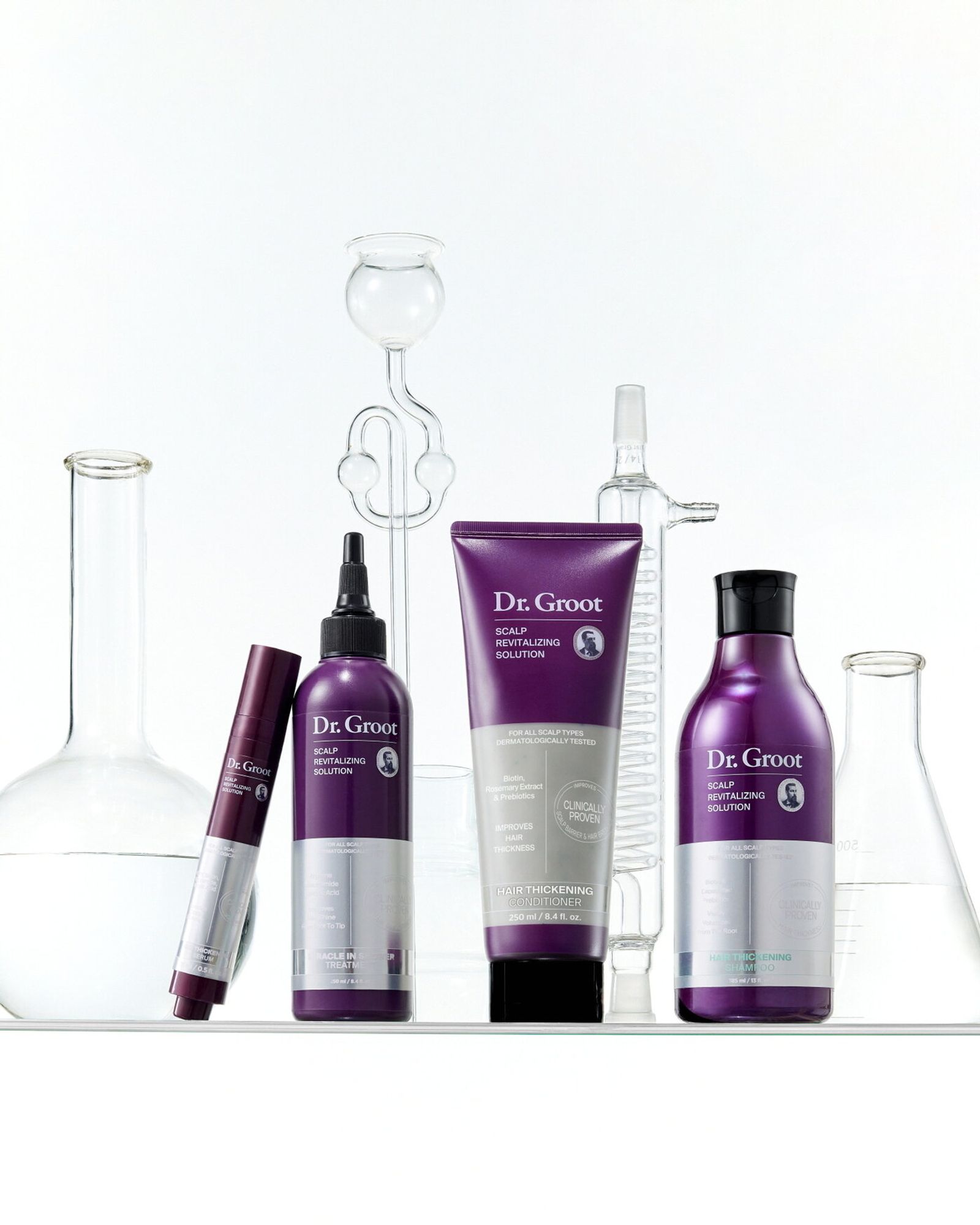
LG Household & Health Care (LG H&H) is carving out a notable position on Amazon in two fast-growing categories: hair-loss treatment and skin-brightening. The results are drawing attention across the beauty industry, not least because the company is making this push from a position of recent adversity. Overexposure to China and a collapse in duty-free sales had left it badly bruised; a concerted drive into North American digital commerce is now providing the basis for a recovery.
Why functional beauty, and why Amazon now?
The global functional cosmetics market is expanding rapidly. According to Grand View Research, it was worth approximately $54 billion in 2023 and is forecast to grow at an annual rate of more than 6% through to 2030. In North America, demand for hair-loss and skin-brightening products has surged, propelled by broader consumer enthusiasm for wellness and self-care.
Amazon is the natural battleground. It commands roughly 38% of all American online retail, and its beauty and personal-care category is among the fastest-growing on the platform. Crucially, Amazon shoppers tend to scrutinise ingredient lists and reviews before buying — a habit that favours functional products with demonstrable science behind them.
LG H&H identified this convergence early. Alongside its existing premium brands — The History of Whoo, Belif, and CNP — the company has deployed its dedicated hair-loss brand Dr. Groot and a range of brightening products as the spearhead of its Amazon strategy.
The mechanics of success: ingredient credibility and the K-beauty halo
Several forces are working in LG H&H's favour. First, North American consumers have developed a genuine affinity for Korean beauty. The global popularity of K-pop acts such as BTS and BLACKPINK, combined with the streaming success of Korean drama, has elevated Korean skincare's standing well beyond a passing trend. As Cosmetics & Toiletries, the American industry trade publication, has observed, "K-beauty has succeeded in transplanting ingredient science and skincare-routine culture into the American mainstream."
Second, LG H&H has used Amazon's A+ content pages — the platform's enhanced product-description feature — to communicate its proprietary ingredients and clinical data effectively. Searches within Amazon's haircare category for terms such as "clinically tested", "dermatologist recommended", and "ingredient verified" generate strong conversion rates. For Dr. Groot, the company has foregrounded research into the scalp microbiome to establish scientific credibility.
Third, Amazon Prime's fast delivery and frictionless returns policy lower the psychological barrier for shoppers trying an unfamiliar brand — a meaningful advantage when launching in a new market.
Structural context: escaping China's gravitational pull
This progress reflects a deliberate strategic reorientation, not merely a marketing campaign. Between 2021 and 2022, LG H&H absorbed a series of blows from China: the government's "common prosperity" campaign dampened luxury consumption, Covid-19 lockdowns disrupted supply chains, and the lingering effects of Beijing's informal cultural restrictions on South Korean goods — the so-called hallyu ban — eroded sales further. China had at one point accounted for more than 30% of LG H&H's revenues; that share has since fallen sharply.
Management's response was to prioritise geographic diversification and a stronger portfolio of high-performance products. The North American operation was reinforced, and the company built in-house capability in Amazon Marketing Cloud (AMC) and demand-side platform (DSP) advertising. "LG H&H invested significantly in Amazon search advertising and programmatic targeting," said one industry insider. "Data-driven targeting proved particularly effective in high-involvement categories like hair loss and brightening, where consumers actively seek out solutions."
Competitive landscape: Korean rivals and global giants
The functional beauty aisle on Amazon is fiercely contested. Amorepacific — South Korea's other beauty conglomerate — is pushing its own brands, including Innisfree and Laneige, hard into North America. Global household names such as Procter & Gamble's Head & Shoulders are reinforcing their functional credentials, while dermatologist-endorsed skincare brands such as CeraVe and Neutrogena are extending into scalp-care and hair-loss treatment.
Given this intensity, analysts warn that sustaining momentum will require continued investment. "Best-seller rankings on Amazon are highly sensitive to advertising spend and review volume," noted one beauty industry analyst. "The real challenge is converting early commercial success into durable brand equity."
Learning from precedent: Laneige's rise and Japan's stumbles
Amorepacific's Laneige offers an instructive parallel. Its Lip Sleeping Mask went viral on TikTok and became the top-selling K-beauty product at Sephora, the prestige beauty retailer — demonstrating the power of combining social-media momentum with physical retail presence. The episode also illustrates the risk of over-reliance on a single channel. How LG H&H structures its presence across Sephora, Ulta Beauty, and other offline retailers will be a significant determinant of its long-term North American trajectory.
Japan's experience in the American market offers a cautionary note. Both Shiseido and Kao built strong products but struggled to convey a compelling brand narrative to American consumers. Kao's haircare brand, Saralea, remained obscure in the United States despite high recognition across Asia. LG H&H's decision to position Dr. Groot explicitly as a "science-based scalp solution" — with localised marketing to match — suggests the company has absorbed these lessons.
Outlook: the next chapter for K-beauty
Analysts describe LG H&H's progress as a signal of where K-beauty is heading. The first wave of the Korean beauty phenomenon was driven by novel formats — sheet masks, BB creams — that captured Western curiosity. The emerging wave is defined by clinically substantiated ingredients and targeted solutions for specific skin or scalp concerns. Call it "solution beauty".
The tasks ahead for LG H&H are clear enough. It must translate Amazon channel gains into broader brand value, extend its functional portfolio beyond haircare and brightening, and weave social-media marketing and influencer partnerships into a coherent omnichannel strategy. As global consumers become ever more ingredient-literate — reading labels, demanding evidence, and questioning efficacy claims — LG H&H's Amazon push is becoming an important test of whether Korean cosmetics can establish lasting credibility in the premium functional beauty market worldwide.