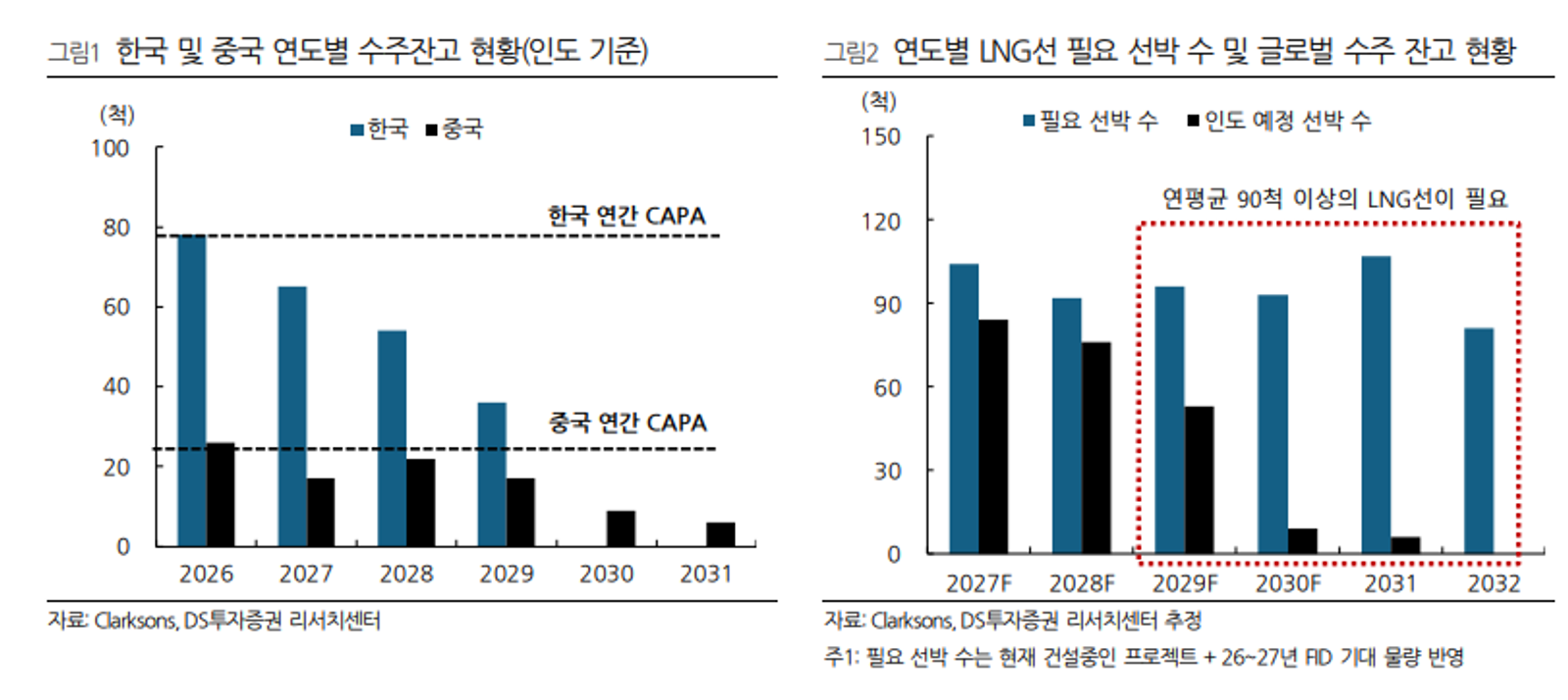
South Korean brokerage DS Investment & Securities predicted on 9th June that annual newbuild orders for LNG carriers will average between 90 and 110 vessels through 2032, once demand from global LNG projects and scrapping-driven fleet replacement is combined.
In a shipbuilding sector report, the firm's research centre calculated that terminals currently under construction, together with anticipated volumes from final investment decisions (FIDs) expected in 2026 and 2027, will generate average annual demand for at least 90 LNG carriers.
On top of that comes replacement demand from approximately 120 ageing steam-turbine LNG vessels that are over 20 years old. The report noted that every LNG carrier scrapped to date has been steam-turbine powered. As these ships are retired in sequence, an additional 10 to 20 replacement orders per year are expected to follow.
South Korean shipyards have already exceeded their full-year 2025 order tally, having secured 36 LNG carrier orders in the first half of 2026 alone. Newbuild prices currently stand at $250m–$254m per vessel. Measured in Korean won, prices have risen steadily since 2022.
DS Investment & Securities expects a large-scale ordering rally, driven by American LNG projects, to gather momentum in the second half of this year. With Chinese yards' delivery slots for 2029 already running tight, South Korean builders are seen maintaining their position as suppliers in a sellers' market — a dynamic that should support a gradual rise in vessel prices.
LNG carriers now account for more than half the revenues of South Korea's major shipbuilders. The brokerage added that if Qatar's large-scale orders and long-term sales and purchase agreements (SPAs) tied to projects currently in the front-end engineering and design (FEED) stage continue to expand, the upcycle could extend well beyond five years.