Company overview
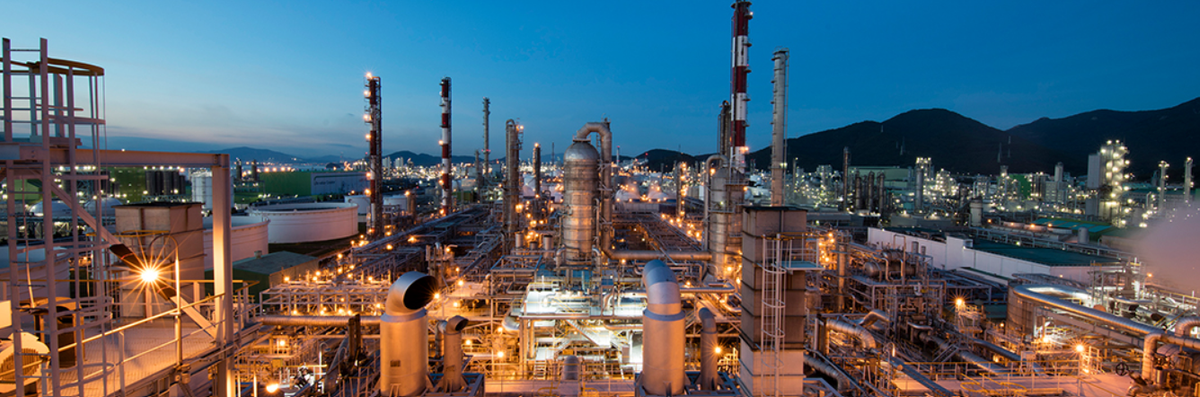
Lotte Chemical is the petrochemical flagship of Lotte Group, one of South Korea's largest conglomerates. Its product range spans basic chemicals — ethylene, propylene and other olefins — through to high-performance engineering materials. Listed on the KOSPI, South Korea's main stock exchange, the company was once among the market's most highly valued names and served as the group's principal cash generator. Since 2022, however, a global petrochemical downturn compounded by a surge in Chinese capacity has caused its profitability to collapse.
South Korea's government launched its "Korea Value-Up Programme" in earnest in 2024, targeting companies trading below book value and pressing them to improve shareholder returns and corporate governance. Lotte Chemical occupies a symbolic position in this debate. With operating losses mounting and dividends being cut, and amid controversy over its parent company Lotte Corporation's reluctance to cancel treasury shares, questions have multiplied about the entire group's commitment to the programme. Because genuine improvements in shareholder returns are structurally impossible without an earnings recovery, Lotte Chemical's experience encapsulates what might be called the shareholder-return dilemma of industrial transition.
Business and financial performance
*Business structure*
Lotte Chemical operates across three segments: basic chemicals (olefins and aromatics), advanced materials (engineering plastics and functional films), and specialty chemicals. Until the late 2010s, commodity chemicals produced via naphtha cracking generated the bulk of its profits. As China brought large quantities of new cracking capacity on stream, however, global oversupply intensified and the spread between feedstock costs and product prices narrowed structurally.
In March 2026, the company formally announced a strategy to shift its portfolio away from commodities and towards high-value functional materials, aiming to repair its margin structure. By June of that year, Lotte Corporation was reported to be considering a demerger of Lotte Chemical's business divisions.
*Financial results*
Year | Revenue (KRW bn) | Operating profit (KRW bn) | Net profit (KRW bn) | Note
2021 | c. 19,000 | c. +1,300 | c. +900 | Boom conditions
2022 | c. 21,000 | c. −350 | c. −400 | Sharp downturn
2023 | c. 19,000 | c. −420 | c. −500 | Losses continue
2024 | c. 18,500 | c. −600 | c. −700 | Losses deepen
2025 | c. 19,000 | −943.6 | n/a | Largest loss to date
*The 2025 operating loss of KRW 943.6bn was confirmed at an earnings call in February 2026. Figures for 2021–2024 are estimates based on published annual reports.*
On 5th February 2026, the day after the 2025 results were announced, Lotte Chemical's share price fell 11% intraday. The loss had exceeded market expectations, badly denting investor confidence. The stock subsequently remained a persistent feature on lists of the most heavily shorted shares on the KOSPI.
Value-Up timeline
*2024 — Joining the programme*
In line with the government's initiative, Lotte Chemical declared its intention to strengthen shareholder returns. Given its continuing operating losses, however, it stopped short of setting specific numerical targets. Its price-to-book ratio (PBR) at the time was around 0.3 times — well below the market average and firmly within the low-PBR cohort that the Value-Up Programme was designed to address.
*October 2025 — Governance report: shareholder returns rated "excellent", auditor independence rated "inadequate"*
Lotte Chemical's corporate governance report, published in October 2025, awarded the company an "excellent" rating on shareholder returns, while flagging weaknesses in the independence of its audit function. Market observers questioned whether an "excellent" shareholder-return rating was meaningful for a company that had consistently failed to generate profits.
*September 2025 — Treasury share cancellation legislation and a group-level dilemma*
As legislation to mandate the cancellation of treasury shares moved closer to enactment, attention focused on Lotte Corporation's substantial treasury holding of approximately 27% of its own shares. For Lotte Chemical, developments in group governance were directly tied to the Value-Up debate. Some in the petrochemical industry also warned that compulsory treasury-share cancellation could complicate restructuring efforts by reducing financial flexibility.
*January 2026 — Dividend cuts ripple up to the parent*
In January 2026, analysts noted that reduced dividends from Lotte Chemical would leave Lotte Corporation short of resources for its own shareholder-return commitments. Lotte Corporation had relied on dividends received from Lotte Chemical to fund distributions to its own shareholders; more than two years of operating losses had all but eliminated that income stream. Some brokerages suggested dividends from Lotte's food and retail subsidiaries could partially compensate, but concluded they could not fully plug the gap.
*February 2026 — Operating loss of KRW 943.6bn announced; share price plunges*
At an earnings call on 4th February 2026, Lotte Chemical confirmed an annual operating loss of KRW 943.6bn for 2025. Management pledged to improve its earnings structure by expanding high-performance materials. Markets were unpersuaded: the share price fell 11% on 5th February, and the stock continued to attract heavy short-selling interest.
*February 2026 — Calls for Lotte Corporation to announce a share-cancellation plan*
In a research note published on 24th February 2026, Heungkuk Securities argued that Lotte Corporation needed to announce a formal treasury share cancellation plan to restore market confidence, warning that Lotte Chemical's poor results were fuelling broader scepticism about the group's commitment to shareholder returns.
*March 2026 — Lotte Corporation announces 5% cancellation; shareholders cry foul*
In March 2026, Lotte Corporation announced it would cancel just 5% of its treasury shares — a fraction of its total holding of approximately 27%. Shareholders criticised the move as inadequate, with some characterising it as a cosmetic gesture that ran counter to the spirit of the Value-Up Programme. Lotte Chemical, as a key subsidiary, was widely seen as unable to distance itself from the group's reluctant approach to shareholder returns.
*March 2026 — "Less commodity, more advanced materials" strategy formalised*
On 26th March 2026, Lotte Chemical formally unveiled a medium-to-long-term strategy to reduce its exposure to commodity petrochemicals and reorient its portfolio around high-value specialty materials. The announcement amounted to an acknowledgement that structurally compressed margins in its core naphtha-cracking business were unsustainable, and that genuine value creation required a fundamental shift in business mix.
*June 2026 — Lotte Corporation considers breaking up Lotte Chemical*
In June 2026, Lotte Corporation was reported to be exploring a break-up of Lotte Chemical's divisions as part of a broader group restructuring, understood to be linked to a planned IPO of its biotech subsidiary. The intention, according to reports, was to separate the advanced materials and basic chemicals businesses into independent entities, enabling each to be valued on its own merits.
Challenges and assessment
*Challenges ahead*
Before Lotte Chemical can be regarded as a credible participant in the Value-Up Programme, it must first return its core business to profitability. After more than four consecutive years of operating losses, commitments to raise dividends or buy back and cancel shares ring hollow for want of funds to support them. Three specific challenges stand out.
First, the pace of the pivot from commodities to high-value materials. Building an advanced-materials business capable of generating meaningful profits will take years of investment and, in the interim, entail further cash outflows. Second, the credibility of the planned demerger. For a structural break-up to translate into genuine value for shareholders, the company will need to disclose detailed plans and timetables transparently. Third, a credible group-level roadmap for treasury-share cancellation. Lotte Corporation's reluctance to act decisively on its own treasury shares is directly damaging market confidence in Lotte Chemical.
*Overall assessment*
Lotte Chemical's Value-Up history is likely to be remembered as a textbook case of good intentions frustrated by adverse circumstances. Despite receiving an "excellent" rating for shareholder returns in its governance report, the company has cut dividends, and its parent's share-cancellation exercise fell far short of market expectations. The formalisation of a portfolio-transformation strategy and the exploration of a demerger are positive signals. But the market is paying more attention to the execution of business transformation than to any near-term shareholder-return metrics. The years 2026 and 2027 will be decisive for rebuilding trust.
Controversies and limitations
*"Excellent" shareholder-return rating despite no profits*
The award of an "excellent" shareholder-return rating in Lotte Chemical's October 2025 governance report drew immediate criticism. Observers argued that the evaluation criteria emphasise procedural compliance — whether policies are in place and adequately disclosed — over the actual quantum of cash returned to shareholders. Rating a company with four consecutive years of operating losses as "excellent" on shareholder returns, critics said, risks undermining confidence in the Value-Up assessment framework itself.
*Lotte Corporation's 5% cancellation and the knock-on effect*
Lotte Corporation's decision to cancel just 5% of its treasury shares provoked a sharp backlash from shareholders. Since Lotte Chemical is a major subsidiary, controversies over group governance translate directly into the subsidiary's valuation. Investors find it difficult to assess Lotte Chemical's own commitment to value creation in isolation; the company's room for manoeuvre is constrained by the group's overall posture on capital returns.
*Mandatory cancellation legislation versus the need for restructuring flexibility*
The push to legislate mandatory treasury-share cancellation has created a dilemma for the petrochemical sector. Companies argue that compulsory cancellation could reduce the financial flexibility needed to execute asset sales, mergers, and other restructuring transactions. Lotte Chemical's planned demerger and portfolio overhaul are likely to become more complicated in this regulatory environment.
*Short-selling pressure and the absence of market confidence*
By March 2026, Lotte Chemical had become one of the most heavily shorted stocks on the KOSPI. Persistent operating losses, uncertain industry conditions, and group-level governance controversies have combined to sustain a negative view among institutional and foreign investors. The Value-Up Programme aims, among other things, to support share prices; but in Lotte Chemical's case, the consensus is clear — without resolving the structural loss-making, there is a firm ceiling on how far market confidence can recover.
Summary data
Year | Operating profit (KRW bn) | Dividend per share (KRW) | Treasury shares | PBR (x) | Note
2021 | c. +1,300 | c. 6,000 | — | c. 0.8 | Boom
2022 | c. −350 | c. 2,000 | — | c. 0.5 | Swings to loss
2023 | c. −420 | c. <1,000 | — | c. 0.4 | Dividend cut
2024 | c. −600 | Minimal | — | c. 0.3 | Losses deepen
2025 | −943.6 | Substantially cut | 5% cancelled at Lotte Corp level | c. 0.3 | Largest loss
*Dividend figures include estimates based on published disclosures. PBR figures are market estimates at year-end. Lotte Chemical itself has not separately announced any treasury share cancellation during this period.*