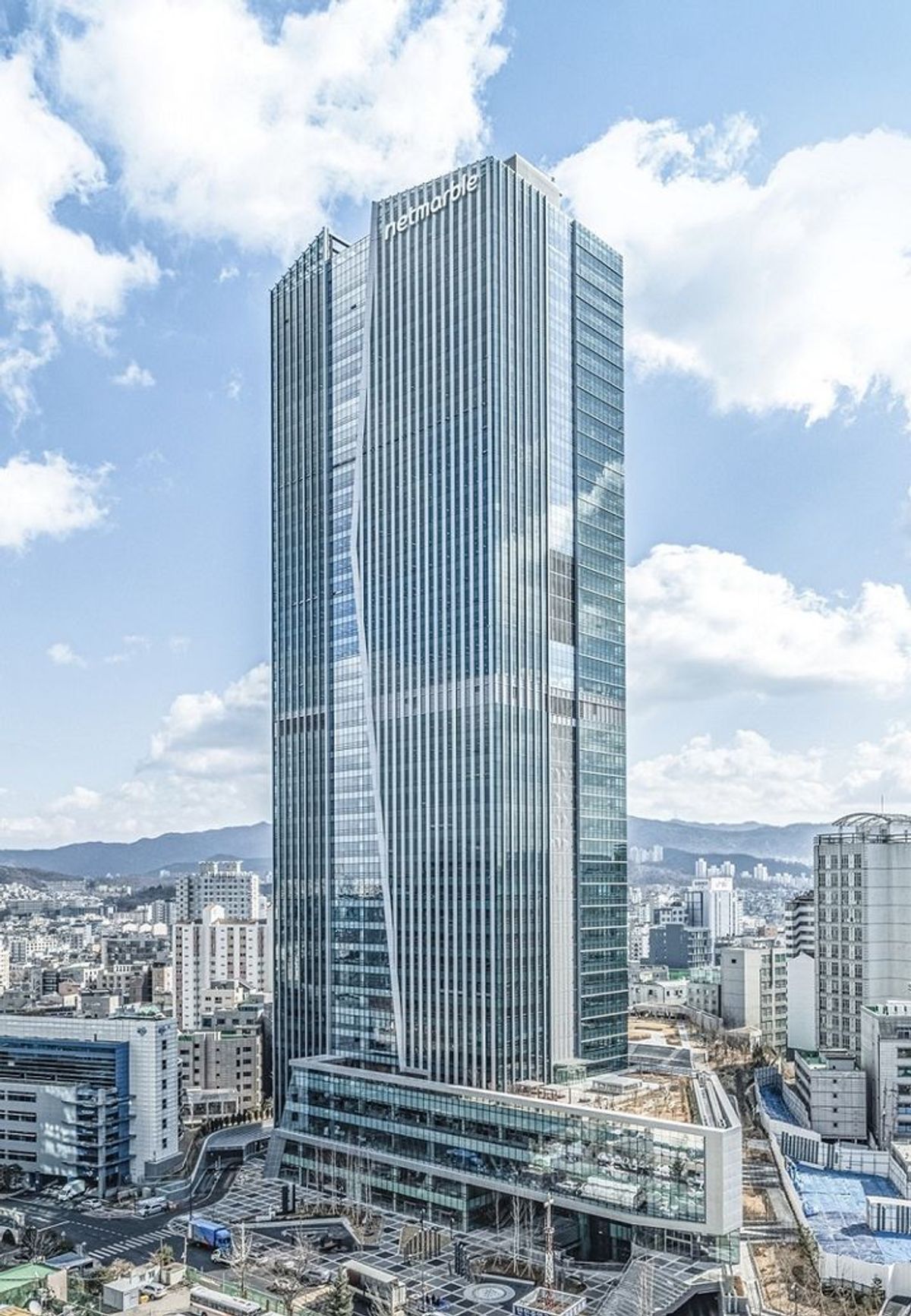
Company Overview
Netmarble (KRX: 251270) listed on South Korea's main KOSPI exchange in 2014 and built its reputation on globally recognised mobile-game franchises including *Seven Knights*, *Marvel Contest of Champions* and *Ni no Kuni: Cross Worlds*. Under the direction of its founder and chairman, Bang Jun-hyuk, the company cemented its place among South Korea's "big three" game developers through bold expansion, most notably an early equity stake in Big Hit Entertainment—now Hybe, the company behind BTS.
That appetite for deals eventually came at a steep price. From 2022 onwards, a combination of weakening demand for mobile games, sharply higher interest rates and the management burden of running disparate subsidiaries—including Coway, a home-appliance rental business, and Hybe—began to erode the company's financial health. Its debt ratio surged, and the group fell into a sustained run of losses. At its peak, Netmarble's market capitalisation exceeded 10 trillion won (approximately $7.5bn); by 2024–25 it had slumped to roughly 4–6 trillion won, trading below book value—an emblem of the so-called "Korea discount" that depresses valuations across many domestically listed companies. The central question confronting shareholders was blunt: how would management fix the balance sheet?
Business Structure and Financial Performance
Netmarble's revenues derive from three principal sources: its own mobile-game development and publishing operations; international subsidiaries in North America and Europe; and non-gaming affiliates, of which Coway is by far the largest. Coway generates steady, predictable rental income, but the roughly 1.7 trillion won in debt taken on to acquire it in 2019 became the group's most persistent financial liability. On the games side, in-house studios including Netmarble Neo and Netmarble Monster develop the pipeline of new titles.
The table below traces the group's financial trajectory over recent years.
Year | Revenue (bn won) | Operating profit (bn won) | Net profit (bn won) | Key developments
2021 | 2,506 | 120 | -328 | Valuation loss on Hybe stake
2022 | 2,673 | -221 | -479 | Weak new releases; interest rates surge
2023 | 2,732 | -114 | -301 | Restructuring begins; headcount reduced
2024 | 2,889 | 159 | -98 | Turnaround begins
2025 | 3,020 (est.) | 280 (est.) | Return to profit (target) | Share cancellations; balance-sheet reduction
*2025 figures are market-consensus estimates and have not yet been confirmed in official filings.*
The scale of the debt problem is worth stressing. Net borrowings reportedly swelled to more than 3 trillion won during the 2022–23 loss-making period. This structural vulnerability explains why Netmarble's value-up strategy has prioritised debt reduction over dividend increases.
Milestones in the Value-Up Programme
Second half of 2024 — Restructuring declared; Hybe stake sold down
In the second half of 2024, Netmarble began gradually selling its stake in Hybe. The company had previously held more than 5% of the K-pop label, qualifying it as a major shareholder; the disposal reportedly generated several hundred billion won in cash. Markets read the move as a commitment to refocus on core gaming operations and as the first concrete signal that management was serious about repairing the balance sheet.
February 2026 — Full cancellation of treasury shares worth 405.2bn won
On 6th February 2026, Netmarble announced it would cancel its entire holding of treasury shares, valued at approximately 405.2bn won. The market responded immediately: Netmarble's share price jumped by more than 10% on the day of the announcement, a conspicuous outperformer in an otherwise falling market. NH Investment Securities issued a research note stating that "the convergence of operational normalisation and strengthened shareholder returns makes the valuation increasingly attractive." Share cancellations reduce the total number of shares outstanding, thereby lifting earnings per share—and in a period when cash dividends remained out of reach, the move represented the most powerful shareholder-return tool available to the company.
March 2026 — Netmarble Neo's planned IPO withdrawn; 82.8bn won in additional shares cancelled
On 25th March 2026, Netmarble announced the withdrawal of its subsidiary Netmarble Neo's planned KOSPI listing and simultaneously cancelled a further 82.8bn won of treasury shares to protect shareholder value. The following day, it formalised Netmarble Neo's absorption as a wholly owned subsidiary. The decision was widely attributed to a tightening regulatory stance by the South Korean government towards the separate listing of subsidiaries within conglomerates.
Mid-March 2026 — Subsidiary IPO roadmap abandoned
In the middle of March 2026, it became clear that Netmarble's broader plan to list several of its game studios in sequence had been effectively shelved in the face of the regulatory crackdown. The company had previously presented the staged listing of subsidiaries as a key route to unlocking embedded value, but the changed regulatory environment made that path untenable.
April 2026 — Share cancellations and group restructuring declared in tandem
On 6th April 2026, Netmarble formally committed to pursuing share cancellations and a structural overhaul simultaneously. The company also unveiled plans to monetise fixed assets, including the sale of its headquarters building. Market commentary began referring to a "1 trillion won financial diet"—a programme combining asset sales, debt repayment and capital efficiency measures. The strategic emphasis was now unmistakably clear: capital efficiency through debt reduction and share cancellations rather than dividend increases.
June 2026 — The "1 trillion won diet" takes shape
By June 2026, the proceeds from further Hybe share sales and the planned property disposal were reported to have brought cumulative cash receipts to approximately 1 trillion won. As dividend payments and share buyback programmes spread across South Korea's gaming sector more broadly, Netmarble's actions began to be cited as a leading example of the industry's shareholder-return awakening.
Challenges and Assessment
Remaining challenges
Four structural hurdles stand between Netmarble and a durable re-rating.
*First, the quality of the earnings recovery must be proven.* Markets are still assessing whether the 2024–25 improvement reflects genuine business momentum from successful new game launches, or is merely the result of one-off cost cuts and restructuring charges falling away. Without sustainable free cash flow, any talk of expanded dividends will remain aspirational.
*Second, further deleveraging is required.* The 1 trillion won financial overhaul is a meaningful step, but the residual debt from the Coway acquisition, combined with ongoing working-capital requirements, means that the balance sheet has not yet been fully restored to health—a view that prevails among most analysts who cover the stock.
*Third, explicit dividend guidance is needed.* To date, Netmarble has relied entirely on share cancellations as its shareholder-return mechanism and has not articulated a policy governing dividend payments or the balance between distributions and reinvestment. Long-term institutional investors in particular require a predictable, clearly communicated payout framework.
*Fourth, board independence must be strengthened.* A K-Value-Up report published in April 2026 found that Netmarble's governance had not meaningfully departed from longstanding industry norms. The report pointed specifically to the concentration of decision-making authority in the hands of the founder and controlling shareholder as a structural impediment to adequately representing minority shareholders' interests. Greater diversity and genuine independence among outside directors were cited as priority areas for improvement.
Overall assessment
Netmarble's value-up journey is, above all, a product of adversity. The painful operating losses of 2022–23 and the collapse in its share price appear to have been the catalysts that made a decision as dramatic as cancelling the entire treasury-share holding conceivable. The announcement landed at an opportune moment—during a broad market sell-off—and delivered a credible short-term signal of management intent. Over the medium term, the reduction in share count should contribute to higher earnings per share. Yet share cancellations cannot substitute for competitive excellence in game development, and the market's attention ultimately remains fixed on the performance of new titles.
Controversies and Structural Limitations
Board independence: the shadow of industry convention
The April 2026 K-Value-Up report levelled pointed criticism at Netmarble's governance. Despite positioning itself as a global enterprise, the report concluded, the company had not escaped the longstanding habits of South Korea's gaming industry, where founder-led, controlling-shareholder structures make it structurally difficult for minority interests to be systematically represented. Calls for greater transparency in the appointment of outside directors and a broader range of expertise on the board have gone largely unanswered.
The subsidiary-listing strategy: a qualified setback
Netmarble had publicly advocated for unlocking value through the sequential separate listings of its game-studio subsidiaries. From the perspective of the parent company's shareholders, however, such listings carry dilution risk. The withdrawal of Netmarble Neo's IPO was ultimately driven by regulatory pressure, but a number of analysts assessed it as, in net terms, a positive outcome for the parent's shareholders. For investors who had positioned themselves in anticipation of the subsidiary flotation, it was a disappointment.
The Coway paradox
Coway contributes reliable cash flows to Netmarble's consolidated accounts, but the juxtaposition of a mobile-gaming business with a home-appliance rental company complicates valuation. Investors focused on the gaming sector struggle to price the rental business; those with a consumer-goods orientation find themselves inadvertently exposed to the volatility of game launches. The resulting "conglomerate discount"—a well-documented phenomenon in which diversified groups trade at a persistent discount to the sum of their parts—continues to blunt the impact of the value-up measures.
Shareholder-return mix: an imbalance
Share cancellations send a powerful signal, but they do not generate the regular income stream that many institutional and retail investors require. Netmarble has paid little or no cash dividend for several years running, a stance that sits uneasily with the stewardship codes that South Korean institutional investors are increasingly obliged to apply when engaging with portfolio companies.
Key Data Summary
Year | DPS (won) | Shares cancelled | Operating profit (bn won) | Price-to-book ratio | Notes
2021 | 0 | — | 120 | 1.2x | Net loss due to Hybe valuation write-down
2022 | 0 | — | -221 | 0.7x | Operating loss; rates surge
2023 | 0 | — | -114 | 0.6x | Restructuring under way
2024 | 0 | — | 159 | 0.8x | Turnaround begins
Feb 2026 | — | 405.2bn won (full cancellation) | — | — | Announcement; share price +10%
Mar 2026 | — | 82.8bn won (additional) | — | — | Netmarble Neo IPO withdrawn
*Price-to-book figures are estimates as at the relevant year-end. Final figures for 2025 and 2026 are pending official disclosure.*
Cumulative shares cancelled (January–March 2026): approximately 488bn won Total financial overhaul target (including Hybe stake and property sales): approximately 1 trillion won