Company overview
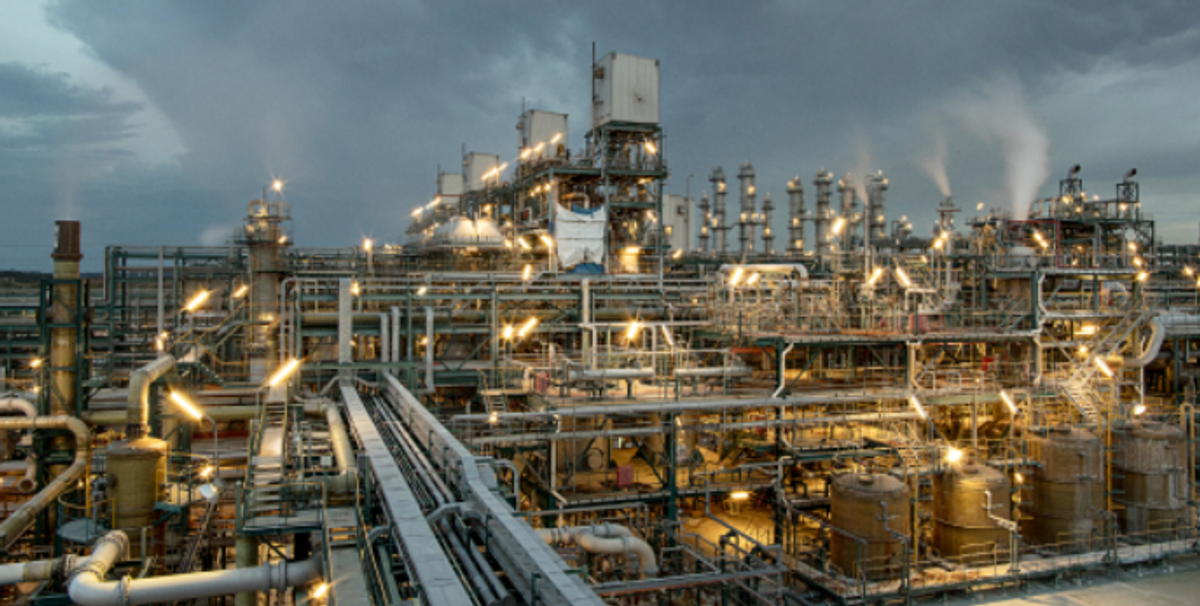
OCI Holdings is a South Korean intermediate holding company focused on chemicals and energy materials, with polysilicon, carbon black, and phthalic anhydride at the core of its business. It was established in 2022 through a spin-off from OCI Co., Ltd., and holds its polysilicon operations indirectly through a subsidiary, OCI Co., Ltd., which operates the OCI MSB facility in Malaysia. The stock is listed on the KOSPI—South Korea's main equity index—and is classified as a large-cap chemicals company.
The firm came to the fore of South Korea's "value-up" debate in 2024 and 2025, a period when the government pushed listed companies to address persistently low price-to-book ratios (PBR). OCI Holdings had long traded at a steep discount to its asset value—a common affliction for holding companies, whose listed subsidiaries are often worth more individually than the parent's market capitalisation implies. Under the stewardship of chairman Lee Woo-hyun, the group announced a series of share cancellations and dividend increases, earning it a reputation in the market as a textbook example of shareholder return policy. Yet the structural headwind of collapsing polysilicon prices has cast a shadow over how long that commitment can be sustained.
Business and financial performance
*Business structure*
OCI Holdings operates across three broad segments: polysilicon production and supply (primarily through OCI MSB in Malaysia); basic chemicals, including carbon black, pitch, and phthalic anhydride; and a miscellaneous segment encompassing real estate and financial investments. Polysilicon—a critical input for solar panels—is by far the most consequential division, linking the group's fortunes to the global solar energy cycle. A prolonged glut of Chinese-produced polysilicon has driven prices sharply lower since 2023, delivering a direct blow to earnings.
*Financial performance by year*
Period | Revenue (consolidated) | Operating profit | Key notes
2022 | c. ₩3.5trn | >₩400bn | First year post-spin-off; polysilicon boom
2023 | c. ₩3trn | c. ₩100bn | Polysilicon price decline takes hold
2024 | c. ₩3trn | Sharply lower | Partial production suspension; conditions worsen
2025 full year | — | Down 99.6% year-on-year | Subsidiary OCI Co. badly hit
2025 Q4 | ₩810.6bn (quarterly) | ₩27.3bn (quarterly) | Polysilicon output normalises; first quarterly profit in three quarters
The headline number for 2025 was stark: operating profit at subsidiary OCI Co. fell by 99.6% year-on-year. Yet the fourth quarter offered a glimmer of recovery. With polysilicon production returning to normal, OCI Holdings swung back to a quarterly operating profit of ₩27.3bn—its first in three quarters. Eugene Investment & Securities cited this as the basis for a target price of ₩200,000 per share, pointing to "earnings recovery and strengthened shareholder returns" as the key investment case.
The value-up programme: a timeline
*2024 — Building the framework*
From inception, OCI Holdings carried the stigma of a low-PBR stock, compounded by the structural discount that markets habitually apply to holding companies (sometimes called the "holdco discount"). As the government's Corporate Value-up Programme—designed to prod listed companies into narrowing the gap between book value and market value—gathered momentum, expectations rose that OCI Holdings would produce a credible shareholder return plan.
*July 2025 — A decisive shift in buyback policy*
In July 2025, OCI Holdings announced a substantial programme of share buybacks and cancellations. Several brokerage research notes described the move as a "fundamental shift" in its approach to treasury shares. Share cancellations are widely regarded as the most powerful tool for improving per-share value: unlike dividends, they permanently reduce the share count and restructure the company's capital base. The market responded positively.
*November 2025 — Follow-through builds confidence*
By November 2025, reports confirmed that the buyback and cancellation schedule was proceeding on track. That OCI Holdings continued to honour its shareholder return commitments even as operating results deteriorated earned it credit with investors—boosting confidence in management's word.
*February 2026 — OCI Co. cancels ₩10bn of shares despite near-wipeout in profits*
In February 2026, subsidiary OCI Co. reported the worst annual results in the group's recent history, yet simultaneously announced a ₩10bn share buyback-and-cancellation programme. The juxtaposition—barely returning to profit while still retiring shares—was widely noted in the financial press. The episode was interpreted as a deliberate signal: management's commitment to shareholder returns would not be abandoned even in adversity.
*February 2026 — Q4 return to profit reinforces optimism*
OCI Holdings separately reported fourth-quarter 2025 revenue of ₩810.6bn and operating profit of ₩27.3bn, ending three consecutive quarters of losses. The recovery was attributed to the normalisation of polysilicon output. In response, Eugene Investment & Securities maintained its buy recommendation and a target price of ₩200,000.
Challenges ahead
The most immediate prerequisite for sustaining the shareholder return programme is a durable recovery in polysilicon prices. The industry consensus is that Chinese oversupply is unlikely to dissipate quickly, leaving OCI Holdings exposed to prolonged pressure on its most important revenue stream.
There is also a structural financing constraint. As a holding company, OCI Holdings depends heavily on dividends received from its subsidiaries to fund its own buybacks and dividends. If OCI Co.'s earnings do not recover meaningfully, the resources available at the holdco level will be correspondingly constrained. Matching the pace of subsidiary recovery to the intensity of group-level shareholder returns is the central balancing act management faces.
More broadly, analysts argue that share cancellations alone are insufficient to close a valuation discount that partly reflects structural features of the holding-company model. New business development, portfolio diversification, and stronger ESG governance are seen as necessary complements to any purely financial engineering.
Assessment
OCI Holdings is frequently cited as a positive case study within South Korea's value-up initiative. Its particular strengths are predictability and transparency: it has disclosed specific targets—amount to be cancelled, timetable for execution—and has delivered against them even under duress. The National Pension Service of Korea, which has been gradually increasing its exposure to low-PBR stocks identified under the value-up programme, is reported to have shown growing interest in OCI Holdings as a result.
Eugene Investment & Securities' target price of ₩200,000 implies meaningful upside from current levels, contingent on the twin catalysts of earnings recovery and continued buyback momentum closing the discount to book value.
Controversies and limitations
*Sustainability of returns during a profit collapse*
The cancellation of shares during a year when operating profit fell by 99.6% drew admiration for its boldness—but also scepticism. Critics note that if buyback funding comes from cash reserves or asset sales rather than operating cash flow, the long-term capacity for shareholder returns may actually diminish over time.
*The holdco discount problem*
The spin-off structure that created OCI Holdings embedded a structural valuation discount that is difficult to eliminate through financial measures alone. Rationalising the relationship with subsidiary OCI Co. and improving governance transparency are seen as prerequisites for a sustained improvement in PBR.
*Overdependence on a single commodity cycle*
OCI Holdings' earnings and cash flow are overwhelmingly hostage to the polysilicon price, which is itself determined largely by Chinese supply decisions and the vagaries of global solar demand—neither of which management can control. This creates an uncomfortable dynamic: shareholder returns can be expanded in good times but may prove impossible to honour at the promised level when conditions deteriorate.
*Governance questions under chairman Lee*
Chairman Lee Woo-hyun has continued to accumulate stakes in group companies and has made equity investments across a range of external businesses, including the pharmaceutical firm Bukwang Pharm. Some observers argue that the growing complexity of the group's ownership structure requires clearer public explanation of how capital is being prioritised between external investments and shareholder returns.
Key figures at a glance
Period | Operating profit | Buyback/cancellation | PBR (est.) | Notes
2022 | >₩400bn | Not disclosed | — | Post-spin-off; polysilicon boom
2023 | c. ₩100bn | — | Low | Price decline begins
2024 | Sharply lower | — | Low | Partial shutdown
2025 full year | −99.6% YoY | Cancellations executed | Low | Three quarters of losses; Q4 profit
2025 Q4 | ₩27.3bn | — | — | Production normalises
Feb 2026 | — | ₩10bn (OCI Co.) | — | Returns maintained despite weak results
- 2025 Q4 revenue: ₩810.6bn - OCI Co. share cancellation (Feb 2026): ₩10bn - Eugene Investment & Securities target price: ₩200,000 - Institutional interest: National Pension Service and other funds tracking as a low-PBR/value-up candidate