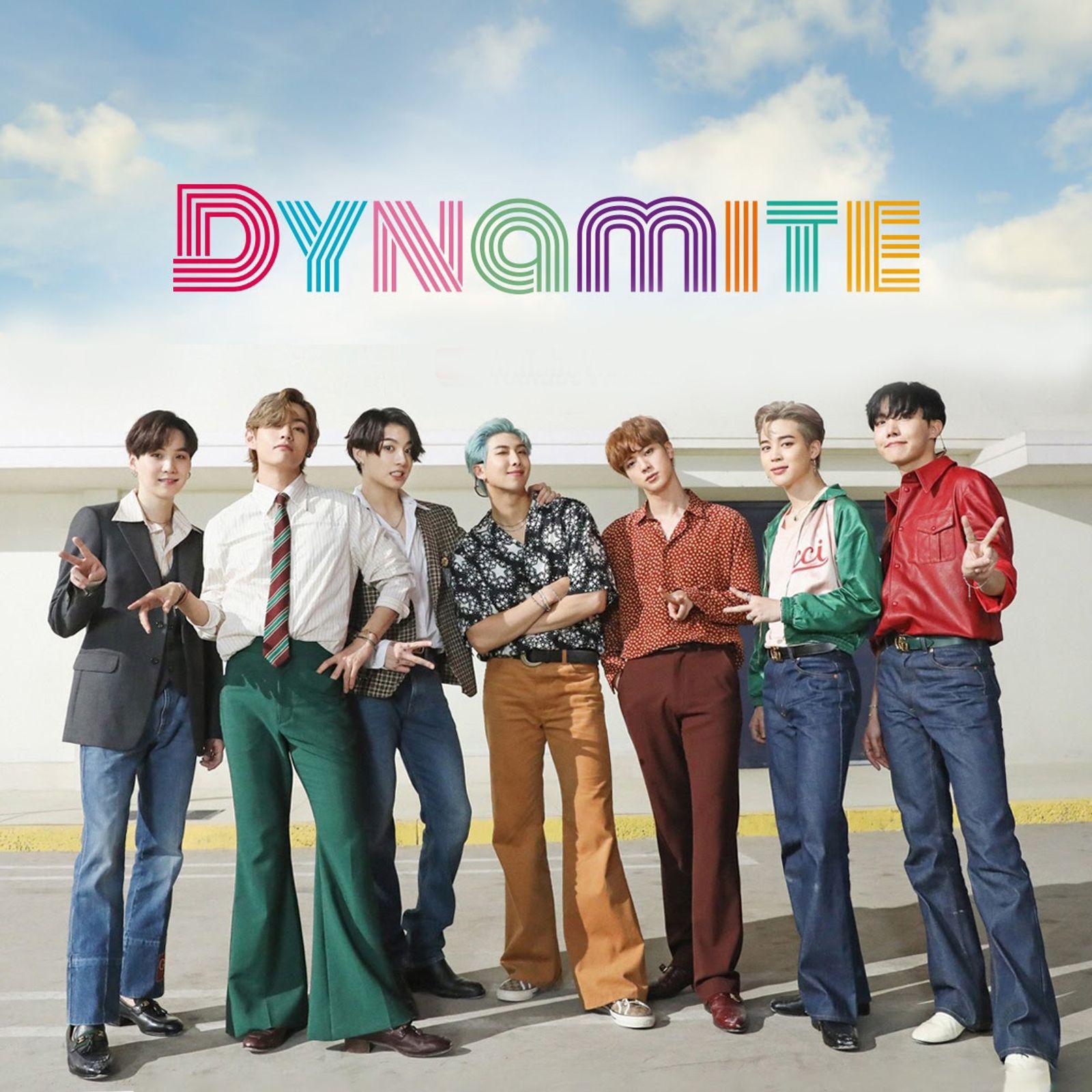
*Editor's note: "One Track" is a series examining the K-pop industry through the lens of a single song. The first instalment looks at "Dynamite," the track on which BTS made their first full commitment to English lyrics.*
On 21st August 2020, BTS released the first single of their career written entirely in English. "Dynamite" debuted at number one on Billboard's Hot 100 chart, making them the first Korean act ever to achieve that distinction.
Origin: An Unknown Songwriter's Lottery Ticket
The man behind the song was David Stewart, then virtually unknown in the music industry. In an interview with Rolling Stone, he recalled that word had spread through the global music business in early 2020 that BTS were looking for a new single — an opportunity he likened to finding the Holy Grail. Major producers scrambled to compete. Stewart eventually landed the brief alongside lyricist Jessica Agombar, describing it as winning what he called "the BTS lottery." He noted that despite twelve years in the songwriting business, nothing had ever produced a reaction like this — all the more remarkable given that the song was finished in his parents' bedroom. Stewart and Agombar had previously collaborated on tracks for the Jonas Brothers and Hailee Steinfeld.
The timing of the release was shaped by the pandemic. BTS said they wanted to share a sense of positive energy with a world exhausted by Covid-19. The mood of "Dynamite" was a deliberate counterpoint to their fourth studio album, *Map of the Soul: 7*, released in February of that year, which had dealt candidly with the group's own anxieties and vulnerabilities. In its place, "Dynamite" offered joy and self-assurance, wrapped in a retro disco-pop arrangement distinguished by an accelerating chorus and a bold brass section.
Asked at a press conference why the group had opted for English lyrics, member V explained that the English words had simply fitted the melody more naturally during the guide recording, and that the result felt refreshingly different from anything they had done before — enough to bring all seven members on board.
Records
"Dynamite" held the top spot on the Hot 100 for two consecutive weeks before briefly slipping to number two, then returning to number one — three weeks at the summit in total. According to Billboard, it was only the twentieth song among the 43 tracks ever to debut at number one that managed to hold the position for a second week. Downloads reached 265,000 in its first week and 182,000 in its second — making it the first release since Justin Timberlake's comparable hit to log more than 180,000 downloads in each of its first two weeks on sale.
Those figures translated into awards recognition. "Dynamite" received a nomination at the 63rd Grammy Awards in the Best Pop Duo/Group Performance category, the first Grammy nomination for any K-pop act. The Recording Industry Association of America (RIAA) certified it five-times platinum, reflecting sales of more than five million units. As of 15th April 2026, the music video had accumulated approximately 2.075 billion views on YouTube. For Stewart himself, the song proved career-defining: he has since joined the ranks of in-demand songwriters, and by 2022 had acquired a home in one of Los Angeles's most sought-after neighbourhoods.
The Debate: Was English the Secret Ingredient?
Success on this scale was not without controversy. "Dynamite" contains no Korean whatsoever, and its sound is rooted firmly in American retro-disco. Critics argued that BTS had, in effect, played by American rules to top the American charts — that the Billboard number one owed as much to cultural assimilation as to the group's own artistry. Within the fanbase, however, many welcomed a song that listeners worldwide could sing along to without any language barrier.
Questions also arose about chart methodology. BTS released four versions of the track — including a remix and an instrumental — at a low combined price, a bundling strategy that arguably inflated the sales tally. Some observers pushed back on that criticism, pointing out that such multi-format release tactics are hardly unusual in the mainstream music industry.
Why It Matters
The significance of "Dynamite" extends well beyond its chart statistics. The arc of the song's creation — a near-anonymous foreign songwriter producing a track that carries a Korean group to the top of the Billboard Hot 100 — is an unusually clear illustration of the international collaborative machinery that underpins the K-pop industry. More broadly, the song established English-language singles as a credible strategic option for K-pop acts targeting the American mainstream, and several have pursued similar approaches since. The underlying question it raised — whether to conquer the world in Korean or to enter markets on their own linguistic terms — remains one of the most contested in the industry. "Dynamite" offered one answer, and backed it up with a number one.
*"An unknown songwriter and the world's biggest Korean group joined forces — and reframed the question of what language K-pop speaks."*