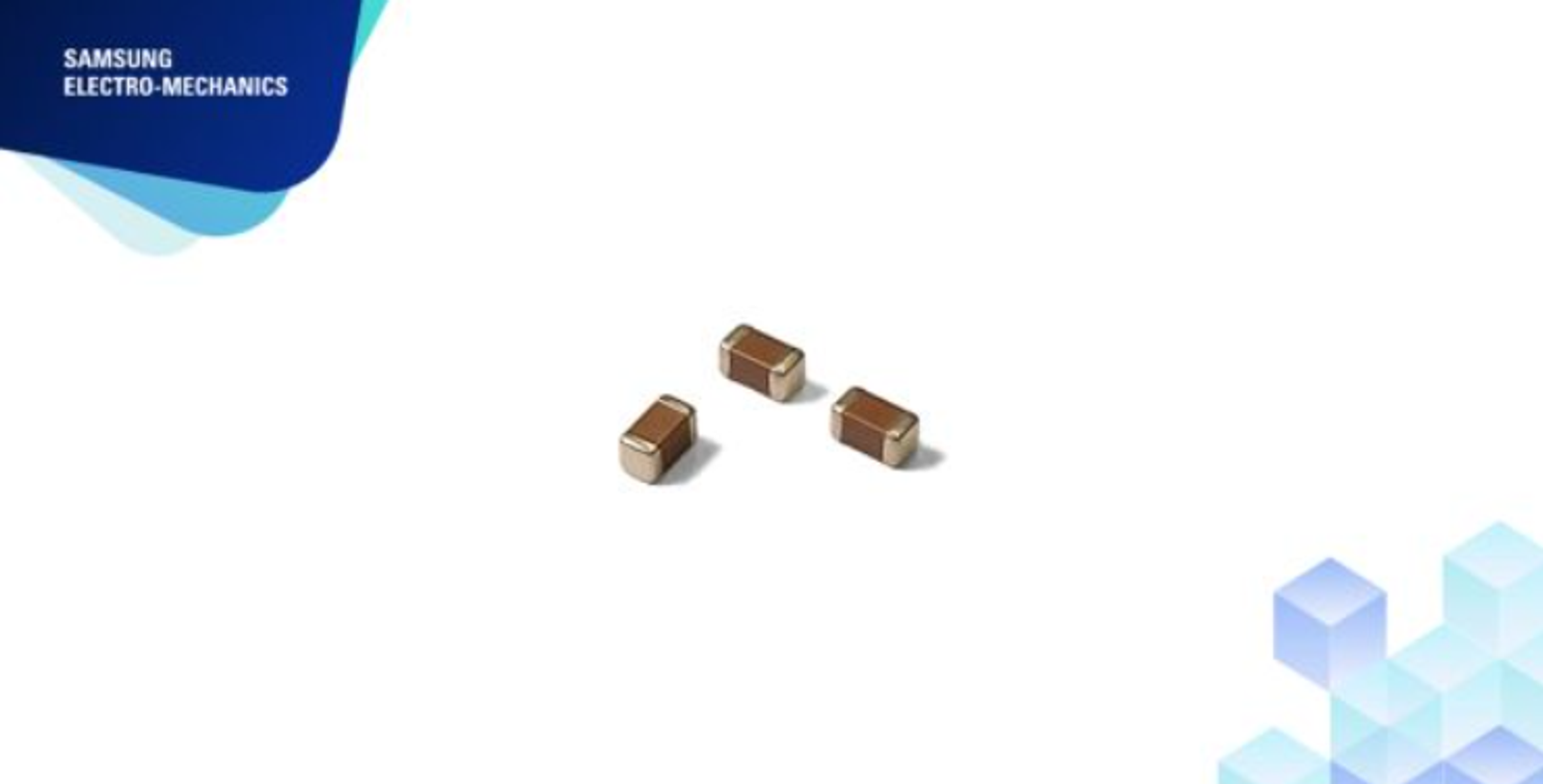
Samsung Electro-Mechanics disclosed on 1st September 2026 a supply contract worth 1.0722 trillion won (roughly $780m) for MLCCs — multilayer ceramic capacitors, the small passive components essential to modern electronics — with a semiconductor platform design firm. Deliveries are scheduled to run from 1st January to 31st December 2027.
In a flash note published on 2nd September, iM Securities described the deal as the third long-term supply agreement (LTA) the company has announced in quick succession, following contracts worth 454 billion won disclosed on 30th June and 295.1 billion won on 23rd July. The latest contract alone exceeds the combined value of those two earlier deals by 43%. Together, the three agreements total 1.8213 trillion won.
The customer has moved upstream
The most significant aspect of this contract is who signed it. The June deal was concluded with an ODM (original design manufacturer) — a contract electronics maker that builds servers to a customer's specification. The July deal was with a global server assembly firm. This time, the counterparty designs the semiconductor platform itself. The distinction matters: rather than hedging supply risk at the point of assembly or purchase, a chip architect is now locking in MLCC availability at the platform design stage, tying component supply directly to its product roadmap. The scope of the contract also appears broader than its predecessors, which targeted high-capacity MLCCs of a single type; this agreement reportedly covers a wider range of premium products, including ultra-compact, high-capacitance variants.
Pricing power, three times over
Pricing terms, too, have improved with each successive deal. Long-term supply agreements typically require suppliers to offer price concessions in exchange for volume visibility. Samsung Electro-Mechanics appears to have avoided that trade-off entirely: iM Securities notes that across all three contracts, the company has secured both volume and price simultaneously. The brokerage estimates the margin on this latest contract at a minimum of 30%, with room for further improvement depending on market conditions. Separately, the company is understood to be in negotiations with OEM customers over direct-supply price increases in the fourth quarter. Should those list prices rise, they would in turn set a higher baseline for future LTA negotiations.
A production line reconfigured for AI
iM Securities estimates the volume implied by the latest contract at roughly 60 billion units, based on an assumed unit price of 18 won per MLCC and a production conversion ratio of 1:3 — meaning that manufacturing one server-grade MLCC requires the equivalent capacity of three commodity units. On that basis, this single contract would redirect production capacity equivalent to 180 billion commodity MLCCs toward server-grade output. Across all three contracts, the redirected capacity totals approximately 300 billion units, or around 23% of Samsung Electro-Mechanics' projected ceramic component production capacity of 1.3 trillion units for 2027.
The financial implications are substantial. The cumulative LTA value of 1.8213 trillion won represents approximately 17% of iM Securities' forecast for the company's components division revenue of 10.5 trillion won in 2027. Applying a 30% margin, the brokerage estimates that this latest contract alone will contribute around 321.7 billion won to operating profit in 2027; across all three deals, the contribution reaches approximately 546.4 billion won, equivalent to 18.6% of the components division's projected operating profit of 2.93 trillion won.
The economics of the shift from commodity to server-grade production are striking. iM Securities estimates that profit per unit from AI-server MLCCs is 27 times higher than for commodity equivalents; profit per unit of production capacity is nine times higher; and revenue per unit of capacity is 2.4 times higher. The more production lines the company converts, the more the financial benefits compound.
Caveats worth heeding
These projections rest on a single brokerage's assumptions and warrant some scrutiny. If the unit price of 18 won, the 1:3 conversion ratio, or the 30% margin assumption proves wide of the mark, the profit estimates could shift materially. Although Samsung Electro-Mechanics reportedly plans to cover up to 60% of its 2027 production capacity through LTAs, actual contract fulfilment depends on AI server demand holding firm and customers' platform roadmaps remaining unchanged — neither of which is guaranteed. The early completion of a new factory in the Philippines, now expected in the first half of 2027, has raised hopes for an uplift in second-half shipments; but investors should note that accelerated capacity additions carry their own risk of oversupply.
iM Securities maintains a buy recommendation on Samsung Electro-Mechanics with a target price of 2,000,000 won, implying upside of approximately 40% from the closing price of 1,430,000 won on 1st September 2026.