Company Overview
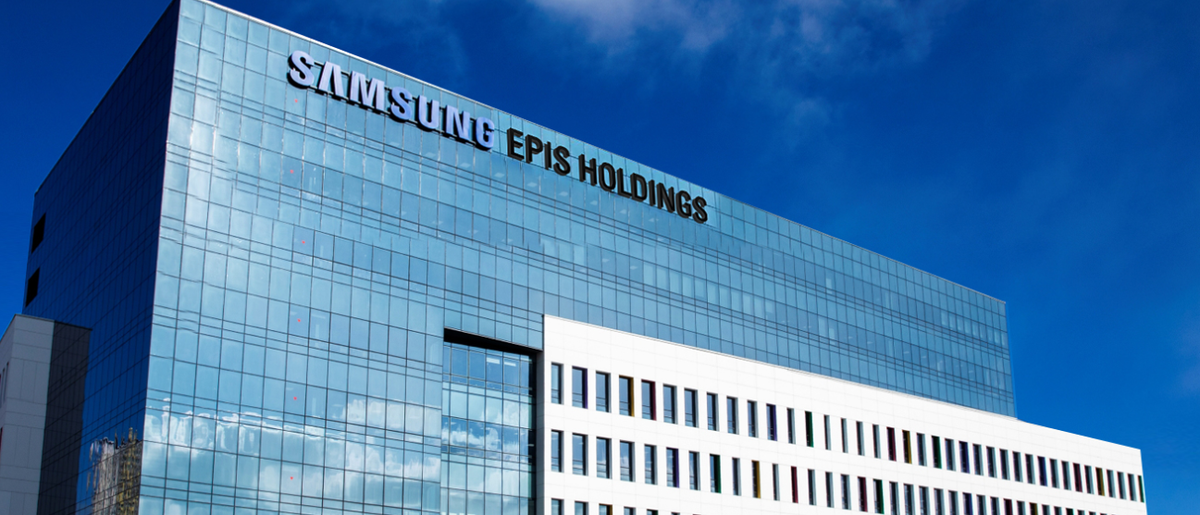
Samsung Epis Holdings is a pure holding company created when Samsung BioLogics restructured its biosimilar subsidiary, Samsung Bioepis, into a separately listed entity. It sits at the heart of the Samsung group's life-sciences ambitions, combining a mature biosimilar portfolio with a medium-term strategy to build proprietary drug-development capabilities.
From the moment of its listing, market attention focused not on the biosimilar business itself — well established and cash-generative — but on whether the company could credibly revalue itself through an independent drug pipeline and proprietary platform technologies. The 2025 spin-off forced the company to construct its own governance and shareholder-return framework from scratch. That process coincided neatly with the South Korean government's "Value-Up Programme", an initiative designed to address the chronic undervaluation of domestic listed companies, particularly those trading at steep discounts to book value. Three themes frame the value-up debate around Epis Holdings: eliminating its price-to-book (PBR) discount, accelerating visibility of its drug pipeline, and raising ESG standards.
Business Foundation and Financial Performance
*Biosimilar portfolio and revenue structure*
The company's core earnings engine is Samsung Bioepis, which has commercialised biosimilar versions of major autoimmune and oncology drugs — including etanercept, adalimumab, bevacizumab, and trastuzumab — across European and American markets. These products provide a stable revenue floor. The pace of penetration in the United States is considered the single most important variable for medium-term margin improvement.
As a holding company, Epis Holdings earns dividends passed up from Samsung Bioepis and charges management fees for group services. In May 2026 the company announced that it had returned to profit — a meaningful milestone demonstrating financial self-sufficiency as an independent listed entity. At the same time, it disclosed that it had received an AA rating from an ESG assessment body.
Year | Operating profit | Shareholder returns | Notes
2024 | Consolidated into Samsung BioLogics | — | Pre-split
2025 | First year as independent entity (disclosures pending) | Dividend policy undecided | Holding-company structure established
2026 | Return to profit | Growth-first stance | ESG AA; sustainability report published; first AGM
*Note: Figures prior to the spin-off were consolidated within Samsung BioLogics and were not reported separately. Standalone figures will be updated as disclosures accumulate.*
*Novel drug and platform investment*
The company is using the steady cash flows from biosimilars to fund an in-house novel drug pipeline. Internalising next-generation biopharmaceutical platform technologies — notably antibody-drug conjugates (ADCs) and bispecific antibodies — has been identified as a priority investment. In May 2026 reporting on the company's value-up strategy, management formally designated novel drugs and platform technology as the twin pillars of its long-term valuation case.
Value-Up Milestones
*September 2025 — Samsung BioLogics pledges governance stability to 2030*
Samsung BioLogics publicly committed to maintaining the current ownership structure through 2030. The announcement was designed to dispel concerns about group-level restructuring and to provide external assurance of Epis Holdings' independence and management continuity. Markets interpreted the pledge as a necessary precondition for attracting long-term investors.
*December 2025 — Value-up strategy takes shape: margin defence and pipeline acceleration*
By December 2025, the contours of Epis Holdings' value-up strategy had become clear. Industry analysis distilled it to two priorities: protecting margins in the existing biosimilar business, and accelerating market recognition of the novel drug pipeline's value. Investors had initially worried that the company would be rated simply as a biosimilar holding company — a label that typically attracts a discount valuation — so management moved quickly to put a concrete timeline around its drug candidates and potential licensing deals.
*February 2026 — Commercial Code amendments pass; governance overhaul begins*
In February 2026 South Korea's National Assembly passed a third round of amendments to the Commercial Code, tightening directors' fiduciary duties to shareholders. The legislation prompted companies across the pharmaceutical and biotech sector to review treasury-share policies and revise their articles of incorporation. Epis Holdings was no exception, facing heightened pressure to formalise a clear shareholder-return framework befitting its new status as an independent listed company.
*March 2026 — Inaugural AGM: novel drugs declared the cornerstone of value creation*
On 20th March 2026, Epis Holdings held its first annual general meeting as a listed entity. Management formally declared novel drug development to be the company's official value-up strategy, confirmed the re-election of its chief executive, and emphasised a growth-oriented agenda. The meeting reflected a broader sectoral pattern: pharmaceutical and biotech companies in South Korea increasingly prioritise investment over immediate distributions to shareholders.
*May 2026 — ESG AA rating, return to profit, and value-up roadmap published*
May 2026 was the most eventful month in the company's short listed history. The ESG AA rating and the announcement of its first profit as a standalone entity arrived together, reinforcing the narrative of a company rapidly maturing into its independence. Alongside those disclosures, the company published a detailed roadmap outlining how novel drug development and platform technology would drive long-term value creation.
*June 2026 — First sustainability report published*
In June 2026 Epis Holdings released its inaugural sustainability report, framed around the concept of "material-issue-focused management". The document covers ESG strategy, social responsibility activities, and governance improvement plans, and marks an important step in formalising communication with institutional investors.
Challenges and Assessment
*Outstanding challenges*
The most fundamental task facing Epis Holdings is demonstrating simultaneously that its biosimilar business can sustain long-term growth and that its novel drug pipeline will eventually deliver tangible results. The biosimilar market is structurally challenged: competition is intensifying and pricing pressure is chronic, so the durability of the company's margin-defence strategy will be tested continuously.
The drug pipeline is, by most accounts, at an early stage. Meaningful clinical data are likely years away, and the costs are considerable. For investors to award a "growth premium" to the stock, the company will need to publish specific clinical trial timelines and credible licensing-deal plans.
Shareholder returns remain unresolved. The current growth-first stance is understandable for an early-stage independent company, but as cash flows stabilise over the medium term, pressure for a defined dividend or buyback policy will mount. The revised Commercial Code — with its stronger duties on directors — has raised the board's accountability in this area.
Finally, broader Samsung group governance dynamics represent a latent risk. Issues including the Samsung Life Insurance Act, the evolving relationship between Samsung C&T and Samsung Electronics, and the mechanics of Chairman Lee Jae-yong's control structure all introduce uncertainty into Epis Holdings' shareholder-value calculation. The commitment to maintain the current structure through 2030 is reassuring, but the market has not yet fully priced it in as a settled matter.
*Assessment*
The bull case for Epis Holdings rests on three genuine strengths: a globally validated biosimilar portfolio; the financial and reputational backing of the Samsung group; and the transparency that comes with independent listing. The rapid accumulation of positive signals — a return to profit, an ESG AA rating, and the publication of a sustainability report — in a single year is encouraging.
The bear case is equally straightforward. Positioning a company as a novel drug play when its pipeline is still in early clinical stages risks overpromising. Meaningful judgement on whether the strategy is working will only be possible once phase 2 or phase 3 trial results are in hand, which is several years away.
Controversies and Structural Constraints
*Holding-company discount and PBR undervaluation*
As a pure holding company, Epis Holdings is structurally exposed to the "holdco discount" — the market convention of valuing a holding structure at less than the sum of its parts, reflecting the additional layer of complexity and potential drag on capital allocation. Closing that discount requires the holding company to demonstrate that it generates independent value beyond passive ownership of Samsung Bioepis. That is a high bar to clear.
*The gap between drug-development ambitions and clinical reality*
The "value-up through novel drugs" message is appealing, but it carries material risk. When a pipeline is at an early stage, the gap between investor expectations and actual clinical outcomes can drive significant share-price volatility. Some analysts have noted that Epis Holdings has been relatively thin on specifics — precise trial timelines, investment budgets, and probability assessments — which makes independent verification of the strategy difficult.
*Samsung group governance and independence questions*
The full range of Samsung group governance pressures — the Samsung Life Insurance Act, the question of how Chairman Lee maintains control, changes in the cross-shareholding structure between Samsung C&T and Samsung BioLogics — all feed indirectly into the uncertainty around Epis Holdings' standalone valuation. The 2030 governance pledge provides some reassurance, but full market confidence will take time to establish.
*Opaque dividend policy*
Prioritising investment over distributions is a rational choice for a young listed company, but the absence of a clear roadmap — specifying when and under what conditions dividends will be introduced or buybacks undertaken — is a legitimate grievance for retail shareholders. With fiduciary duties to shareholders now more explicitly codified under the revised Commercial Code, the board's obligation to address this gap has become more pressing.
Summary Data
Year | Operating profit | Dividend | Treasury shares | PBR | Key events
2024 | Consolidated pre-split | — | — | N/A | Within Samsung BioLogics
2025 | First independent year (disclosures pending) | Undecided | None | Discount structure | Spin-off listing; governance pledge
2026 | Return to profit | Growth-first | Under review | Improvement targeted | ESG AA; sustainability report; inaugural AGM
*Note: Standalone figures are being disclosed incrementally following the spin-off. Some data points remain subject to revision as formal filings accumulate. PBR fluctuates with market conditions.*