Samsung Securities raised its target price for OCI Holdings to 350,000 won on the 30th, up 13% from the previous target of 310,000 won, while reaffirming a Buy rating and maintaining the stock as its top pick within the renewable energy sector.
The upgrade follows a sharp recovery in OCI Holdings' second-quarter results for 2026, alongside two significant disclosures on 23rd July: a new capacity expansion at its Malaysian polysilicon facility, and long-term supply agreements with new American customers.
A recovery, but short of expectations
Second-quarter operating profit came in at 108.1bn won, a 895% jump from the previous quarter and a return to profitability. Revenue reached 1.023tn won, up 14.7% quarter-on-quarter and 31.8% year-on-year. Even so, the results fell short of both the market consensus of 121.8bn won and Samsung Securities' own estimate of 118.6bn won, by 11.3% and 8.9% respectively.
Two factors explain the shortfall. OCI TerraSus, the group's polysilicon subsidiary, sold 4,800 tonnes in the quarter—below the anticipated 5,400 tonnes. Sales volumes at MSE, the American solar-module subsidiary within OCI Enterprises, also disappointed. OCI TerraSus recorded a quarterly operating loss of 3.5bn won and remains in the red. The overall figures were rescued chiefly by OCI Enterprises, which posted operating profit of 60bn won, boosted by the sale of a 500-megawatt power project by OCI Energy.
Doubling capacity in Malaysia
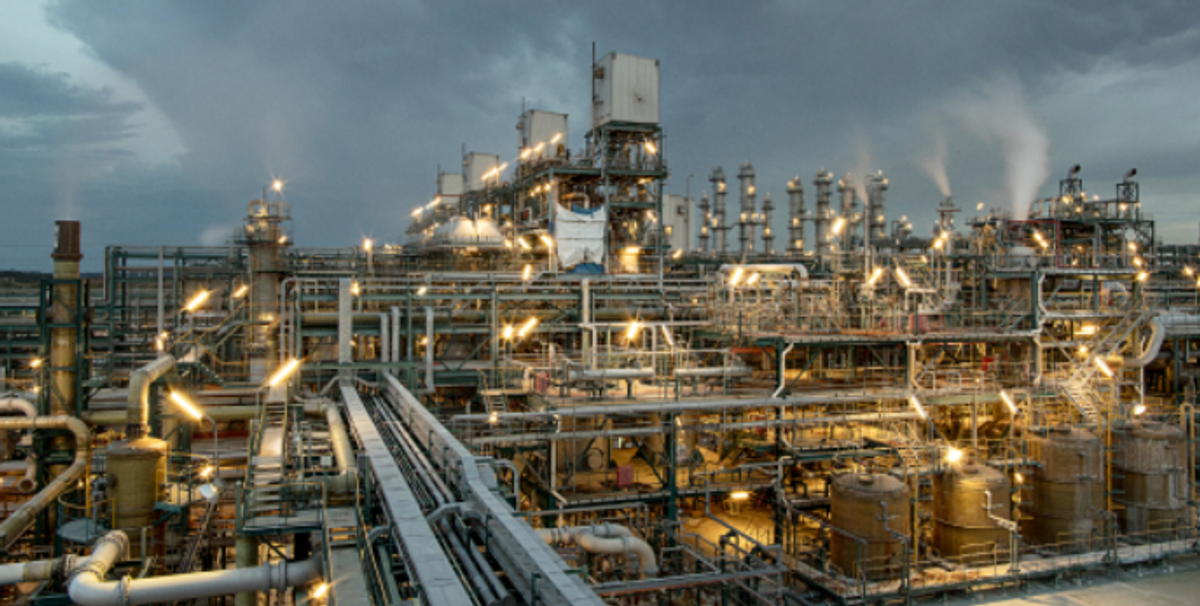
Investor attention has shifted quickly from the quarterly numbers to the expansion plan. OCI Holdings announced it would double its Malaysian polysilicon production capacity from 35,000 tonnes to 70,000 tonnes by January 2029, at a total investment of 1.43tn won. The announcement revises and supersedes an earlier plan, disclosed in 2024, to expand capacity to 57,000 tonnes for 870bn won—a target that was never executed. The updated plan is both larger in scale and accompanied by firmer commercial commitments, though the history of delays is not lost on analysts.
Take-or-pay contracts lock in American demand
The structure of the new supply agreements may prove as significant as the capacity announcement itself. Of OCI Holdings' existing 35,000-tonne capacity, 15,000 tonnes were already committed under existing contracts. The remaining 20,000 tonnes have now been signed into long-term agreements with a new American customer. Negotiations are under way with multiple American buyers for the additional 35,000 tonnes to be created by the expansion.
As a result, the share of total capacity covered by long-term agreements (LTAs) is projected to rise from 43% today to 71% in 2027, 80% in 2028, and 100% by 2029.
Crucially, the contracts being concluded carry take-or-pay terms: buyers are obligated to pay for contracted volumes even if they do not take physical delivery. This structure provides OCI Holdings with meaningful protection on both utilisation rates and margins—a significant improvement over spot-market or short-term contract exposure.
The American solar boom and the non-Chinese premium
This commercial repositioning reflects a structural shift in the American solar supply chain. Annual solar installations in the United States are forecast to exceed 100 gigawatts from 2026 onwards, with demand for data-centre infrastructure adding further momentum. Tightening American trade restrictions on Chinese goods have simultaneously made non-Chinese polysilicon—of which OCI TerraSus, producing in Malaysia, is a rare supplier—increasingly scarce and sought-after.
Risks that remain
The investment case is not without its vulnerabilities. The group's track record on execution gives pause: the 2024 expansion plan was announced and then quietly abandoned before being reissued in revised form, a precedent that raises questions about delivery. OCI TerraSus continued to post operating losses in the second quarter, and the timing of a recovery in its profitability will depend heavily on the pace at which polysilicon spot prices recover. The underperformance of the American module subsidiary MSE also remains unresolved.
Valuation
At the current share price of 247,000 won, Samsung Securities' new target of 350,000 won implies upside of 41.7%. The stock trades on a forward price-to-earnings ratio of 19.9 times on 2026 earnings and 14.8 times on 2027 earnings. The bank forecasts full-year operating profit of 303.0bn won for 2026 and 463.0bn won for 2027. The shares remain 36% below their 52-week high of 388,000 won.