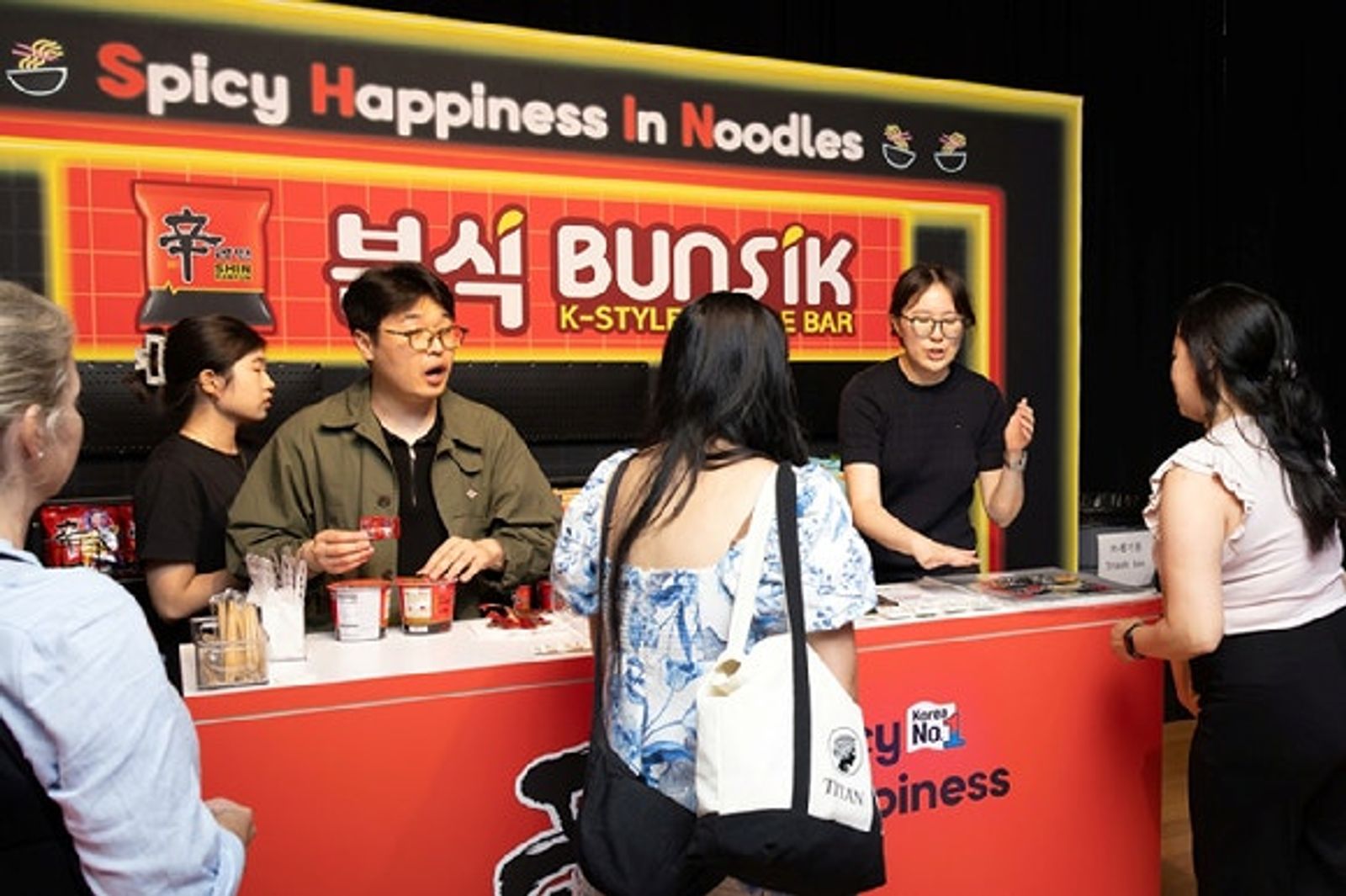
Nongshim, South Korea's dominant ramen producer, has launched a concerted campaign to raise the profile of its Shin Ramyun brand in the United States, partnering with New York restaurants and the Korean Cultural Centre in Manhattan to go beyond simple retail distribution. The initiative marks a strategic shift — from selling a product to selling an experience — and reflects the company's broader ambition to monetise the global K-food wave before rivals do.
Shin Ramyun's place in a vast market
The scale of the opportunity is considerable. According to the World Instant Noodles Association, global consumption reached approximately 121 billion servings in 2023. The United States alone accounts for roughly five billion of those, and post-pandemic demand for convenient meals has been accompanied by growing consumer appetite for premium products. Nongshim currently generates around 400 billion won (roughly $300m) in annual American sales, predominantly through Shin Ramyun, and has set a target of one trillion won in US revenue by 2030.
The brand is already stocked by Walmart, Costco and Amazon. Yet penetrating beyond the country's Asian-American consumer base has remained an elusive goal. The New York campaign is a direct attempt to close that gap.
Marketing with cultural substance
Nongshim's partnership with the Korean Cultural Centre of New York is more than a publicity stunt. The centre, situated in midtown Manhattan, draws tens of thousands of American and international visitors each year and serves as a hub for Korean cultural programming. Nongshim plans to use the venue to communicate Shin Ramyun's brand narrative through interactive, experiential formats — letting consumers engage with the product's story rather than simply encountering it on a supermarket shelf.
The restaurant collaborations are equally telling. Working with local chefs to reframe Shin Ramyun as a premium culinary ingredient echoes a strategy Japan's Nissin deployed with some success when it partnered with Michelin-starred chefs to elevate its Cup Noodles brand. Nongshim's intent is clear: to shed the "cheap instant food" stigma and reposition Shin Ramyun as a symbol of premium Korean culinary culture.
A tailwind, and stiff headwinds
The timing is propitious. The global profile of Korean food has risen sharply since the film *Parasite* brought the dish chapaguri to international attention in 2021, and Netflix's *Squid Game* triggered a further surge of curiosity about Korean cuisine. Google Trends data show that American searches for "Korean ramen" have risen steadily since 2020.
Competition, however, is fierce. Samyang Foods' Buldak (Fire Chicken) noodles built formidable brand recognition among younger American consumers through the viral "Fire Noodle Challenge" on social media. Domestic rivals such as Ottogi and Paldo are also active in the market, as are Asian noodle giants including Nissin and Toyo Suisan of Japan and Taiwan's Wei Wei, all of which are investing aggressively in American market share.
Research by Mintel, the consumer intelligence firm, suggests that 62% of American consumers say a product's origin story and cultural background influence their food purchasing decisions. Nongshim's choice of a cultural centre as a marketing channel reflects a precise understanding of that psychology.
Walking the tightrope between localisation and authenticity
Analysts caution that the success of this approach hinges on how carefully Nongshim balances adaptation with authenticity. Prior research by consumer behaviour scholars at New York University found that ethnic food brands risk alienating their core Asian-American loyalists if they dilute their original identity too aggressively in pursuit of mainstream acceptance.
Nongshim says it is pursuing a twin-track strategy: preserving the defining characteristic of Shin Ramyun — its heat — while broadening the brand's appeal through varied recipes and premium storytelling. The company already supports this positioning in practice, operating premium product lines such as Shin Ramyun Black and Shin Ramyun건면 (a lighter, air-dried variant) in the American market at higher price points, creating a tiered portfolio that can speak to different consumer segments simultaneously.
Lessons from a Japanese predecessor
Nissin's experience offers a useful historical parallel. Having entered the American market in the 1970s, the Japanese firm spent decades embedding itself in local consumer culture and effectively defined the category. That Korean ramen is now tracing a similar arc in the 2020s is significant — though the strategies differ in an important respect. Nissin conquered America with Cup Noodles, a product thoroughly adapted for local tastes. Nongshim is attempting the same feat with an unchanged original: Shin Ramyun as it exists in Korea is the product it wants Americans to adopt as their own.
The food industry's prevailing view is that Korean heat may be closer to the American mainstream than it appears. Salsa, after all, overtook ketchup as the United States' best-selling condiment — a reminder that the culinary preferences of a large, diverse nation can shift in ways that once seemed implausible.
From distribution to brand experience
The New York campaign is a symbolic marker of a broader evolution in Nongshim's American strategy — away from a focus on expanding retail distribution and towards building brand experience. The company's roadmap is legible: in the near term, deepen engagement with New York consumers; in the medium term, win over non-Asian mainstream shoppers; in the long term, establish Shin Ramyun as a fixture of American food culture.
If the K-food tailwind holds, and if Nongshim's localisation strategy continues to grow in sophistication, its trillion-won target begins to look less like corporate aspiration and more like a credible plan.