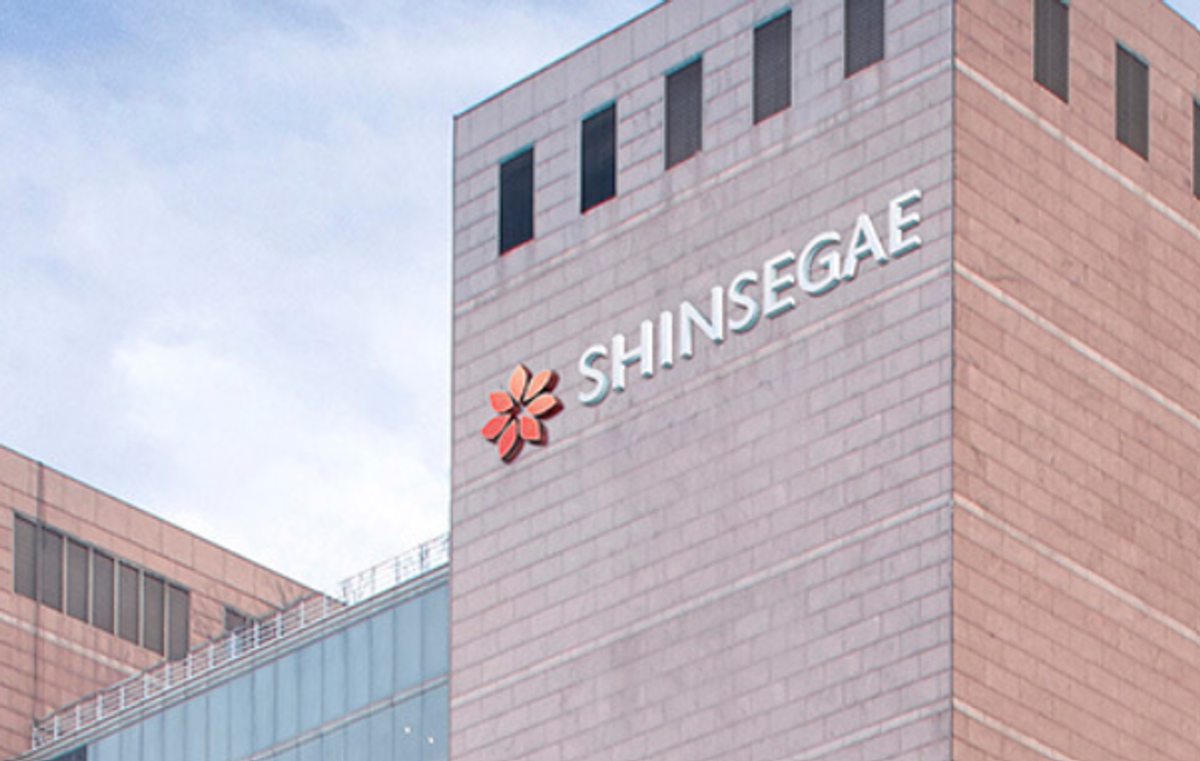
Company Overview
Shinsegae (KRX: 004170) is South Korea's pre-eminent premium retailer, operating flagship department stores in Gangnam, Centum City (Busan), and Daegu that have become synonymous with luxury retail in the country. As the operating holding company of the broader Shinsegae Group — which encompasses E-Mart, Shinsegae Food, and Shinsegae International — it sits at the heart of one of Korea's largest distribution conglomerates.
For years, however, Shinsegae's shares traded at a steep discount to their book value, with a price-to-book ratio (PBR) hovering between 0.3 and 0.5 times. That persistent undervaluation reflects a structural affliction common to Korea's large conglomerates (chaebol): the so-called "Korea discount," driven by opaque governance, weak shareholder returns, and a domestic consumer market under pressure from high inflation, sluggish spending, and the relentless advance of e-commerce. Spurred by the Korean government's "Value-Up" programme — a policy initiative launched to encourage listed companies to close the gap between their market and book values — Shinsegae has embarked on a more assertive shareholder-return strategy, combining treasury-share cancellations, higher dividends, and boardroom reform. The market has begun to characterise this as the opening of a "Value-Up 2.0" phase.
Business Foundation and Financial Performance
*Premium retail as the profit engine*
Shinsegae's earnings are anchored in its department-store business. Its flagship stores have consistently outcompeted rivals in attracting global luxury and designer brands, sustaining high operating margins. Yet the same model carries a structural vulnerability: as consumer spending polarises, the erosion of middle-class discretionary expenditure weighs directly on footfall and sales volumes.
*Financial performance, 2022–2025*
Year | Revenue (consolidated, KRW bn) | Operating profit (KRW bn) | Operating margin | Key developments
2022 | c. 2,700 | c. 320 | c. 11.8% | Post-pandemic reopening; luxury demand surged
2023 | c. 2,750 | c. 300 | c. 10.9% | Domestic consumption began to slow
2024 | c. 2,680 | c. 280 | c. 10.4% | Prolonged impact of high inflation and economic weakness
2025 | c. 2,720 | c. 310 | c. 11.4% | Modest top-line recovery; margins defended
*Note: Figures are estimates based on published reports. Please refer to official filings with the Financial Supervisory Service for precise data.*
*Signs of a 2026 recovery*
Into 2026, Shinsegae has been pursuing twin objectives: modest revenue growth alongside margin protection. In May 2026, against a backdrop of recovering earnings, the company introduced its first-ever quarterly dividend — a signal that shareholder returns were accelerating. Management has credited a premium positioning strategy and cost discipline for preserving profitability even as the broader retail sector has struggled.
Value-Up: Key Milestones
*July 2025 — Treasury shares reach 9%: the starting point*
Through steady share buybacks, Shinsegae accumulated treasury shares equivalent to roughly 9% of its outstanding stock. The market's attention quickly turned to the critical question of how these shares would be used: cancelled for the benefit of all shareholders, or deployed in a governance restructuring that might entrench the controlling family. Under Chairwoman Chung Yoo-kyung, the daughter of Shinsegae Group's founding family, the direction of travel remained uncertain.
*December 2025 — The Shinsegae Food delisting controversy*
E-Mart's move to delist its subsidiary Shinsegae Food brought group-wide restructuring into the open. Critics argued the manoeuvre was "governance reshuffling dressed up as Value-Up": by taking the subsidiary private, the controlling shareholders could tighten their grip over group resources while presenting the move as an efficiency measure. The episode fuelled suspicion that the Value-Up agenda was being selectively applied.
*January 2026 — Shareholder-return strategy formally announced*
Shinsegae Group formally committed to a dual track of higher dividends and treasury-share cancellations as part of broader governance reform discussions. The announcement was read as a declaration that the company intended to confront the retail downturn through shareholder-friendly policy rather than wait it out. Improving transparency in group governance was presented as an equal priority alongside lifting shareholder value.
*February 2026 — A finance specialist joins the board*
In February 2026, Shinsegae appointed Woo Jeong-seop, a seasoned financial executive, as an executive director. Placing a finance and profitability specialist at the boardroom table was interpreted as a commitment to giving the Value-Up strategy genuine institutional backing — and as a signal, at least, of greater board-level expertise.
*March 2026 — Treasury-share cancellation roadmap unveiled*
Shinsegae joined a wave of major Korean retailers — alongside Hyundai Department Store and Lotte Shopping — in publicly committing to cancel treasury shares. The company disclosed a phased roadmap for cancelling its roughly 9% holding. Analysts attributed this co-ordinated move across the sector to the combined pressure of proposed amendments to Korea's Commercial Act and the government's Value-Up programme. For the first time, Shinsegae had made an explicit public commitment to returning capital through share cancellation.
*March 2026 — Lowering boardroom barriers: Value-Up 2.0 begins*
Alongside the cancellation announcement, Shinsegae introduced measures to improve shareholder access to the board and to expand the formal channels through which shareholder views could be heard. As similar reforms spread across the retail sector, Shinsegae began to be recognised as a core participant in what the market was calling Value-Up 2.0.
*May 2026 — Quarterly dividends introduced: a qualitative shift*
In May 2026, Shinsegae introduced quarterly dividends for the first time in its history. The move represented more than a straightforward increase in the dividend payout; it signalled a structural shift from the traditional Korean practice of a single annual dividend payment towards a more predictable, consistent cash-return framework. Markets responded positively, viewing the change as a meaningful upgrade in the quality — not merely the quantity — of shareholder returns.
Challenges and Assessment
*Three tests ahead*
Shinsegae's Value-Up ambitions face three concrete challenges.
The first is the pace and durability of treasury-share cancellations. A roughly 9% stake is material, but the credibility of the cancellation programme depends on whether the company specifies binding timelines and volumes. Without that precision, the commitment risks being dismissed as aspirational rather than actionable.
The second is sustaining the earnings base that funds shareholder returns. Quarterly dividends raise market expectations and, by definition, make any future cut more visible and damaging to the share price. With Korea's domestic retail market facing structural headwinds, the operating-profit generation needed to support both dividends and buybacks cannot be taken for granted.
The third is substantive governance reform. Global institutional investors increasingly assess Korean companies not merely on dividend yields or buyback volumes, but on the independence and supervisory effectiveness of the board. As long as key decisions remain concentrated in the hands of the controlling family, governance scores — and with them valuation multiples — will reflect that risk.
*The market verdict*
The broad consensus is that Shinsegae's Value-Up efforts are "late but directionally correct." What gives investors reason for cautious optimism is that the measures taken — share cancellations, quarterly dividends, the appointment of a finance director, and boardroom opening — appear to form a coherent strategic sequence rather than a series of isolated gestures. Shinsegae's decision to introduce quarterly dividends ahead of most peers in the retail sector is a genuine differentiator. The residual concern is that the governance restructuring running in parallel may ultimately serve the controlling shareholders more than minority investors.
Controversies and Structural Limits
*Treasury shares: return vehicle or control mechanism?*
The 9% treasury-share holding is double-edged. It can be cancelled to benefit all shareholders, but it can equally be deployed to defend against hostile takeover bids or to facilitate intra-group restructuring in ways that favour the controlling family. Until the cancellation roadmap specifies concrete quantities and dates, sceptics will argue it remains a declaration of intent rather than a binding commitment.
*The Shinsegae Food delisting: the paradox of Value-Up*
E-Mart's pursuit of a Shinsegae Food delisting exposed an inherent tension in the Value-Up narrative. Taking a subsidiary private may improve capital-allocation efficiency at the group level, but for minority shareholders in that subsidiary it means the elimination of their investment exit route and the destruction of market liquidity. The episode illustrated how a group-level Value-Up strategy can simultaneously destroy value for shareholders in specific subsidiaries — a structural contradiction that the programme's advocates have yet to fully resolve.
*Earnings risk and dividend sustainability*
A prolonged retail downturn would compress the operating profits available to fund both dividends and buybacks. By introducing quarterly dividends, Shinsegae has raised the market's baseline expectations; a dividend reduction in response to weaker earnings would inflict a disproportionate penalty on the share price.
*The limits of boardroom reform*
Appointing a finance-focused executive director strengthens the management team's capacity to execute the Value-Up strategy, but executive directors are, by their nature, aligned with management rather than independent of it. Without a genuinely independent, non-executive-led board equipped with real supervisory authority, governance reform risks remaining cosmetic — a point that will not be lost on international investors applying global corporate-governance standards to Korean equities.
Key Metrics Summary
Year | Annual DPS (KRW) | Treasury-share activity | Operating profit (KRW bn) | PBR (×) | Key actions
2022 | c. 2,000 | Ongoing buybacks | c. 320 | c. 0.50 | Benefited from post-pandemic reopening
2023 | c. 2,000 | Stake accumulated further | c. 300 | c. 0.40 | Domestic slowdown takes hold
2024 | c. 2,200 | Treasury stake reaches c. 9% | c. 280 | c. 0.35 | Value-Up programme discussions intensify
2025 | c. 2,500 | Cancellation roadmap under discussion | c. 310 | c. 0.38 | Dividend-and-cancellation strategy formalised
2026 | Quarterly dividends introduced | Cancellation programme launched | Recovery trend | Improvement expected | Finance director appointed; board opened
*Note: Figures are estimates based on published reports. Please refer to Financial Supervisory Service disclosures for authoritative data.*