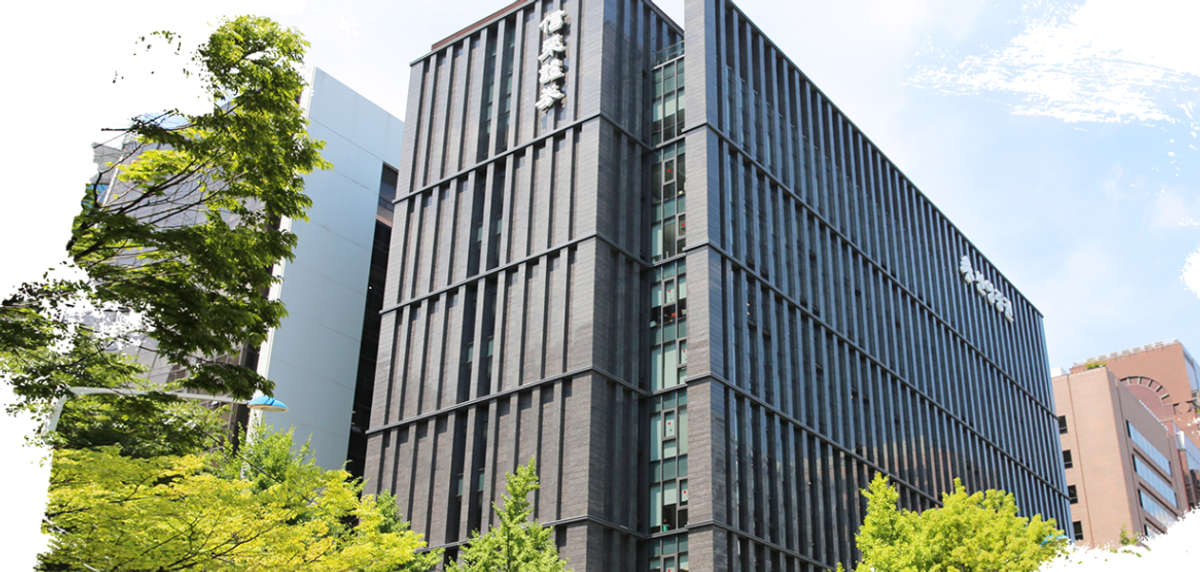
Company background
Shinyoung Securities, founded in 1961, is one of South Korea's more venerable mid-sized brokerages, with a track record stretching back more than six decades. It has long been known for its strengths in wealth management and fund distribution, and has cultivated a distinct identity around value investing — holding its own against the aggressive expansion of the country's largest securities houses.
The firm catapulted to the centre of South Korea's "Value-Up" debate in June 2026, when it resolved to cancel treasury shares worth approximately 989 billion won (around $720m), a sum widely characterised in the market as a "one-trillion-won" shareholder return. The decision lit a fire under rivals. But it has also attracted sharp criticism, with observers arguing that the move is entangled with the controlling family's efforts to consolidate its grip on the company and manage a succession. Shinyoung has become the starkest illustration yet of what analysts are calling the "dual nature of Value-Up" — a government-backed programme to improve corporate valuations that can, by design or accident, serve owners as readily as shareholders.
Business model and financial profile
Shinyoung's revenues are drawn from brokerage commissions, wealth management, investment banking and proprietary trading. Its wealth-management franchise is considered its most durable asset, providing a stable base of long-term retail clients. Relative weaknesses include a smaller capital base than the major brokerages and a slower pace of digital transformation — structural disadvantages that have persistently constrained its growth.
The firm discloses limited financial detail by the standards of a KOSPI-listed company (South Korea's main stock exchange). What the scale of the share cancellation does confirm, indirectly, is that Shinyoung had accumulated very substantial capital — close to one trillion won worth of treasury shares sitting on its balance sheet.
Chronology of events
*June 4th, 2026 — The announcement.* Shinyoung's board resolved to cancel treasury shares with a market value of approximately 989 billion won. The company described the decision as being "in the interest of enhancing shareholder value." Its share price jumped sharply on the day, making it one of the most closely watched stocks in the market.
*June 5th, 2026 — A wave of competition.* The move immediately rippled across the industry. Multiple news outlets declared that Shinyoung had triggered an "arms race in shareholder returns" among Korean brokerages. Daeshin Securities, marking its 64th anniversary, announced a separate cancellation of 2.55 million treasury shares the same week. Pressure on smaller brokerages to follow suit intensified.
*June 18th, 2026 — The backlash begins.* Within a fortnight of the announcement, several publications turned their attention to the mechanics of the deal. When a company cancels treasury shares, the total number of shares in circulation falls and each remaining shareholder's percentage stake rises automatically — including that of the controlling family. Analysts estimated that Chairman Won Jong-seok and his relatives would see a meaningful uplift in their ownership stake as a direct result of the cancellation. Headlines asking "why the owner is smiling despite a trillion-won giveaway" began circulating. Shinyoung responded that the decision reflected "a long-standing commitment to responsible management," but the scepticism did not fully dissipate.
*June 19th, 2026 — New management.* The company appointed Kim Dae-il as its new chief executive. The simultaneous arrival of a new leader and the landmark capital return intensified scrutiny of the firm's strategic direction, and raised questions about whether the incoming CEO would provide genuine momentum behind its Value-Up commitments.
The controversy unpacked
The structural issue at the heart of this affair is not unique to Shinyoung, but the firm's case illustrates it with unusual clarity. South Korea's Value-Up programme was launched by the government to push listed companies — many of which trade at deep discounts to book value — to improve returns to all shareholders. Share cancellations are one of the approved tools.
The problem is that cancelling treasury shares is not a neutral act when ownership is concentrated. Chairman Won had also attracted attention for his personal purchases of the company's treasury shares at relatively low prices — raising questions about whether an individual could benefit twice over: first by acquiring shares cheaply, and then by seeing the company itself destroy shares, pushing the remaining price higher. Shinyoung denied that any conflict of interest existed, but the controversy has not gone away.
More broadly, critics argue that the government's programme has failed to account adequately for this dynamic. Reforms to commercial law — including restrictions on the voting rights attached to treasury shares and mandatory cancellation requirements — are increasingly being discussed as necessary safeguards.
A separate debate concerns capital allocation. Shinyoung had the option of deploying that trillion won to expand its business, invest in technology or diversify its revenue streams. Choosing instead to extinguish the shares raises a legitimate question: is cancellation the best use of capital for a mid-sized broker that already faces structural disadvantages in scale and digital capability?
What comes next
For the share cancellation to be judged a genuine success, Shinyoung will need to address three challenges. First, it must demonstrate that this is not a one-off gesture by publishing a credible, medium-term framework for shareholder returns — covering dividends as well as further buybacks. Second, it needs to shore up governance. A cancellation that incidentally strengthens the founding family's position demands, as a minimum, a robustly independent board and enhanced disclosure. Third, the new chief executive must show that capital efficiency translates into improved profitability. Without genuine gains in return on equity and operating profit, a rising share price will rest on a thin foundation.
Assessment
By the standards of South Korea's mid-tier brokerage industry, a cancellation approaching one trillion won is extraordinary, and it has unquestionably accelerated an industry-wide conversation about shareholder returns. The positive reading is straightforward: Shinyoung heard the government's message, acted decisively, and moved markets.
The more complicated reading is that the deal is overdetermined — that it simultaneously serves the interests of outside shareholders, the objectives of the Value-Up programme, and the dynastic ambitions of the controlling family. These purposes need not be mutually exclusive, but neither are they identical. Shinyoung's trillion-won moment will most likely be remembered as both a milestone in Korean capital-market reform and a reminder that the instruments of shareholder value can be turned to more than one purpose.
*Editor's note: This article draws on press reports published through June 2026. Detailed financial figures for Shinyoung Securities that remain undisclosed in public filings have been omitted; all uncertain items are clearly indicated.*