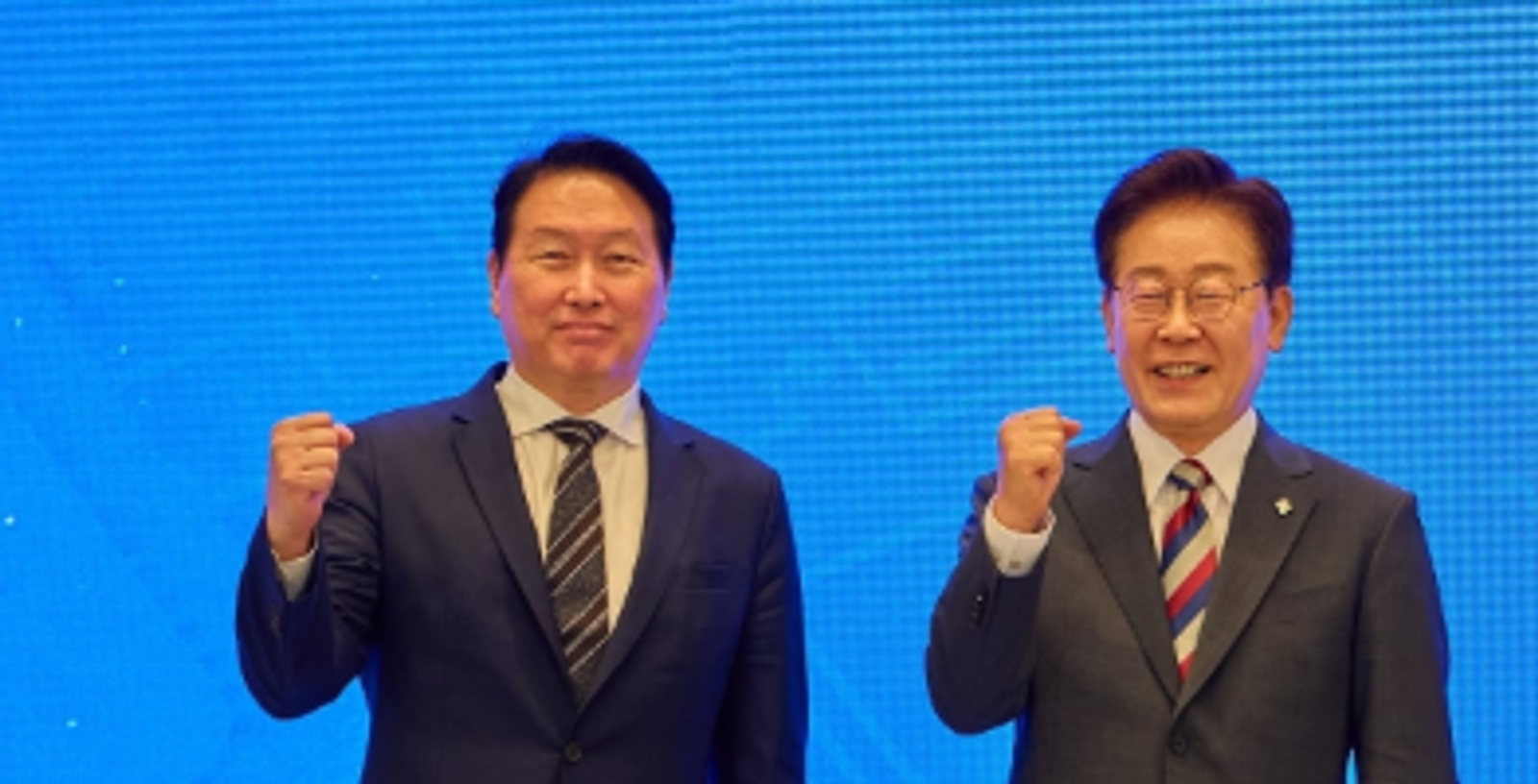
SK Group's chairman, Chey Tae-won, has put two numbers on the table: 1,000 trillion won earmarked for AI data centres, and 1,100 trillion won for expanding semiconductor supply chains. Together, the 2,100 trillion won ($1.5 trillion) commitment represents a scale of strategic ambition without precedent in South Korean corporate history.
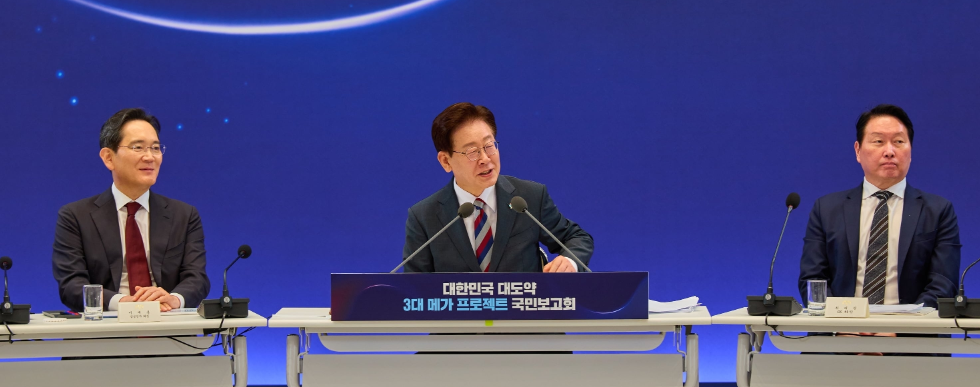
Just how large is 2,100 trillion won?
The figure strains comprehension. It is more than three times South Korea's entire annual national budget of roughly 656 trillion won. It roughly equals the total market capitalisation of Samsung Electronics and comfortably exceeds the GDP of many mid-sized economies. The investment will not come from SK alone — it encompasses global partnerships and co-investment arrangements — but the message embedded in the number is unambiguous: SK intends to be at the centre of the AI and semiconductor era.
Why now: the race to build AI infrastructure
The AI boom is no passing fad. The emergence of large language models such as ChatGPT has triggered a global arms race in computing infrastructure. Microsoft, Google, Amazon, and Meta are each committing hundreds of billions of dollars to building out AI data centres. At the heart of every such facility lies advanced semiconductor technology — and in particular, high-bandwidth memory (HBM).
HBM is a high-performance chip architecture in which multiple layers of memory are stacked vertically, enabling the rapid data transfer that AI workloads demand. Put simply, the graphics processing units (GPUs) that serve as AI's brain cannot function at speed without HBM as their ultra-fast memory. SK Hynix, SK Group's semiconductor arm, is already one of the world's leading producers of HBM.
SK's two-pronged strategy: infrastructure and materials
Mr Chey's announcement rests on two pillars.
The first is AI data-centre investment (1,000 trillion won). SK is not content merely to supply chips; it aims to invest across the entire data-centre ecosystem — power supply, cooling systems, and telecommunications networks included. This is, in effect, a "full-stack" infrastructure strategy.
The second pillar is semiconductor supply-chain expansion (1,100 trillion won). SK Hynix is already widely regarded as a world leader in HBM technology. The group now intends to scale production capacity dramatically to capture surging demand for AI chips. Construction of a new fabrication facility in Indiana, in the United States, is part of this push to diversify manufacturing beyond South Korea.
The winner-takes-all logic of chip investment
The semiconductor industry operates by a harsh rule: companies that fall behind in capital expenditure rarely recover their position. When Japanese chipmakers pulled back on investment in the 1980s and 1990s, South Korea's Samsung and Hynix filled the vacuum and rose to become the world's top two memory producers. More recently, Intel's hesitation over foundry investment allowed TSMC to consolidate its dominance of contract chip manufacturing.
Today, AI data-centre construction and HBM demand are growing faster than any previous semiconductor cycle. When one player secures the supply chain early, late-moving rivals find the gap almost impossible to close. Mr Chey's 2,100 trillion won is, at its core, a declaration that SK will not be caught on the wrong side of that dynamic.
Wider economic consequences
An investment of this scale carries implications well beyond SK's own balance sheet. Hundreds of South Korean suppliers of semiconductor equipment, materials, and components stand to benefit. Overseas — particularly in the United States — the investments generate jobs and tax revenues, and serve as diplomatic assets. SK Hynix's Indiana plant, for instance, has strengthened South Korea's hand in trade negotiations with the Trump administration, giving Seoul tangible leverage in discussions over tariffs and market access.
The risks should not be dismissed
The outlook is not without shadows. Concerns about an AI bubble persist. Should Big Tech's AI spending yield returns more slowly than anticipated, demand for data-centre capacity and advanced memory could fall sharply. The collapse of the dotcom boom in the early 2000s — which bankrupted many telecoms infrastructure companies that had overbuilt in anticipation of internet demand — stands as a cautionary precedent. Geopolitical risks add further uncertainty: China's drive for semiconductor self-sufficiency and shifting US export controls could disrupt markets at any moment.
The strategic signal behind the numbers
Mr Chey's announcement is ultimately less an investment plan than a statement of strategic conviction. It signals to global partners and investors alike the direction in which SK is heading. Behind the 2,100 trillion won figure lies a single, firm belief: that without AI infrastructure and advanced semiconductors, nothing in the future economy will function.
The contest for AI supremacy has already begun. SK has just planted its flag at the centre of the battlefield.