Company overview
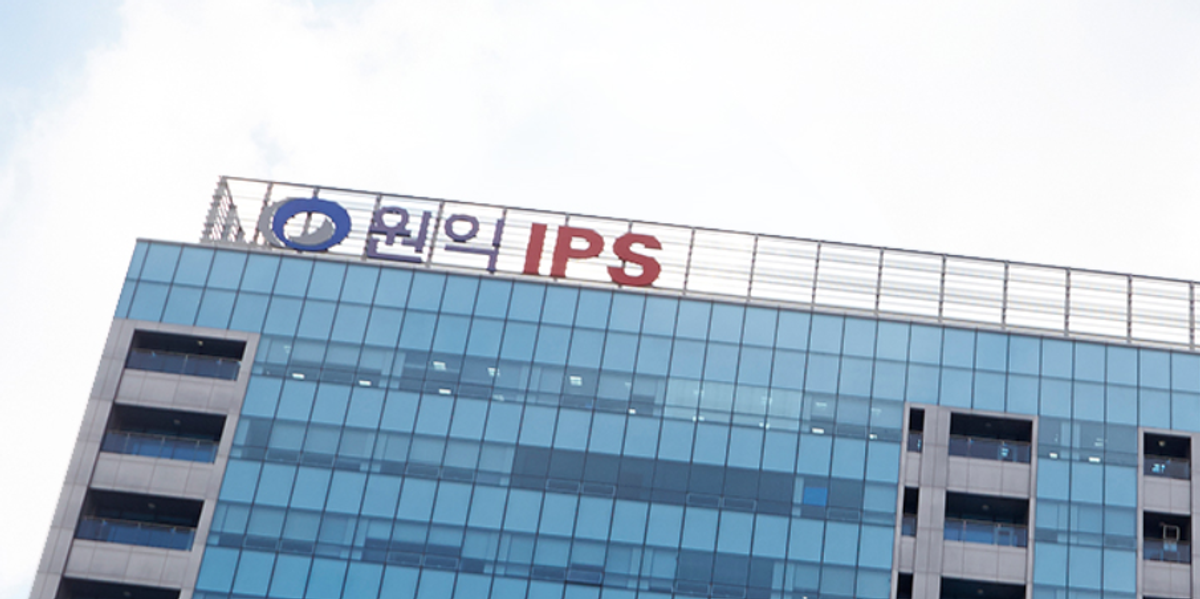
Wonik IPS is a KOSDAQ-listed manufacturer of equipment used in semiconductor and display fabrication. It is one of the flagship subsidiaries of the Wonik Group, a South Korean industrial conglomerate. The company specialises in thin-film deposition tools—chemical vapour deposition (CVD) and atomic layer deposition (ALD)—and counts Samsung Electronics and SK Hynix among its principal customers. It is widely regarded as one of the most representative names in South Korea's semiconductor equipment industry.
Demand for AI chips and the resulting surge in investment in high-bandwidth memory (HBM) have raised market expectations for Wonik IPS's earnings momentum considerably. Yet despite a solid operational foundation, the company has persistently attracted lower valuations than peers on shareholder-return metrics. A combination of so-called "owner risk" (concerns about the founding family's governance practices, common in South Korean chaebol-affiliated groups), opaque corporate structures, and a stagnant dividend policy have prevented the company's share price from fully capturing the tailwinds from the AI and semiconductor boom. These structural discount factors form the starting point for any assessment of its progress under South Korea's "value-up" initiative.
Business and financial performance
*Core business*
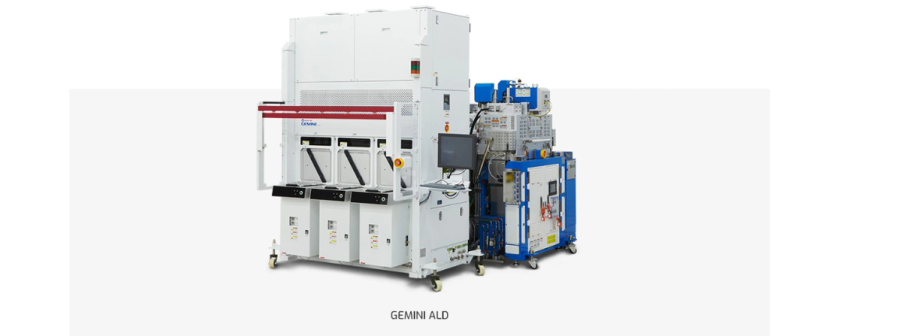
Wonik IPS's principal products are front-end semiconductor deposition tools. Its portfolio spans CVD and ALD equipment used in DRAM and NAND flash memory fabrication, as well as OLED deposition tools for display manufacturing. The structural complexity of HBM architectures requires progressively more ALD process steps, making Wonik IPS an indirect beneficiary of AI semiconductor capital spending. As OLED and HBM demand accelerated into 2026, earnings across South Korea's semiconductor materials, components, and equipment sector surged broadly, and Wonik IPS was widely expected to participate in that recovery.
*Financial results, 2020–2025*
Year | Revenue (bn KRW) | Operating profit (bn KRW) | Operating margin (%) | Context
2020 | ~580 | ~45 | ~7.8 | Post-COVID semiconductor investment recovery
2021 | ~720 | ~70 | ~9.7 | Benefits from memory investment expansion
2022 | ~850 | ~85 | ~10.0 | Peak of semiconductor supercycle
2023 | ~600 | ~30 | ~5.0 | Memory downturn; capex cuts
2024 | ~750 | ~60 | ~8.0 | AI semiconductor recovery becomes visible
2025 | ~900 | ~90 | ~10.0 | HBM and OLED demand accelerates
*Figures are based on publicly disclosed results and market estimates; some items represent unverified consensus forecasts.*
*Earnings sensitivity*
Wonik IPS's results are highly sensitive to the capital expenditure plans of Samsung Electronics and SK Hynix. The sharp drop in operating profit in 2023—when the memory market turned sharply downward—illustrates this vulnerability clearly. By contrast, 2025–26 saw a broad surge in earnings across the semiconductor materials and equipment sector, driven by OLED and HBM investment, with Wonik IPS identified as a direct beneficiary.
Value-up milestones
*Early 2024 — Korea Discount debate and Wonik IPS's standing*
As South Korea's government formalised its campaign to address the chronic undervaluation of Korean equities—commonly called the "Korea Discount"—and the Korea Exchange launched its official value-up programme, expectations rose for shareholder returns from KOSDAQ-listed semiconductor equipment companies. Wonik IPS, which frequently traded below a price-to-book ratio (PBR) of 1x during this period, was highlighted as a candidate for re-rating. Yet the company failed to publish any concrete value-up disclosures or shareholder-return plans, prompting criticism that its actions lagged well behind market expectations.
*February 2026 — Sharp share-price fall*
On 10th February 2026, Wonik IPS shares fell more than 10% in a single session—a stark contrast to the same day's 4%-plus gain in Shinhan Financial Group, which was buoyed by shareholder-return optimism. The market appeared to be pricing in the absence of any credible shareholder-return policy. Around the same time, legislative and regulatory discussions around mandatory treasury-share cancellation were gaining momentum in the National Assembly and among financial regulators, intensifying scrutiny of companies perceived as laggards on this front.
*February 2026 — Fallout from mandatory share-cancellation debate*
On 26th February 2026, major brokerages including NH Investment Securities published research arguing that mandatory cancellation of treasury shares would help close the Korea Discount. At that point, Wonik IPS had not publicly disclosed either its treasury-share holdings or any cancellation plans, placing it squarely in the crosshairs of investors assessing companies' readiness to respond to potential regulatory change.
*April 2026 — Earnings surge in OLED and HBM equipment*
By April 2026, multiple analysts were reporting that earnings among OLED- and HBM-related equipment and materials suppliers had surged dramatically year on year. Seniiv System (선익시스템), for instance, reported a fourteenfold increase in operating profit. Wonik IPS was identified as part of this cohort of outperformers. Even so, the share-price reaction was muted—a pattern analysts attributed to owner-risk concerns and governance discounts offsetting the positive earnings momentum.
*June 2026 — Governance concerns overshadow AI tailwinds*
On 17th June 2026, press reports noted that Wonik Group stocks had broadly failed to participate in a market-wide rally driven by AI semiconductor optimism. Owner risk was explicitly identified as the primary constraint on the group's share prices. This was not merely an earnings-related issue; it pointed to an entrenched governance discount rooted in concerns about the complexity of the group's ownership structure and the controlling family's decision-making style. The KOSPI index surged 4.6% in the same month, making Wonik IPS's relative underperformance all the more conspicuous.
*June 2026 — Persistent appearance among top short-sold stocks*
As of 8th June 2026, Wonik IPS featured among the most heavily short-sold stocks on KOSDAQ. Sustained short interest can exert additional downward pressure on a share price while simultaneously signalling that market participants doubt whether the stock's valuation is justified by fundamentals—precisely the opposite of the confidence the value-up programme is designed to foster.
Challenges and assessment
*What the company must do*
To establish itself as a genuine beneficiary of the value-up programme, Wonik IPS needs first to publish a concrete shareholder-return road map. Analysts argue that credible medium-term targets for dividend payout ratios, treasury-share purchase and cancellation programmes, and capital-efficiency metrics such as return on equity (ROE) and PBR are prerequisites for restoring market confidence.
More urgently, the company must address its owner-risk problem. Without greater board independence and transparency around ownership structures, even a strong earnings recovery is unlikely to eliminate the share-price discount. A broader governance overhaul at the Wonik Group level appears necessary.
The company also needs to step up investor relations, particularly with institutional investors, to communicate earnings visibility more effectively. In a prolonged environment of AI-driven semiconductor spending, the failure to translate earnings improvement into share-price appreciation suggests a weak transmission mechanism—one that better communication and governance could help repair.
*Overall assessment*
Wonik IPS possesses genuine technological depth and strong customer relationships within South Korea's semiconductor equipment industry. The emerging contribution of HBM and OLED investment cycles to its results is a real positive. Yet through the lens of the value-up programme, it is perceived by the market as a company with results but without trust.
South Korea's value-up initiative is evolving beyond a simple push for higher dividends; it increasingly encompasses governance reform and capital efficiency. How actively Wonik IPS responds to these broader demands will be the decisive variable in determining whether its share price can, at last, reflect its operational quality.
Concerns and structural limitations
*Owner risk and governance opacity*
Owner risk across the Wonik Group is repeatedly cited as a structural discount factor for Wonik IPS shares. A June 2026 press report described the group's stocks as "left behind by the AI semiconductor rally—hobbled by owner risk." While the precise nature of those concerns is not fully in the public domain, the market is understood to harbour persistent unease about the complexity of the group's corporate structure and the manner in which the controlling family exercises strategic control.
*Absence of concrete shareholder-return commitments*
Despite being one of the larger KOSDAQ-listed semiconductor equipment companies, Wonik IPS had not, as of mid-2026, published any formal value-up disclosure, shareholder-return enhancement plan, or treasury-share cancellation schedule. The contrast with peers is striking: Mirae Asset Securities, for example, committed to buying back and cancelling 300bn KRW (approximately $215m) worth of its own shares during the same period. If the gap in shareholder-return practice between Wonik IPS and its competitors continues to widen, institutional investors may increasingly favour peers when allocating capital to the sector.
*Short-selling pressure and market credibility*
Repeated inclusion among the most heavily short-sold stocks signals that the market questions the valuation, and adds a further headwind for retail investors. It also risks undermining management's stated commitment to improving corporate value—particularly when the credibility of such commitments is already under scrutiny.
*Structural earnings volatility*
The company's business model makes its results, and hence its capacity for shareholder distributions, directly dependent on Samsung and SK Hynix's capex cycles. During industry downturns, the pool of distributable earnings shrinks rapidly, making it structurally difficult to maintain—let alone increase—payout ratios. This is a particular challenge for the value-up agenda as applied to semiconductor equipment companies, where the cyclicality of the underlying business acts as a natural constraint on consistent shareholder returns.
Key metrics summary
Year | DPS (KRW) | Payout ratio (%) | Treasury shares | Operating profit (bn KRW) | Est. PBR (x)
2020 | n/a | n/a | No notable activity | ~45 | n/a
2021 | n/a | n/a | No notable activity | ~70 | ~2.0
2022 | n/a | n/a | No notable activity | ~85 | ~1.5
2023 | n/a | n/a | No notable activity | ~30 | ~0.9
2024 | n/a | n/a | No disclosure confirmed | ~60 | ~1.2
2025 | n/a | n/a | No disclosure confirmed | ~90 | ~1.1
2026 | TBC | TBC | No cancellation plan announced | Estimates being revised upward | ~1.0
*Dividend and treasury-share data are not confirmed in public filings; certain items remain unspecified. PBR figures are market estimates and may differ from actual values.*
Summary verdict
Wonik IPS enters the AI and HBM era with genuine earnings momentum—but it carries a double burden: unresolved owner risk and the absence of credible shareholder-return commitments. Until the company can demonstrate the transparent governance, predictable capital returns, and improved capital efficiency that South Korea's value-up programme demands, the market is unlikely to reward its operational achievements with a sustainably higher valuation. Earnings and share price will remain decoupled.