Company Overview
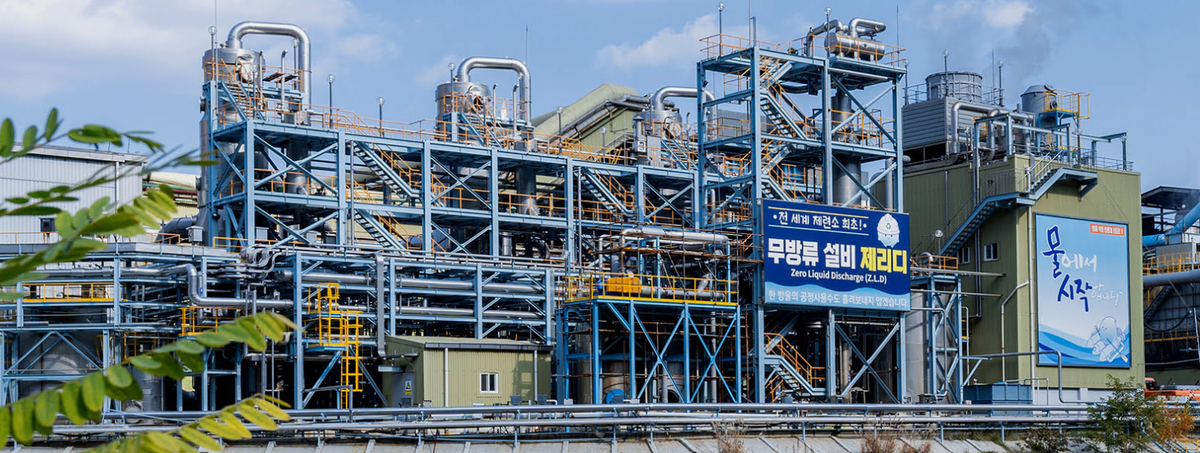
Youngpoong (KOSPI: 000670) is a non-ferrous metals specialist whose core business is the smelting of zinc and lead. Its commanding position as the largest shareholder of Korea Zinc places it at the apex of South Korea's non-ferrous metals industry. Founded in 1949, Youngpoong has operated its Seokpo smelter in North Gyeongsang Province for decades. Because the financial results of Korea Zinc — in which Youngpoong holds roughly a 25% stake — are consolidated directly into Youngpoong's accounts, the parent company functions in practice as a holding vehicle whose valuation tracks that of its subsidiary.
Youngpoong's shareholder-value credentials came under intense scrutiny in 2024 and 2025, when a fierce battle for control of Korea Zinc erupted between a coalition led by private-equity firm MBK Partners and Youngpoong chairman Jang Hyung-jin on one side, and Korea Zinc chairman Choi Yun-beom on the other. Far from being celebrated as a champion of shareholder returns, Youngpoong found itself condemned for neglecting them. Its cash dividend of five Korean won per share — a nominal fraction of a cent — became a byword for shareholder parsimony among domestic and international investors alike, and a rallying point for demands to overhaul its governance. The ensuing pressure from retail shareholders, institutional investors and activist groups has made Youngpoong's value-up journey, in effect, a chronicle of change imposed from without.
Business Foundations and Financial Performance
Smelting Operations and the Korea Zinc Structure
Youngpoong's business divides into two broad segments: direct smelting operations and investment holdings. The Seokpo smelter produces hundreds of thousands of tonnes of zinc and lead annually, making it a pivotal supplier in the domestic market. However, in terms of profit contribution, dividends received and equity-method gains from the Korea Zinc stake weigh far more heavily than the smelting division itself. This structure means that Youngpoong's enterprise value is more a function of Korea Zinc's earnings and share price than of its own operational performance.
Financial Performance by Year
Year | Operating Profit (consolidated, est.) | Net Profit (consolidated, est.) | Key Factors
2021 | c. ₩180bn | c. ₩150bn | Benefited from rising zinc prices
2022 | c. ₩210bn | c. ₩180bn | Strong Korea Zinc results fed through
2023 | c. ₩120bn | c. ₩90bn | Zinc price decline; higher environmental compliance costs
2024 | Loss (est.) | Loss (est.) | Seokpo environmental issues; legal costs of control battle
2025 | Recovery (est.) | Partial improvement (est.) | Restructuring and early shareholder-return policy shifts
Standalone results at Youngpoong are heavily influenced by Seokpo's utilisation rates and the cost of meeting environmental regulations. In 2024, a deterioration in smelting profitability compounded by legal expenses from the control dispute pushed the company into the red.
Ownership and the Peculiarities of Governance
The Chang family, including chairman Jang Hyung-jin, is believed to hold — directly and indirectly — a majority of Youngpoong's shares that far exceeds 50%. Critics have long argued that this overwhelming concentration of founding-family ownership has left minority shareholders poorly protected and the board insufficiently independent.
Key Value-Up Developments
2024: The Korea Zinc Control Battle and the Governance Reckoning
When MBK Partners and Youngpoong launched a takeover bid for Korea Zinc in the second half of 2024, the spotlight fell sharply on Youngpoong's governance shortcomings. Comparisons with Korea Zinc's far more generous shareholder-return policy proved damaging. The five-won-per-share dividend crystallised the criticism, cementing Youngpoong's reputation as a textbook case of a deeply undervalued company whose asset value was being systematically withheld from ordinary shareholders.
March 2026: AGM Reforms and Value-Up Pledges
Ahead of its annual general meeting in March 2026, Youngpoong announced it would incorporate amendments to South Korea's revised Commercial Act into its articles of association and push ahead with measures to enhance shareholder value. The company described these steps as part of a sustained commitment to shareholders, though observers noted that concrete numerical targets and detailed implementation plans were conspicuously absent.
March 2026: KZ Precision's Shareholder Proposals
On 5th March 2026, Youngpoong said it would review and put to the AGM a package of governance and shareholder-return proposals submitted by KZ Precision — a shareholder understood to be aligned with Korea Zinc chairman Choi Yun-beom. The proposals called for an expanded scope for the separate election of audit committee members (a mechanism designed to strengthen the independence of oversight) and the cancellation of treasury shares to deliver tangible value to shareholders. The move was widely interpreted as a dual-purpose play: exploiting Youngpoong's governance vulnerabilities while cultivating common cause with minority investors.
March 2026: The Five-Won Dividend Controversy and the Company's Defence
On 13th March 2026, Youngpoong's five-won-per-share cash dividend attracted intense media coverage, reigniting the "stingy dividend" controversy. The company responded by arguing that, although the headline cash payment was small, its total shareholder-return programme — measured against the underlying asset value — amounted to approximately ₩30bn. Management put its per-share intrinsic asset value at ₩1,685, framing this as context for understanding the apparent gap between the cash payout and the company's worth. The market was largely unconvinced.
March 2026: Cancellation of 203,500 Treasury Shares
On 25th March 2026, Youngpoong cancelled 203,500 treasury shares, presenting the move as evidence of its commitment to enhancing shareholder value. The action followed its review of KZ Precision's cancellation proposal, and the shares retired were said to carry a meaningful market value.
May 2026: Reaffirmation of Shareholder-Return Intent
On 17th May 2026, Youngpoong reiterated its intention to review KZ Precision's remaining shareholder proposals and bring them to a general meeting, pledging to maintain its course on shareholder-value improvement. The statement was read as an attempt to keep governance dialogue open even as the broader corporate control dispute continued to simmer.
Challenges and Assessment
Outstanding Challenges
For Youngpoong to become a genuine beneficiary of South Korea's corporate value-up drive, structural change — not isolated gestures — will be required. Four challenges stand out.
First, a fundamental reset of dividend policy. So long as the five-won cash dividend endures as a symbol, investor confidence will remain elusive. The company needs to adopt and publicly commit to a payout ratio tied to its earnings.
Second, genuine board independence. The mere fact that expanded audit committee elections had to be demanded by outside shareholders speaks volumes about the market's scepticism. Greater diversity in non-executive director appointments and more substantive audit and remuneration committees are widely considered prerequisites.
Third, resolution of the Seokpo environmental overhang. Prolonged regulatory friction and community opposition threaten both the smelter's profitability and any meaningful rerating of the overall business. The Seokpo facility has repeatedly featured in controversies over pollution of the Nakdong River, and disputes with environmental regulators have generated production disruptions and substantial remediation costs.
Fourth, stabilisation of the Korea Zinc relationship. Until the corporate governance battle is conclusively settled, the uncertainty surrounding control will continue to weigh on Youngpoong's valuation.
Assessment
Viewed against the company's history, the measures taken in 2026 — retiring over 200,000 treasury shares, incorporating the revised Commercial Act, and agreeing to table KZ Precision's proposals — represent a discernible shift. Yet the central question is whether these changes reflect a genuine conversion or a defensive reaction to extreme external pressure. The market's verdict is largely sceptical. Insisting that a five-won cash dividend represents a ₩30bn shareholder-return programme is an argument that few investors find persuasive. The share buyback and cancellation will earn credibility only if they form part of a sustained, systematic policy rather than a one-off response to an acute crisis. Building a corporate culture that pursues shareholder value consistently, without the spur of an external shock, remains Youngpoong's fundamental challenge.
Controversies and Limitations
The Structural Contradiction Exposed by the Five-Won Dividend
Youngpoong's five-won-per-share payout is not merely evidence of tightfistedness; it encapsulates a structural contradiction at the heart of the company's governance. While hundreds of billions of won in dividends flow into Youngpoong from its Korea Zinc stake, very little of that cash is passed on to ordinary shareholders. The inescapable inference is that the arrangement primarily serves to consolidate the founding family's control and accumulate cash internally — at the expense of everyone else.
The Limits of Externally Driven Reform
Youngpoong's 2026 value-up initiatives were triggered, in large part, by shareholder proposals from KZ Precision — an entity linked to the opposing camp in the control battle. This raises legitimate questions about whether the board and management have genuinely embraced the shareholder-value agenda, or whether they have adopted shareholder-friendly measures purely as a defensive manoeuvre. If the external pressure dissipates, a reversion to prior habits cannot be ruled out.
The Entanglement of Control Politics and Reform
Youngpoong's governance reforms are so thoroughly intertwined with the Korea Zinc control battle that it is difficult to assess them on their merits. Whether the company's receptiveness to KZ Precision's proposals reflects authentic governance improvement or tactical positioning in a corporate power struggle is a question the market struggles to answer. As one financial market participant was reported to have put it: "Youngpoong's value-up is still more a product of circumstance than of conviction."
The ESG Discount
Environmental risk is a dimension of Youngpoong's value-up story that tends to be underappreciated. The Seokpo smelter has been embroiled in repeated controversies over water pollution in the Nakdong River basin, and a protracted standoff with the Ministry of Environment has produced both production disruptions and heavy remediation costs. As global institutional investors continue to tighten their ESG criteria, this environmental liability is likely to sustain a long-term discount on the company's valuation.
Key Data Summary
Year | Cash Dividend (per share) | Treasury Share Cancellation | Operating Profit (consolidated, est.) | PBR (est.) | Key Value-Up Events
2021 | — | — | c. ₩180bn | 0.2–0.3× | —
2022 | — | — | c. ₩210bn | 0.2–0.3× | —
2023 | — | — | c. ₩120bn | c. 0.2× | —
2024 | ₩5 | Unconfirmed | Loss (est.) | Below 0.2× | Control battle erupts; governance controversy intensifies
2025 | — | — | Recovery (est.) | c. 0.2× | Value-up policy response begins
2026 | ₩5 (contested) | 203,500 shares cancelled | Not finalised | — | Treasury cancellation; KZ Precision proposals tabled; revised Commercial Act incorporated; ₩30bn shareholder-return figure cited