The won-dollar exchange rate has been hovering around 1,540 per dollar, briefly breaching 1,560 in June—its highest level since the global financial crisis of March 2009. As of 24th June, the rate stood at approximately 1,539. The currency's slide has been sharp even by regional standards: while Asian currencies broadly weakened after rising energy import costs followed the outbreak of conflict involving Iran, the won has fallen particularly steeply. Paradoxically, the currency has depreciated even as South Korea's exports and trade surplus have surged, adding to market confusion.
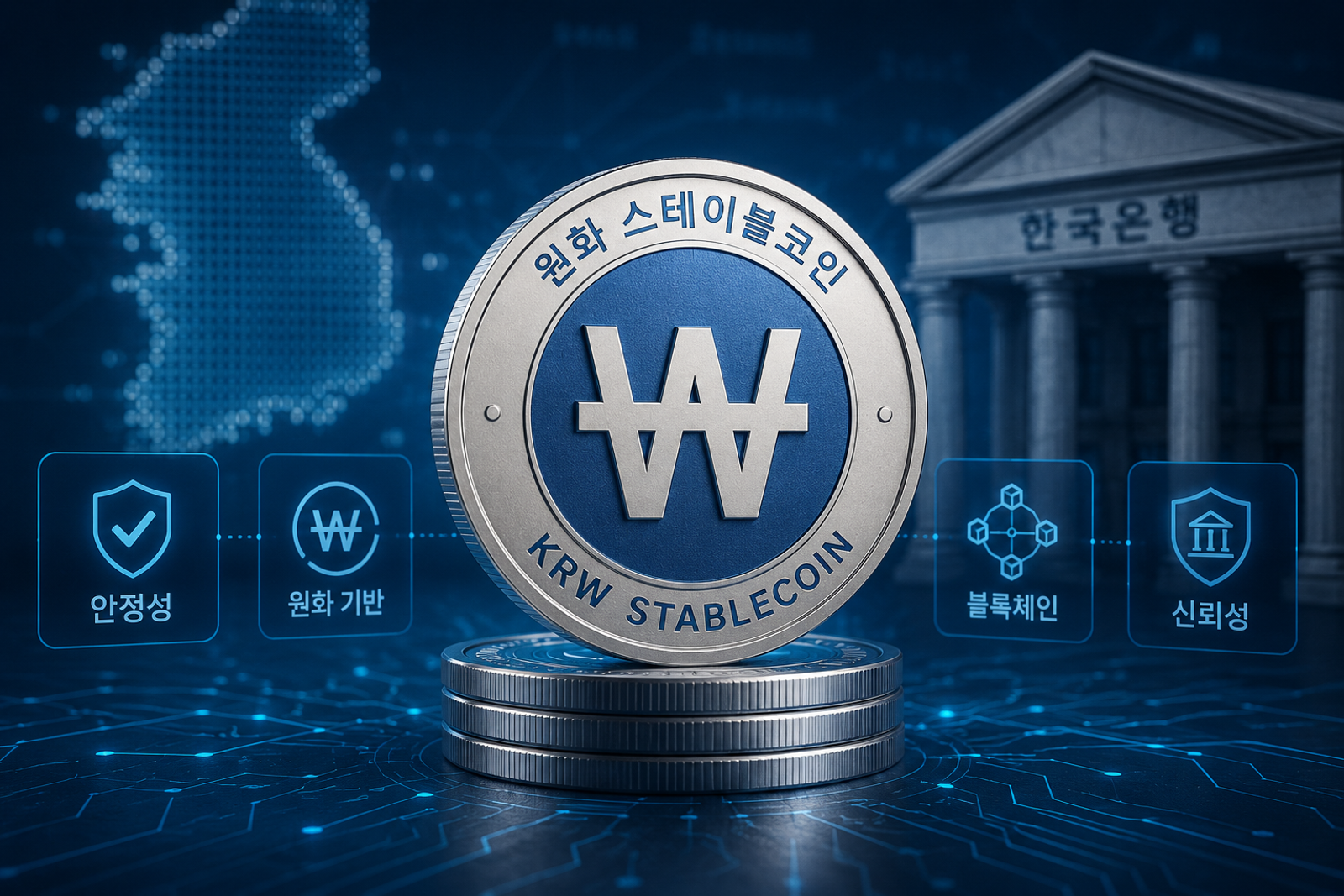
The implications for the nascent debate over a won-denominated stablecoin are structural. A won-pegged stablecoin, by design, maintains a one-to-one peg with the won, so its domestic value would not be directly eroded by currency weakness. The real problem lies in dollar-denominated purchasing power. The weaker the won, the more attractive dollar stablecoins such as USDT and USDC become as stores of value—and the stronger the grip of dollar-denominated instruments that already dominate South Korea's crypto market. According to Chainalysis, stablecoin transactions in South Korea totalled roughly $64 billion in the year to June 2025, with a substantial share conducted in USDT. In a market where dollar stablecoins have become the de facto standard in the absence of a won alternative, a weakening currency makes it still harder to reclaim lost ground.
The legal foundations for issuing a won stablecoin remain equally uncertain. Negotiations between the Bank of Korea, the Financial Services Commission (FSC), the Ministry of Economy and Finance, and the National Assembly have stalled over a fundamental question: who should be allowed to issue one. The central bank insists on a consortium model in which banks hold at least a 51% stake; the FSC argues that enshrining a specific ownership threshold in law would stifle innovation. An original target of introducing draft legislation by the end of 2025 has slipped, with no clear timetable in sight. "South Korea is in a situation where it must issue a stablecoin, yet the gaps between the Bank of Korea, the FSC, the Ministry of Finance, and the National Assembly are so wide that discussions keep getting delayed," said Professor Hwang Seok-jin of Dongguk University. "At this point, regardless of who says what, the priority has to be getting something issued."
The longer the regulatory vacuum persists, the deeper South Korea's dependence on dollar stablecoins is likely to become. At the country's major exchanges—Upbit and Bithumb—a significant portion of won-denominated trading is already conducted via USDT. If a depreciating won continues to enhance the appeal of dollar instruments, the window for a won stablecoin to gain a foothold will narrow further. Projects being developed by Toss and several commercial banks are similarly stuck at the starting line, unable to proceed without a settled legal framework. Critics warn that delays in institutional design are translating directly into a loss of market competitiveness—and, more broadly, that South Korea is ceding both visibility and monetary sovereignty in the global stablecoin landscape.
Industry consensus holds that the fate of a won stablecoin will ultimately be determined less by exchange-rate fluctuations than by the speed of legislation. Before the dollar's dominance in global stablecoin markets becomes irreversible, South Korea will need to pass the necessary laws—even against the headwind of a weak currency. Whether the won's slide dampens the political momentum for action or sharpens the urgency for it will depend, in the end, on the choices made in the National Assembly.