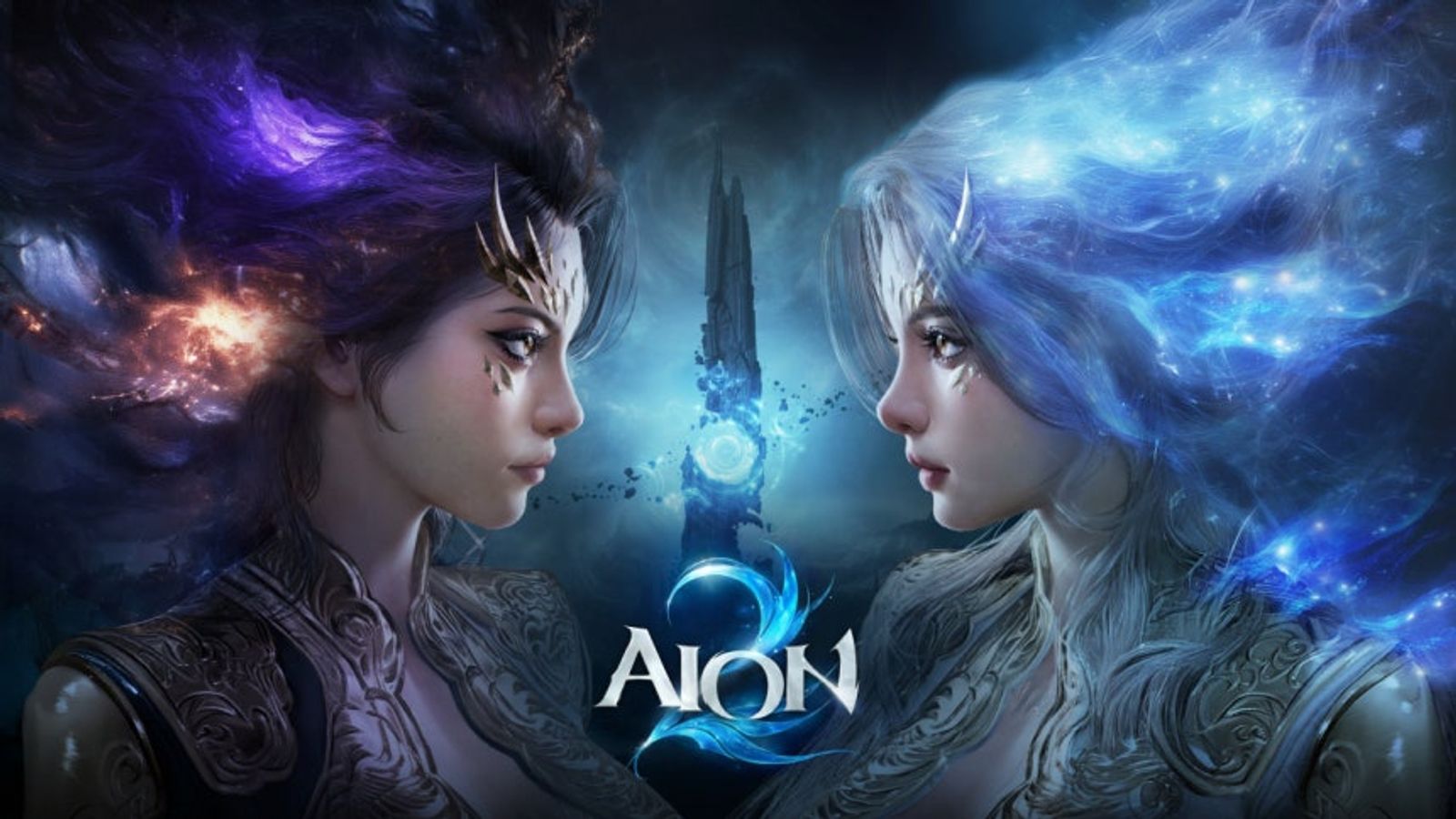
NC Soft's flagship title Aion 2 launched simultaneously worldwide on 6th October 2026, attracting 400,000 concurrent players on its first day and announcing itself forcefully to the global gaming market. For a company that has spent years mired in declining earnings, a falling share price, and painful rounds of redundancies, the launch represents an attempt to prove that its most valuable intellectual property still has the power to draw crowds.
Desperation and Determination: The Road to Aion 2
NC Soft has been under sustained pressure since 2022, when critics began questioning the company's heavy reliance on its Lineage franchise—a series of massively multiplayer online role-playing games (MMORPGs) that had long been its primary revenue engine. The absence of compelling new titles, combined with a weakening position in mobile gaming, compounded the strain. Operating profit collapsed by more than 50% in 2023 compared with the previous year, and 2024 brought a wave of voluntary redundancies and organisational restructuring. Against that backdrop, Aion 2 was developed under enormous internal pressure, tasked with nothing less than securing the company's future beyond Lineage.
The original Aion, released in 2008, was a genuine phenomenon. When it launched in North America and Europe in 2009, it attracted hundreds of thousands of concurrent players and was widely regarded as the most credible Eastern challenger to World of Warcraft. Aion 2 retains that universe and its aesthetic sensibility, but rebuilds it on Unreal Engine 5 and introduces a more dynamic combat system alongside a non-linear narrative structure—concessions to the tastes of a new generation of players.
What 400,000 Concurrent Players Actually Means
The figure demands context. On Steam, the platform's all-time peak concurrent-player record stands at roughly 450,000, set by Helldivers 2 in 2024; Elden Ring reached approximately 950,000 at launch. Within the MMORPG genre specifically, 400,000 concurrent players places Aion 2 at the very top of the historical rankings—all the more impressive given that MMORPGs, by their nature, tend to spread player activity more evenly across the day than action titles do.
The broader market backdrop is encouraging. According to a recent report by games analytics firm Newzoo, the global MMORPG market was worth approximately $25bn by 2025, with demand for cross-play between mobile and PC rising sharply. Aion 2's decision to support PC, console, and mobile simultaneously looks less like a gamble than a well-timed reading of market conditions.
The Simultaneous Global Launch as a Strategic Bet
One of the most consequential decisions NC Soft made was to abandon its traditional practice of launching in South Korea first and rolling out to other regions sequentially. That convention had the advantage of allowing servers to be stress-tested gradually, but it created information asymmetries in global communities and allowed early momentum to dissipate before international players could participate.
The original Aion suffered from this problem: its North American and European launch came more than a year after the Korean release, and analysts believe this delay cost it significant global traction. By contrast, Blizzard's World of Warcraft and Square Enix's Final Fantasy XIV both built their loyal international communities partly through near-simultaneous global launches that allowed a shared sense of discovery from day one.
"Four hundred thousand concurrent players is not merely a strong opening—it signals that Aion 2 has crossed the threshold at which a live-service game becomes viable as a long-term global operation," said one Seoul-based games analyst. "The critical variables from here will be the cadence of content updates and how carefully the monetisation model is calibrated."
A Double-Edged Reception Abroad
Overseas reaction has been a mixture of enthusiasm and wariness. On Reddit and other global gaming forums, players have praised the game's visual fidelity and its faithful yet refreshed recreation of the original's world. Anticipation for player-versus-player combat and large-scale siege warfare is particularly high.
Yet a persistent anxiety haunts the game's reception: the fear that Korean MMORPGs are structurally inclined towards "pay-to-win" monetisation, in which spending money confers meaningful competitive advantages. NC Soft has form here. Both Lineage M and Lineage W attracted fierce criticism, domestically and internationally, for aggressive monetisation practices that many players felt undermined the integrity of gameplay.
NC Soft has stated that Aion 2's revenue model will centre on a battle pass and cosmetic items—purchases that alter a character's appearance without affecting competitive performance. This is the model that has earned the greatest acceptance among Western players. However, communities will watch closely for any drift from that commitment as the game matures and revenue targets loom larger.
A Crowded Competitive Landscape
The MMORPG market that Aion 2 has entered in 2026 is more competitive than at any point in recent memory. Final Fantasy XIV continues to hold a dedicated global audience through consistent content updates. Amazon Games' New World, having stumbled badly at launch, is attempting a substantial revival. And Chinese studios affiliated with NetEase and Tencent have been releasing large-scale MMORPGs aimed squarely at international markets, eroding the advantage that Korean developers once took for granted.
Within that field, Aion 2's opening numbers affirm that Korean-developed MMORPGs retain genuine global appeal. But a cautionary tale is close to hand. Lost Ark, developed by Smilegate, reached 1.3 million concurrent players on Steam shortly after its 2022 international launch—then shed the vast majority of those players within six months. A spectacular debut, as that episode demonstrated, is a necessary but not sufficient condition for lasting success.
Financial Implications for NC Soft
Investors and analysts are watching closely for what Aion 2's performance means for NC Soft's financial recovery. If 400,000 concurrent players can be sustained, analysts estimate that monthly revenues from in-game purchases alone could run to tens of billions of Korean won. NC Soft's share price rose by more than 10% in early trading on the day of the launch announcement, reflecting the market's optimism.
"The early indicators suggest NC Soft has secured the foundation for a stable global live-service operation over the next two to three years," said a games-sector analyst at one Korean brokerage. "But sustained share price appreciation will hinge on the regularity of content updates, global server stability, and the fine-tuning of the monetisation balance."
What This Means for Korean Gaming
The early evidence from Aion 2 carries broader lessons for the Korean games industry. First, simultaneous global launches and multi-platform strategies are no longer optional—they are the baseline expectation for any title with international ambitions. Second, the "legacy IP remaster" approach—taking an established franchise and rebuilding it for modern sensibilities—has demonstrated real viability in global markets. Third, and perhaps most urgently, transparent monetisation and the cultivation of player trust remain the central challenge for Korean developers seeking to build lasting overseas audiences.
Whether Aion 2 becomes a flash in the pan or earns a place alongside Final Fantasy XIV as a durable global franchise will become clearer over the next six to twelve months. NC Soft has earned itself a genuine opportunity. Whether it can resist the short-term temptations that undermined its predecessors, and write a new chapter for Korean MMORPGs, is the question the global games industry is now asking.