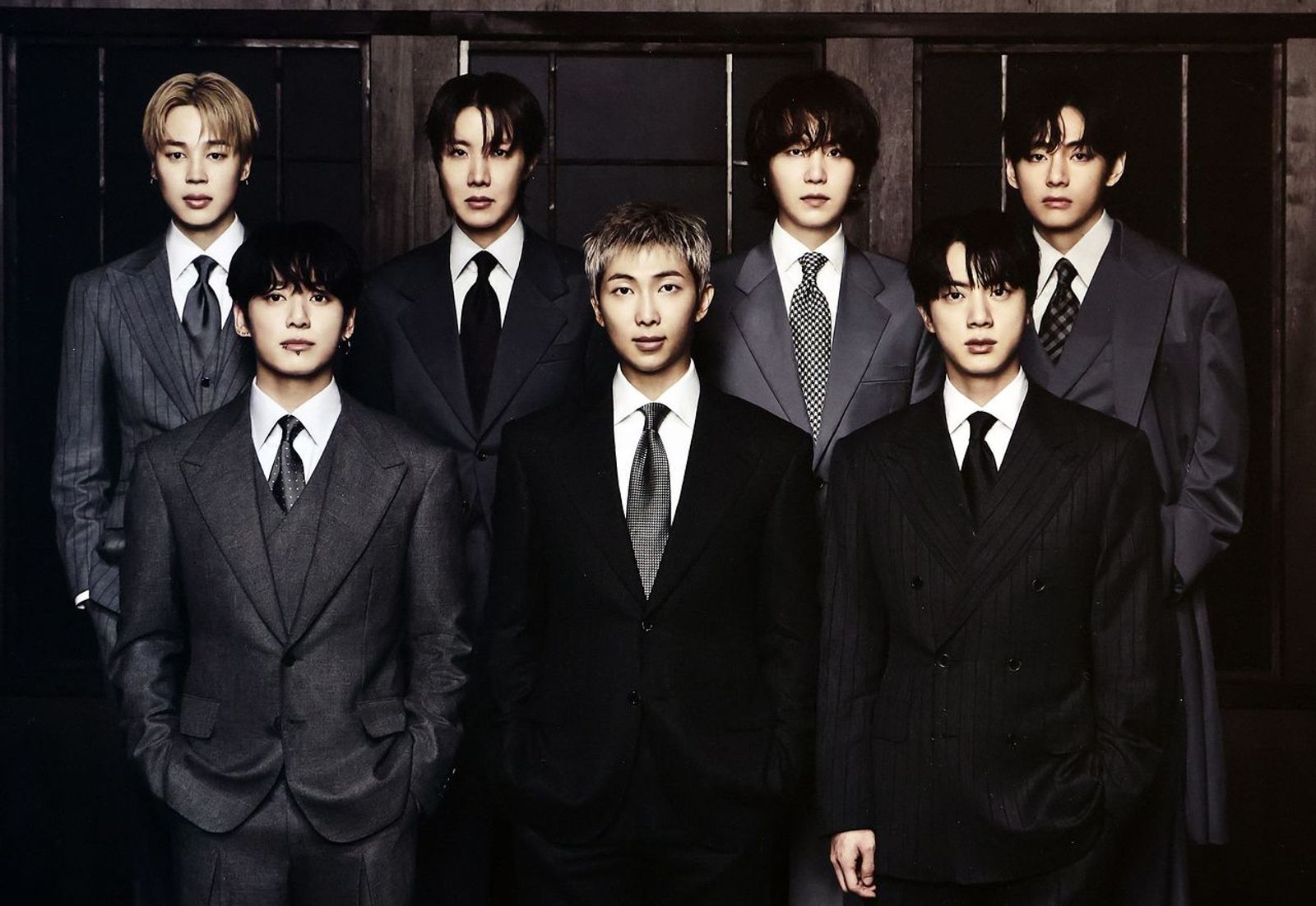
Even the most eagerly anticipated comeback in K-pop history has failed to revive HYBE's flagging share price. Once hailed as the "emperor stock" of Korean entertainment and trading above 400,000 won, HYBE has languished around 200,000 won since 2025 — roughly half its peak. Far from being a company-specific ailment, the malaise reflects a structural crisis gripping South Korea's entire entertainment industry.
Why the BTS premium has failed to materialise
BTS members completed their mandatory military service in phases from the second half of 2025, with the full group resuming activities in 2026. Under normal circumstances, the return of a supergroup of this magnitude would fire on all cylinders — album sales, concert revenues and merchandise — translating into improved earnings and a rising share price. When the question of military exemptions triggered a sharp sell-off in 2022, most analysts assumed a full recovery was simply a matter of waiting.
It has not worked out that way. According to Korea Investment & Securities, the anticipated boost from BTS's reunion had already been priced in during 2024, and the gap between when earnings would actually materialise and when markets had expected them eroded investor confidence. Wall Street's old maxim — that markets do not react to well-flagged good news — has proved equally applicable to Seoul's entertainment sector.
Internal fractures and governance risk
The deeper explanation for HYBE's underperformance lies in the corporate turmoil that erupted in 2024. A bitter management dispute between HYBE and Min Hee-jin, the former chief executive of its subsidiary label Ador, went far beyond a personnel clash. It cast doubt on the viability of HYBE's entire multi-label strategy, in which semi-autonomous creative units operate under a single corporate umbrella. As legal proceedings dragged on, institutional confidence eroded and foreign ownership declined markedly.
According to disclosures filed with South Korea's Financial Supervisory Service, foreign investors' stake in HYBE fell from roughly 23% at the start of 2024 to around 15% by the end of 2025 — a significant deterioration from a corporate-governance standpoint. Daeshin Securities Research summed up the dilemma neatly: "The multi-label structure maximises creative output, but if internal conflicts spill into the open, investor trust can evaporate overnight. It is a double-edged sword."
An industry-wide slowdown
HYBE is not alone. All four of South Korea's major entertainment companies — SM Entertainment, JYP Entertainment and YG Entertainment alongside HYBE — saw their share prices fall 30–50% from their peaks between 2024 and 2025. Data from the Korea Exchange show that its Media and Entertainment index declined approximately 38% between January 2024 and the first half of 2026.
Several structural forces are at work. First, album sales appear to have peaked. The culture of mass bulk-buying by fan communities — whereby devotees purchase multiple copies of a single release to boost chart positions and show loyalty — is maturing. According to Circle Chart (formerly Gaon Chart), the average sales growth rate between a group's debut album and its second or third release has plummeted from around 40% in the early 2020s to less than 10% today.
Second, dependence on the Chinese market has resurfaced as a vulnerability. China's fan economy, which never fully recovered after Beijing's informal ban on Korean cultural exports — known as the "hallyu ban" or *한한령* — remains fragile, particularly given the risk of renewed tensions between Washington and Beijing. Third, expansion into alternative markets such as Japan and South-East Asia has underwhelmed, limiting the effectiveness of revenue diversification strategies.
Lessons from abroad: the narrative cycle in pop-industry stocks
Similar patterns are visible elsewhere. Live Nation, the American concert-promotion giant, saw its share price more than triple as live music roared back after the pandemic, only to give back more than 30% in 2025 as antitrust proceedings brought by the US Department of Justice and fears of market saturation took hold. Warner Music Group in Britain experienced rapid multiple compression when discussions about restructuring streaming royalty arrangements began in earnest.
The common thread is that entertainment stocks command a premium precisely because they are priced on growth narratives. When those narratives falter, the re-rating is swifter and more savage than in most other sectors — a "narrative discount" in which the share price corrects well before any deterioration in reported earnings.
Variables investors should watch
The average target price set by twelve brokerages currently covering HYBE sits at around 270,000 won, implying upside of more than 30% from current levels. Consensus estimates put HYBE's 2026 revenues at roughly 2.5 trillion won (approximately $1.9bn), representing growth of 25–30% on the prior year, once the BTS world tour is factored in.
Yet optimism has its limits. Kiwoom Securities Research cautions that concert revenues are essentially one-off events, and that the pace at which HYBE can monetise its fan-community platform, Weverse, is the real test of the investment case. Monthly active users on Weverse stood at around ten million at end-2025 — a figure that has stagnated. Meanwhile, heavy investment in new ventures such as AI-powered virtual artists and global talent-search programmes is squeezing near-term profitability. Operating margins have slid from 15% in 2021 to roughly 8% in 2025.
Outlook and policy implications
For entertainment stocks to stage a genuine recovery, the industry needs to diversify its revenue base and clean up its governance — neither of which happens quickly. Analysts broadly identify three paths forward.
The first is deeper exploitation of intellectual property. Moving away from artist-dependent revenues towards film, gaming and webtoon adaptations would make earnings more stable and predictable. Japan's Avex Group offers a precedent: in the early 2010s it restructured to reduce the share of artist-related revenues from 70% to below 50%, improving its earnings quality and share-price stability in the process.
The second is genuine localisation overseas. Korean entertainment companies have begun identifying and nurturing local talent in the United States and Europe, but analysts note that such investments typically take three to five years to contribute meaningfully to earnings, requiring a long-term perspective from investors.
The third involves government support. South Korea's Ministry of Culture, Sports and Tourism allocated 320 billion won to hallyu promotion for 2025, a 15% increase on the previous year. Practitioners argue, however, that meaningful tax incentives and a more robust system for combating overseas copyright infringement would do more good than headline spending figures.
BTS's return is unquestionably a milestone — for HYBE and for K-pop as a whole. But markets are proving more sensitive to the sustainability of the underlying business than to the glamour of a star-studded comeback. The gap between the temperature of a fandom and the temperature of a share price is perhaps the starkest lesson that entertainment investors have learnt in 2026.