Company Overview
Celltrion, founded in 2002, is South Korea's pre-eminent biopharmaceutical company and one of the global pioneers in antibody biosimilars. A perennial heavyweight in the KOSPI (South Korea's main stock exchange index) by market capitalisation, it has long been regarded as the bellwether of the domestic biotechnology sector.
The company completed a two-stage consolidation of its group structure, merging with Celltrion Healthcare in 2019 and with Celltrion Pharm in 2022, to form a single integrated entity. Since that consolidation, attention has increasingly turned to shareholder returns. Celltrion had long drawn criticism for being relatively ungenerous towards shareholders by the standards of large Korean biotech firms. That began to change materially in 2024–25, when the Korea Exchange launched its "Korea Value-Up" programme—an initiative designed to address the persistent undervaluation of Korean listed companies—and institutional pressure on major companies to return capital intensified accordingly. Celltrion's response has been to pursue what its management describes as a dual objective: growing operating profit while simultaneously enhancing shareholder value.
Business and Financial Performance
*From biosimilars to novel drugs: a broadening portfolio*
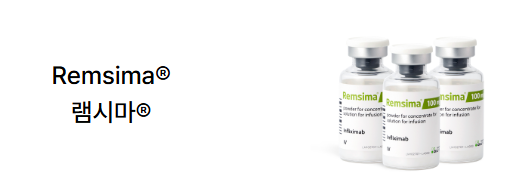
Celltrion's core business is the development, manufacture and commercialisation of antibody biosimilars. Its established blockbuster portfolio—Remsima (infliximab), Truxima (rituximab) and Herzuma (trastuzumab)—has been progressively supplemented by newer products, including Steqeyma (ustekinumab biosimilar) for autoimmune diseases and Zymfentra (subcutaneous infliximab), both of which have entered the United States and European markets and are expanding Celltrion's revenue base.
Consolidated revenues and operating profit recovered steadily after the merger was completed. In 2023 earnings were temporarily depressed by integration costs, but profitability improved markedly in 2024–25 as market penetration for the company's principal biosimilars deepened in key overseas markets. By the first quarter of 2026 the company was reported to have achieved a record quarterly operating profit.
*Annual financial performance*
Year | Revenue (consolidated, bn won) | Operating profit (bn won) | Operating margin
2021 | c.1,900 | c.550 | c.29%
2022 | c.2,200 | c.600 | c.27%
2023 | c.2,400 | c.480 | c.20%
2024 | c.3,600 | c.750 | c.21%
2025 | c.4,700 | c.1,000 | c.21%
2026 (target) | 5,300 | — | —
For 2026 the company has set a revenue target of 5.3 trillion won (approximately $3.9bn), implying roughly 13% growth on the prior year. The principal growth drivers are expected to be Zymfentra's expansion of market share in the United States and rising sales of Steqeyma in Europe.
The Value-Up Programme: A Chronology
*2024 — Laying the foundations for shareholder returns*
As the merged entity stabilised operationally, 2024 was the year in which Celltrion set the broad parameters of its shareholder-return policy. The company is understood to have confirmed internally a twin-track strategy of increasing its dividend payout ratio while simultaneously buying back and cancelling treasury shares. The Korea Exchange's concurrent discussion of a "Korea Value-Up Index"—intended to highlight companies with strong return-on-equity and capital efficiency credentials—added institutional momentum to the process.
*April 2026 — 9.11 million shares cancelled; issued share count falls 4%*
On 14th April 2026 Celltrion announced the completion of the cancellation of 9.11 million treasury shares, equivalent to approximately 4% of total shares in issue at the time. Market observers described this as one of the largest single cancellation transactions in the history of the Korean biotech sector. The exercise removed the dilutive overhang represented by treasury shares and transferred value directly to long-term shareholders.
*April 2026 — A further 100bn-won buyback authorised*
On 23rd April Celltrion announced a further share repurchase programme worth 100bn won. The company was explicit that the acquired shares would be cancelled rather than held on the balance sheet or deployed for executive compensation—a commitment that drew favourable attention from investors accustomed to Korean companies using treasury shares for purposes other than cancellation.
*May 2026 — Record quarterly profit; formal pledge to accelerate returns*
First-quarter 2026 results, released in early May, showed a record quarterly operating profit. Management used the results announcement to formalise its commitment to expanding shareholder returns in line with improving profitability. The phrase "a virtuous cycle of growth and returns" became the centrepiece of the company's investor communications.
*May 2026 — Market estimates annual cancellation volume at c.2 trillion won*
Around 21st May, securities analysts and multiple media outlets began reporting that the total value of shares Celltrion intended to cancel within 2026 could reach approximately 2 trillion won—materially above earlier market expectations. Analysts concluded that Celltrion was in the process of setting a new industry benchmark for shareholder returns among Korean biotech companies.
*June 2026 — Additional 100bn-won cancellation completed; 2-trillion-won annual target on track*
On 4th June Celltrion announced the completion of a further cancellation worth 100bn won, drawn from previously repurchased treasury shares. With several rounds of cancellations now completed within the first half of the year alone, the company appeared to be on course to meet its annual target.
*June 2026 — Group-level share purchase of 270bn won initiated*
On 5th June it was reported that the broader Celltrion Group had commenced a 270bn-won share purchase programme. The move was interpreted as a signal both of committed stewardship and of the group's confidence in the outlook.
*June 2026 — Shareholder return ratio reaches 103%; sustainability report published*
On 30th June Celltrion disclosed that its combined shareholder return ratio—cash dividends plus the value of shares cancelled—had reached 103% of net profit. This means the company returned more to shareholders than it earned in net income, drawing down on accumulated resources to do so. On the same day the company published its 2025–2026 Sustainability Report, which documented shareholder-return activity alongside environmental and broader ESG performance.
*July 2026 — Cancellation of 1.8 trillion won of treasury shares announced*
On 4th July Celltrion disclosed a further plan to cancel treasury shares worth 1.8 trillion won. Analysts described this single announcement as the largest cancellation by value in the history of the Korean biotech sector. It was presented alongside the full-year revenue target of 5.3 trillion won, cementing the company's stated strategy of pursuing growth and capital returns in parallel.
Challenges and Assessment
*Challenges ahead*
Sustaining this strategy requires several structural conditions to be met. First and most fundamentally, earnings must continue to grow. Cancelling shares worth 2 trillion won in a single year is manageable only if revenues and profits continue to rise at a comparable pace. The speed at which Zymfentra captures market share in the United States, and whether competition in the biosimilar market intensifies, are the critical variables.
Second, balancing returns against research investment will be a persistent tension. Some industry observers have raised concerns that a shareholder-return programme on this scale could constrain research and development spending. Celltrion will need to present credible investment plans for its next-generation drug candidates and successor biosimilar pipeline if it is to maintain full market confidence.
Third, corporate governance remains an area requiring further development. Since the return to active management of founder and chairman Seo Jung-jin, the concentration of decision-making authority has increased. Strengthening the independent functioning of the board and protecting the interests of minority shareholders are areas where sustained progress will be expected.
*Overall assessment*
The market's verdict is broadly positive. No other large-cap Korean biotech has cancelled shares at this speed or on this scale, and the 103% shareholder return ratio clearly distinguishes Celltrion from peers that have limited themselves to modest dividend increases. Crucially, the company has followed through on its commitment to cancel shares promptly after repurchase, rather than holding them on the balance sheet or redirecting them toward executive pay—a common practice elsewhere in the Korean market.
That said, prudent investors will want to examine closely whether the pace of capital return is genuinely underpinned by free cash flow, or whether it relies to an uncomfortable degree on financial engineering. If key products face renewed pricing pressure or competitive incursions in the American biosimilar market, the current rate of cancellations may become difficult to maintain.
Controversies and Limitations
*The merger process and minority shareholder grievances*
Any account of Celltrion's capital-return history must acknowledge the controversy surrounding the merger transactions that began in 2019. At the time of the merger with Celltrion Healthcare, minority shareholders and some institutional investors expressed dissatisfaction with the merger ratio and what they regarded as terms weighted against smaller shareholders. Some analysts argue that this episode created residual reputational pressure that has since contributed to the vigour of the current shareholder-return programme.
*The sustainability of cancellation funding*
Share cancellations of approximately 2 trillion won are sustainable only on the basis of continued profit growth. Some analysts have suggested that, measured against Celltrion's free cash flow, the 2026 return programme may be somewhat aggressively sized. Should price compression in the United States biosimilar market or intensified competition materialise, questions about the durability of the current pace would inevitably arise.
*The pace of price-to-book re-rating*
Despite its technological capabilities and global revenues, Celltrion has periodically traded at a price-to-book ratio (P/BV) below those of comparable global peers. While the share cancellation programme is intended to close this gap, the structural discount applied to Korean equities more broadly—a phenomenon known as the "Korea discount"—combined with the regulatory and clinical uncertainties inherent in biopharmaceuticals, may mean that any re-rating is slower than management or shareholders would wish.
*Governance concentration risk*
Chairman Seo's dominant ownership and management role has undoubtedly enabled swift, decisive action on shareholder returns. The downside is a persistent external question about whether the board functions as a genuinely independent check on management. ESG rating agencies are understood to continue issuing improvement recommendations to Celltrion on governance grounds.
Summary Data
Year | Operating profit (bn won) | Cash dividend | Treasury share cancellations | Return ratio | P/BV (approx.)
2021 | c.550 | Paid | — | — | c.4–6x
2022 | c.600 | Paid | — | — | c.3–5x
2023 | c.480 | Paid | — | — | c.2–4x
2024 | c.750 | Increased | Framework established | — | c.2–3x
2025 | c.1,000 | Increased | Large-scale cancellations initiated | — | c.2–3x
2026 | Record (Q1) | Increased | 9.11m shares + 100bn won + 1.8 trillion won announced | 103% | Improving
In 2026 alone, Celltrion has announced or completed the cancellation of shares worth 1.8 trillion won, a group-level share purchase programme worth 270bn won and an expanded cash dividend—while simultaneously targeting revenues of 5.3 trillion won. The combination of a 103% shareholder return ratio and a double-digit revenue growth target is, by common consent, unprecedented in the company's history and sets a new standard for capital returns within the Korean biopharmaceutical industry.