What Is Happening
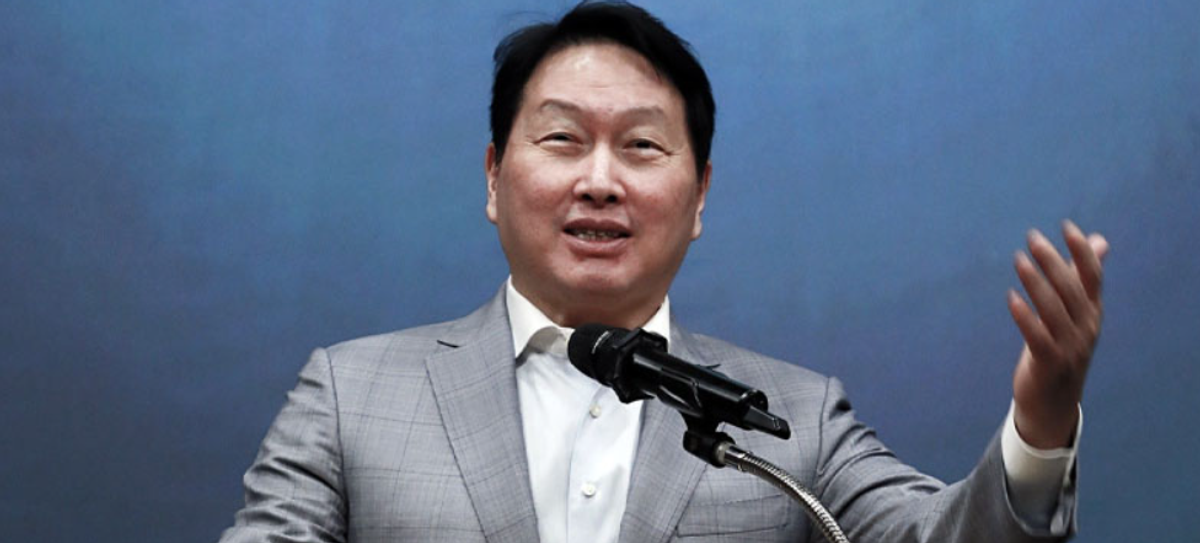
Chey Tae-won, chairman of SK Group—one of South Korea's largest conglomerates—has begun the process of selling approximately ₩900bn (roughly $670m) worth of shares in SK Corp, the group's holding company. The sale is no routine portfolio adjustment. It is the direct consequence of the largest divorce settlement in South Korean corporate history, arising from the breakdown of his marriage to Noh So-young, director of the Arko Arts Centre Nabi.
The Divorce That Shook the Boardroom
The legal proceedings began in 2022. A court of first instance ordered Chey to pay Noh approximately ₩66.5bn in the division of marital assets—a substantial sum, but one well within the chairman's means. The Seoul High Court, however, upended that calculation in 2023, raising the award to ₩1.3808tn: roughly twenty times the original figure.
The dramatic increase turned on a single contested question: how much had Noh contributed to the rise of SK Group? Her legal team argued that the political influence of her father, Roh Tae-woo—South Korea's president from 1988 to 1993—had materially assisted SK's business expansion during a critical period of the group's growth. The appeals court found this argument partly persuasive and adjusted the asset-division ratio accordingly. Chey's side rejected the reasoning outright, insisting that the group's success was built on managerial acumen alone.
The Supreme Court subsequently upheld the appeals ruling, making the ₩1.3808tn award final and enforceable.
Turning Assets into Cash
Like most chaebol patriarchs, Chey holds the bulk of his personal wealth not in cash but in stakes across the group's affiliated companies. Faced with an unavoidable legal obligation, selling shares is the most practical route to raising liquidity. The ₩900bn disposal is widely interpreted as the first concrete step towards satisfying the court's order—in effect, selling part of his company to pay a court-mandated debt.
The Governance Question
The most consequential dimension of this episode is what it means for control of SK Group. The group's ownership architecture follows a classic chaebol pattern: Chey's personal stake in SK Corp, the listed holding company, anchors his authority over the entire conglomerate. The larger that stake, the firmer his grip.
Chey currently holds approximately 17–18% of SK Corp. A ₩900bn disposal could reduce that figure by several percentage points. That alone is unlikely to threaten his position in the near term; SK Group has constructed a web of cross-shareholdings and friendly institutional investors that provides a degree of insulation. Most analysts believe an immediate challenge to his control is improbable.
The longer-term picture is less comfortable. A diminished personal stake creates more room for outside shareholders to make themselves heard—and activist investors, who take stakes in companies specifically to push for strategic or governance changes, have grown more assertive across Asia in recent years. Other chaebol groups, including Samsung and Hyundai, have faced precisely this kind of pressure when controlling families saw their ownership positions erode. SK would not be immune.
Market Implications
Large sell-downs by controlling shareholders tend to unsettle markets. The instinct among investors is straightforward: if the person who knows the company best is selling, there may be a reason to worry. A block of ₩900bn hitting the open market in a single transaction could cause a sharp, if temporary, fall in SK Corp's share price.
To manage this risk, the disposal is likely to be structured as a block deal—a private sale of shares to institutional investors conducted outside the regular market session. Block deals reduce the immediate shock to the share price but are typically executed at a discount to the prevailing market price. The day after such a transaction is announced, the share price often drifts down to reflect that discount. Existing shareholders in SK Corp would be wise to monitor the precise structure and timing of the sale closely.
Broader Questions for Korean Inc.
This episode illuminates several fault lines that extend well beyond one family's private difficulties.
Chaebol fragility. When a single individual's personal legal or financial troubles can reverberate through a group employing tens of thousands of people, the structural vulnerability of the chaebol model is laid bare. Concentrated ownership, which allows decisive leadership in good times, becomes a liability when the patriarch is under pressure.
The reach of divorce law. The appeals court's willingness to credit the indirect, politically derived contributions of a spouse to a family's business fortune sets a significant precedent. Future cases involving wealthy individuals will inevitably be argued in its shadow.
Shareholder protection. When a controlling shareholder is compelled by a court to divest, the interests of minority shareholders—who had no say in the matter—can be affected. Whether South Korea's regulatory framework adequately addresses such scenarios is a question worth examining.
Key Facts at a Glance
Stake being sold | Approx. ₩900bn of SK Corp shares
Reason for sale | To satisfy Supreme Court divorce ruling
Total settlement awarded | ₩1.3808tn to Noh So-young
Near-term governance risk | Low
Long-term governance risk | Elevated, as ownership stake declines
Market impact | Possible short-term price weakness via block-deal discount
This is not merely a story about a billionaire's divorce. It is a test of how South Korea's chaebol system copes when the personal circumstances of a founding family collide with legal obligations, market mechanics, and the expectations of outside investors. How SK Group restructures its ownership to restore stability—and how the market absorbs the inevitable selling pressure—will be watched carefully by investors and governance specialists alike.