Company Overview
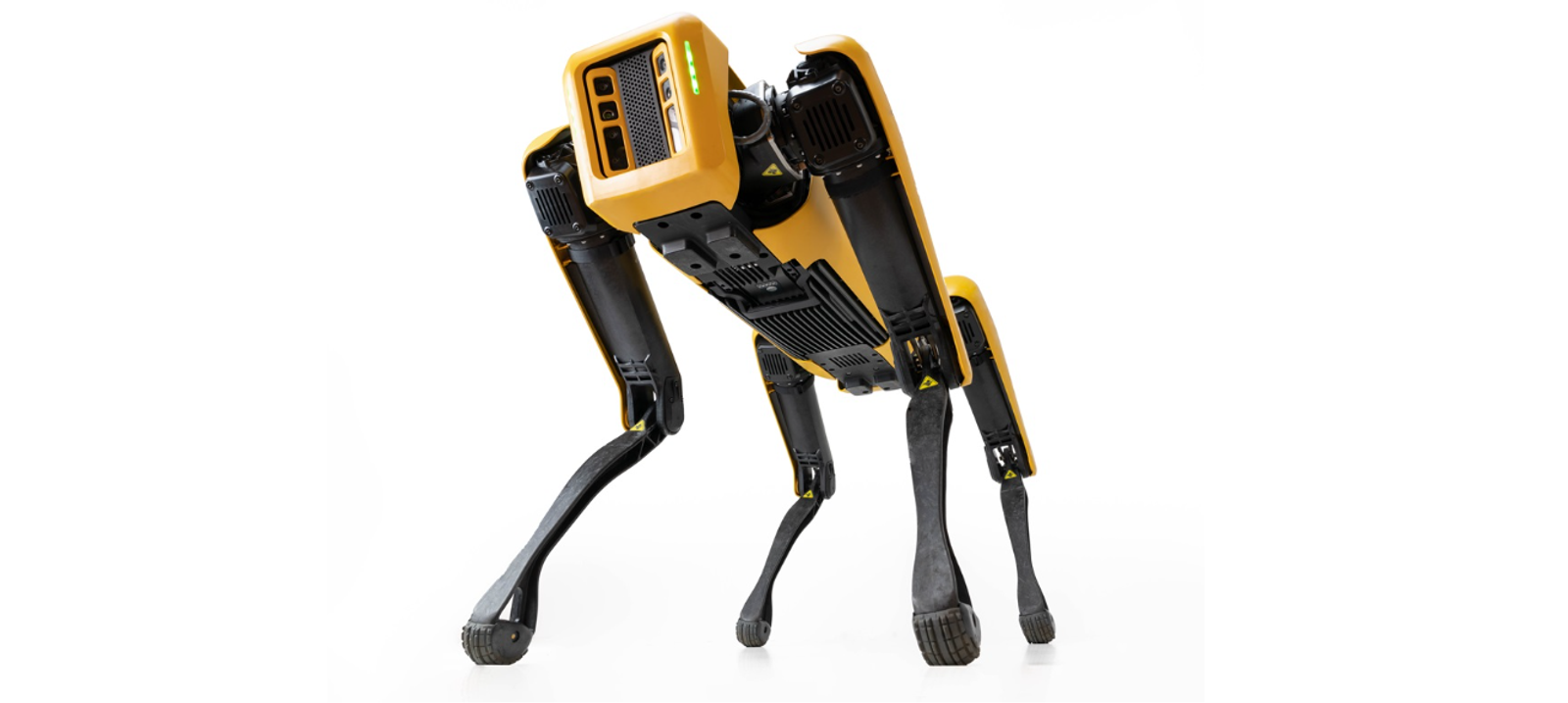
Clobot is South Korea's foremost service-robotics specialist, built around an autonomous-navigation software platform. Founded in 2017, the company has developed self-driving algorithms based on the Robot Operating System (ROS) and a multi-robot Fleet Management System, deploying them across hospitals, hotels, logistics centres, and factory floors. A strategic partnership with Hyundai Motor Group has given Clobot an enviable position within South Korea's robotics ecosystem. The company listed on the KOSDAQ — South Korea's technology-focused stock exchange — in 2024, and by late 2025 its market capitalisation had surpassed 1 trillion won (roughly $730m), earning it informal "unicorn" status.
Clobot's approach to shareholder value creation differs markedly from the conventional Korean corporate playbook of dividend increases and share buybacks. As a growth company still running operating losses, it has instead pursued what might be called "growth-driven value enhancement" — expanding the business aggressively in the expectation that scale will ultimately justify the premium the market has accorded it. The 68.5 billion won acquisition of Doosan Logistics Solutions (DLS) in June 2026 and a declared offensive into North America are the most tangible expressions of this strategy. Yet persistent operating losses and a large share issuance have created an ongoing tension between growth investment and potential dilution of shareholder value.
Business Model and Financial Performance
Clobot's operations rest on three pillars: autonomous-navigation software, a multi-robot fleet management platform, and hardware supply. Its proprietary algorithms and remote-monitoring systems are deployed across diverse verticals. The Hyundai Motor Group partnership underpins supply-chain stability and provides the kind of blue-chip reference that competitors struggle to match.
The June 2026 acquisition of Doosan Logistics Solutions (DLS) for 68.5 billion won marked a strategic inflection point. By combining DLS's automated-logistics equipment and systems-integration capabilities with Clobot's autonomous software, the company is positioning itself as a full-stack logistics-automation business rather than a pure software platform provider.
On the financial side, the picture remains mixed. The company disclosed a 2025 full-year consolidated operating loss of 3.1 billion won, a continuation of losses that have persisted since listing. There were, however, reports of early signs of a turn towards profitability towards the end of 2025. In the first quarter of 2026, revenue surged 65% year on year, partly reflecting the initial contribution from DLS.
Key Milestones in Clobot's Value-Creation Journey
*2024 — KOSDAQ listing*
The IPO opened a public capital-raising channel and gave Clobot's valuation formal market recognition for the first time. Hyundai Motor Group's participation as a strategic anchor investor was widely credited with bolstering market confidence.
*December 2025 — Crossing the 1 trillion won threshold*
Even as the broader service-robotics sector struggled, Clobot's shares powered ahead, driven by three converging narratives: its Hyundai Motor alliance, anticipation of a profit inflection, and growing attention to South Korean robotics firms as potential suppliers in Nvidia's expanding AI hardware ecosystem. The moment represents the most symbolic milestone in Clobot's value-creation history.
*February 2026 — Full-year 2025 results: operating loss of 3.1 billion won confirmed*
The formal disclosure confirmed continued losses, prompting concern in some quarters. Others pointed to the robust revenue trajectory and argued that profitability remained a realistic near-term prospect.
*March 2026 — Entry into Nvidia's Korean robotics supply chain*
Reports emerged that Clobot had emerged as a leading beneficiary of Nvidia's efforts to broaden its South Korean robotics supply base. Overlapping with investment flows into Naver's physical-AI value chain, this development furnished Clobot with a compelling new narrative — participation in the global AI-robotics ecosystem — that the market treated as a valuation premium in its own right.
*April 2026 — Rights issue: 200 billion won raised for North America push*
Clobot announced a rights issue to raise approximately 200 billion won, declaring that the proceeds would fund a North American expansion and that no further capital-raising would be needed for at least three years. North America is the world's most competitive service-robotics market, and management argued the investment would be the primary driver of long-term value creation. The announcement also, however, raised concerns about dilution of existing shareholders and a potential weakening of Hyundai Motor Group's strategic stake — a sensitive issue given how much of Clobot's competitive edge derives from that relationship.
*June 2026 — DLS acquisition confirmed at 68.5 billion won*
On 24th June 2026, Clobot formally announced the acquisition of Doosan Logistics Solutions for 68.5 billion won, a price that incorporated both a control premium and DLS's existing debt. The deal transforms Clobot from a software specialist into a full-stack robotics and logistics-automation company. Shares rose 13% on the day of the announcement.
Challenges Ahead
The most pressing task is achieving a durable and structural move into operating profitability. Investors have tolerated losses as the inevitable cost of growth investment, but patience is finite: the timing of a credible profit inflection is now the central question.
The integration of DLS poses its own risks. Having acquired both control and debt, Clobot must manage the possibility of unexpected financial burdens emerging during consolidation. The effect of DLS's debt load and margins on Clobot's consolidated accounts warrants close monitoring.
Third, the North American expansion must deliver concrete results. Having raised 200 billion won and pledged to need no further funding for three years, Clobot is under considerable pressure to win contracts and establish meaningful local partnerships within that window.
Assessment
Clobot's value-creation story does not fit neatly into conventional corporate-governance frameworks. There are no dividends, no share buybacks, and no near-term prospect of either. Yet a succession of significant business events — the Hyundai alliance, inclusion in Nvidia's supply chain, and the DLS acquisition — has functioned as a premium-valuation engine in the eyes of the market. The crossing of the 1 trillion won market-cap mark demonstrates that a growth-oriented approach to value creation can, under the right conditions, win genuine market recognition.
The structural vulnerability is equally plain. So long as operating losses continue, the entire valuation rests on expectations of future growth. That makes the share price acutely sensitive to shifts in interest rates or deterioration in sentiment towards the robotics sector. Should the North American push disappoint, or broader enthusiasm for AI-linked robotics cool, the fundamental support for current valuation multiples would be thin.
Controversies and Limitations
*Governance uncertainty from the rights issue*
The April 2026 capital raise provoked debate about the potential dilution of Hyundai Motor Group's stake. Because so much of Clobot's competitive positioning flows from that strategic relationship, any weakening of it is not merely a governance concern — it is a business-continuity risk.
*Opacity in the DLS deal structure*
Some market participants have criticised the lack of transparency in how the 68.5 billion won DLS acquisition price was determined, specifically regarding the weighting given to the control premium versus the assumed debt. Disclosure of precisely how DLS's liabilities will be absorbed into Clobot's consolidated balance sheet has been judged insufficient.
*Growth investment versus shareholder dilution*
A large rights issue inevitably reduces the per-share value held by existing investors. Management's long-term North American growth narrative is coherent, but the short-term dilution is real and unavoidable. The debate over whether this constitutes value-enhancing investment or value destruction for existing shareholders will not be resolved quickly.
*The sustainability of a loss-making premium valuation*
Reaching a 1 trillion won market cap while still in the red highlights the fragility of the valuation's foundations. If market optimism about robotics fades, or if North American revenues fail to materialise as hoped, there is limited fundamental support for the current price.
Key Metrics Summary
Period | Operating profit/(loss) | Revenue growth | Dividend | Buyback | Key event
FY 2025 | –3.1bn won | — | None | None | Profit-turn expectations; 1 trillion won market cap reached
Q1 2026 | — | +65% YoY | None | None | DLS acquisition impact begins
April 2026 | — | — | None | None | Rights issue: 200bn won raised
June 2026 | — | — | None | None | DLS acquisition (68.5bn won) confirmed; shares +13%