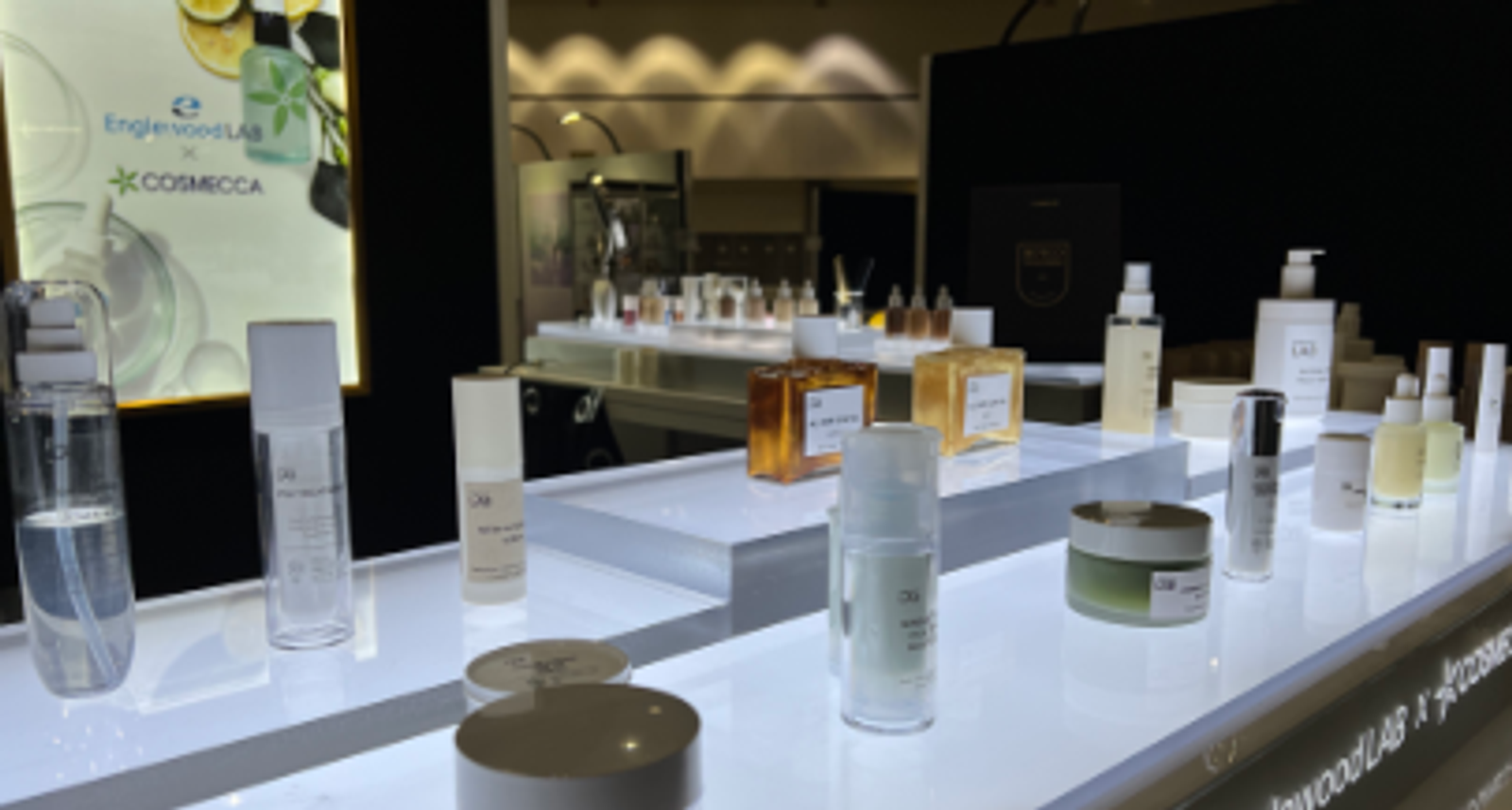
Company overview
Cosméca Korea is a specialist ODM (original design manufacturer) in the cosmetics industry, founded in 2000 and listed on the KOSDAQ, South Korea's technology-focused junior exchange. The company develops and manufactures a broad range of products — from skincare and sun-care to colour cosmetics — for domestic and international beauty brands. It is widely regarded as one of the most direct beneficiaries of the global K-beauty boom, having successfully diversified its customer base towards independent ("indie") beauty labels.
The company's founding family has long held a tight grip on management. Chief Executive Cho Im-rae has maintained continuity of leadership, but the structure — in which the founder and his spouse jointly exercise effective control — has attracted persistent criticism on grounds of governance transparency. As Cosméca Korea pursues a transfer to the KOSPI, South Korea's main board, questions about governance have moved to the centre of the "value-up" debate around the company — a debate that goes well beyond shareholder returns to encompass structural reform and managerial accountability.
Business model and financial performance
*A diversified ODM operation*
Cosméca Korea manufactures cosmetics across multiple categories under the ODM model, in which the manufacturer handles both product development and production for brand clients. The company was historically reliant on a small number of large brand customers, but the surge in global demand for Korean indie beauty brands prompted a rapid diversification of its client roster. This shift towards smaller, higher-margin indie labels has been the principal driver of both revenue growth and improving profitability.
*Global manufacturing footprint*
Beyond its domestic production base in South Korea, the company operates manufacturing subsidiaries in the United States and China. In 2026, Korean cosmetics firms have also been moving to establish footholds in France — the traditional heartland of global beauty — and Cosméca Korea is reported to be part of this broader push into the European market.
*Financial performance*
The table below summarises the company's estimated financial results. All figures are approximate, based on published reports and publicly available information, and may differ from audited figures.
Year | Revenue (KRW bn, approx.) | Operating profit (KRW bn, approx.) | Operating margin | Key developments
2021 | ~310 | ~13 | ~4.2% | COVID-19 impact; early demand recovery
2022 | ~380 | ~19 | ~5.0% | Indie brand orders begin to grow
2023 | ~450 | ~28 | ~6.2% | Sharp rise in global K-beauty demand
2024 | ~550 | ~42 | ~7.6% | Record results; customer diversification pays off
2025 | ~620 | ~52 | ~8.4% | Record-breaking run continues
Value-up milestones
*2023 — Shareholder returns come under scrutiny*
As profits improved sharply on the back of K-beauty tailwinds, investors began calling for more generous shareholder returns. The company is understood to have begun reviewing its dividend policy and broader capital-allocation strategy. However, active measures such as share buybacks and cancellations remained limited throughout this period.
*2024 — KOSPI transfer linked to value-up agenda*
Cosméca Korea announced its intention to transfer its listing from KOSDAQ to the KOSPI main board, framing the move as part of a broader strategy to enhance its corporate profile and valuation. A KOSPI listing typically attracts a wider pool of institutional investors, improves liquidity, and confers greater reputational credibility. Governance reform emerged as a prerequisite for the move.
*2025 — Transfer bid runs into difficulty; governance controversy deepens*
The KOSPI transfer application is understood to have encountered significant obstacles during the regulatory review process. Market observers pointed to the spousal co-management structure and concentrated family ownership as likely sticking points. In December 2025, as the rival biopharmaceutical firm Alteogen completed its own KOSPI transfer amid much fanfare, Cosméca Korea's stalled application was thrown into sharper relief.
*May 2026 — Second transfer attempt; reform questioned*
In May 2026 the company made a fresh bid for a KOSPI listing, signalling renewed commitment to reform. However, industry observers and journalists were quick to note that the spousal management structure remained intact. One outlet ran a headline asking whether the promised shake-up amounted to little more than window-dressing: "Rejected by KOSPI, yet the couple still runs the show — is reform just for show?" The company is reported to have defended the arrangement on grounds of managerial efficiency and continuity.
*May–June 2026 — Record results continue; PBR discount persists*
Despite posting another set of record quarterly results in the second quarter of 2026, driven by continued growth in indie brand orders, analysts noted that the company's price-to-book ratio (PBR) remained well below what the strong earnings trajectory might imply. Pressure on the company to close this valuation gap shows no sign of easing.
Challenges and assessment
*Four tasks ahead*
For Cosméca Korea to be regarded as a genuine beneficiary of South Korea's national value-up programme — a government-backed push to close the persistent discount at which Korean equities trade relative to global peers — four challenges must be addressed.
First and most urgently, governance transparency. Until market scepticism about the founder-couple management structure is resolved, both a KOSPI listing and meaningful institutional investor participation will remain out of reach. Concrete steps — including genuinely independent non-executive directors and a more diverse board — are essential.
Second, a credible and quantified shareholder-return policy. Investors want to see commitments on dividend pay-out ratios, share buyback programmes, and cancellation of treasury stock translated into firm numbers, not vague intentions.
Third, a successful KOSPI transfer. The move must be accompanied by substantive improvements in governance and disclosure, not treated merely as a change of trading venue. Markets will regard it as the acid test of whether management is serious about raising the company's quality as well as its profile.
Fourth, over the medium term, further diversification of its manufacturing base across the United States, Europe, and elsewhere, to reduce geopolitical and supply-chain risk.
*Overall assessment*
Judged purely on its operating performance, Cosméca Korea has delivered an impressive record within the K-beauty ODM sector. Its early pivot towards indie brands, its investment in overseas production facilities, and its ability to capture rising global demand for Korean beauty products have put it ahead of many rivals.
Yet the broader market verdict is that the company still has far to travel on the governance and shareholder-return dimensions that the value-up programme demands. The prevailing analysis is that persistent weak governance — rather than any fundamental flaw in the business — is the root cause of the stubbornly low PBR. Investors are watching to see whether Cosméca Korea can evolve from a company that delivers strong earnings into one that is also transparent, shareholder-friendly, and trustworthy.
Controversies and structural weaknesses
*Spousal management and governance risk*
The concentration of effective control in the hands of the founder and his spouse is the company's central governance controversy. While such an arrangement can facilitate swift decision-making, it weakens external oversight and raises the risk that minority shareholders' interests will be subordinated to those of the controlling family. The fact that this structure has survived even after the KOSPI listing application was rejected has sent a negative signal to the market.
*Repeated transfer failures and credibility damage*
Each unsuccessful KOSPI transfer attempt erodes confidence in management's willingness to implement genuine reform. The market's demand is not simply for a listing upgrade, but for a fundamental improvement in corporate culture — and without visible governance changes, the charge of "reform in name only" will continue to stick.
*Shareholder returns lagging earnings growth*
Dividend pay-out ratios and share-buyback activity have not kept pace with the rapid growth in profits. This has become more conspicuous as other KOSDAQ-listed companies have introduced quarterly dividends and active treasury-share cancellation programmes during the same period, making Cosméca Korea's approach appear comparatively passive.
*Risk of a permanent valuation discount*
Analysts warn that if the combination of governance risk and inadequate shareholder returns becomes entrenched, the PBR discount may become self-perpetuating — ultimately destroying long-term value for shareholders.
Summary data
The table below presents key metrics by year. Figures are largely estimated from press reports and market data, and may differ from audited disclosures.
Year | Dividend pay-out (est.) | Share buyback/cancellation | Operating profit (KRW bn, est.) | PBR (×, est.) | Key value-up event
2021 | Low | None | ~13 | ~1.0–1.2 | —
2022 | Low | None | ~19 | ~1.2–1.5 | Indie brand orders accelerate
2023 | Modest improvement | Limited | ~28 | ~1.5–2.0 | Shareholder-return policy review begins
2024 | Modest improvement | Limited | ~42 | ~1.5–2.0 | KOSPI transfer announced
2025 | Modest improvement | Limited | ~52 | ~1.5–2.0 | Transfer review stalls; governance criticism intensifies
2026 | Under review | Under review | ~58+ (forecast) | TBD | Second KOSPI bid; spousal management criticised