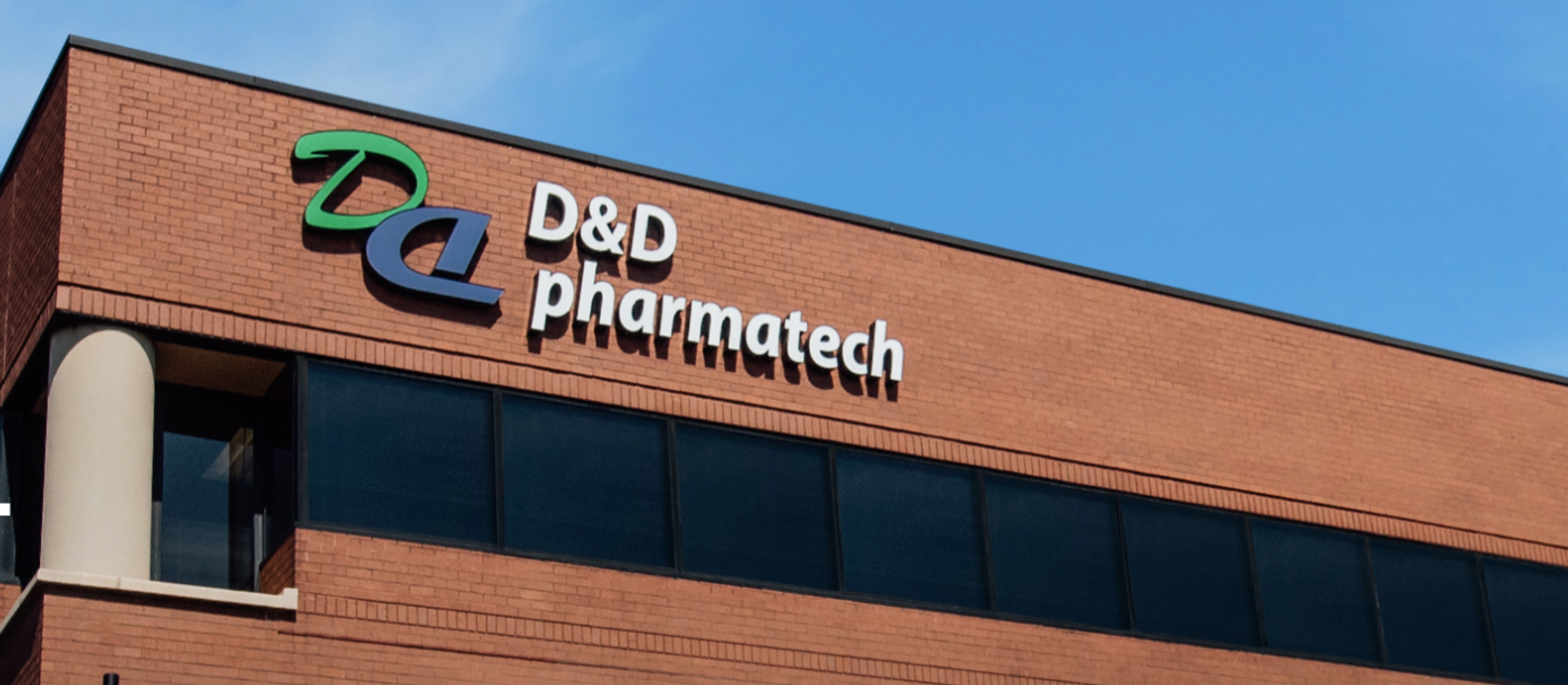
Company Overview
D&D Pharmatech is a South Korean biotechnology company whose principal programmes target obesity and metabolic diseases as well as neurodegenerative conditions. Listed on the KOSDAQ — South Korea's technology-focused stock exchange — the company develops GLP-1-based peptide drug candidates and creates value primarily by licensing its intellectual property to international partners rather than selling medicines directly.
The company has gained prominence within South Korea's biotechnology sector largely through co-development agreements and technology-transfer deals with American partners, which have brought its pipeline onto the global clinical stage.
Its relationship with South Korea's "Value-Up" initiative — a government-backed programme launched to close the persistent discount at which Korean equities trade relative to their book value — reflects a tension inherent to all clinical-stage biotechs. Companies that spend more on research than they earn in revenue cannot readily fund dividends or share buybacks, the conventional instruments of shareholder return. Instead, upfront licence fees, milestone payments, and corporate events at partner companies — initial public offerings or mergers and acquisitions — serve as the de facto mechanisms for creating shareholder value. D&D Pharmatech's history of value creation is, accordingly, inseparable from its record of demonstrating technological worth.

Business Foundation and Financial Performance
Core Pipeline
D&D Pharmatech's business rests on two pillars. The first is a class of dual GLP-1/GIP agonist candidates targeting obesity and diabetes — a therapeutic area that has attracted enormous investor interest as the global obesity-drug market has expanded rapidly. The second is a pipeline directed at neurodegenerative diseases, including Parkinson's disease and Alzheimer's, where clinical progress is reportedly being made through American partners.
A Licensing-Dependent Revenue Model
The company generates income primarily through technology-transfer agreements rather than product sales. Upfront contract fees and stage-gated milestone payments are its main sources of revenue. This model carries an inherent disadvantage — earnings are lumpy and difficult to forecast — but when a deal is signed or a milestone is triggered, the effect on perceived enterprise value can be dramatic.
Financial Summary by Year
Year | Operating Result | Revenue Character | R&D Spend | Notable Development
2021 | Loss | Minimal | Heavy | Early clinical stage
2022 | Loss | Minimal | Heavy | Pipeline expansion
2023 | Loss (narrowing) | Licence fees received | Maintained | Technology-transfer deal signed
2024 | Loss (sustained) | Milestones received | Maintained | Global clinical progress
2025 | Loss | Milestones included | Expanding | Partner IPO/M&A activity
*Specific figures are subject to revision at formal disclosure dates. As is typical for clinical-stage biotechs, an operating loss is understood to be the sustained condition.*
Key Value-Up Milestones
2023 — Technology Transfer and First Proof of Value
In 2023, D&D Pharmatech formalised the value of its pipeline through a technology-transfer agreement with an American partner. The public disclosure of contract and potential milestone values triggered a revaluation debate among investors. From this point, the company began to be cited within KOSDAQ's biotechnology community as a model for the "virtuous cycle" of licensing-led value creation.
2024 — Clinical Progress and the Shareholder Value Conversation
In 2024, news of clinical advances by the American partner coincided with reports that the partner was pursuing an IPO or a sale. This was significant: for a licensor, the capital-markets success of a licensee represents a form of value realisation that approximates, in economic effect if not in form, a return to shareholders. Reports in November 2025 on the acceleration of South Korea's technology-export cycle cited D&D Pharmatech as a leading example, affirming that the collaborative achievements of the preceding year had become tangible.
November 2025 — The "Virtuous Cycle" Thesis Takes Hold
In November 2025, South Korean financial media reported a wave of IPOs and acquisitions involving the American licensees of Korean biotechnology companies, describing an accelerating virtuous cycle in the country's technology-export industry. D&D Pharmatech was identified as one of the central companies in this trend. The mechanism attracting attention was straightforward: rising valuations at partner companies increase both the probability of milestone payments and the worth of any equity stakes held by the licensor.
First Half of 2026 — Foreign Buying Enters the Picture
In June 2026, D&D Pharmatech appeared among the top recipients of net foreign buying on the KOSDAQ. The inflow of overseas institutional capital is generally interpreted as a positive signal — an indication that global investors are ascribing credible value to the pipeline and to the track record of licensing success. Foreign interest in biotechnology stocks tends to track clinical data releases, partner developments, and broader trends in the global obesity-drug market.
Challenges and Assessment
Structural Challenges
Three challenges stand between D&D Pharmatech and a more conventional position as a Value-Up beneficiary.
Revenue stability. Dependence on licensing income means quarterly results can swing violently depending on when contracts are signed and milestones are triggered. Without a reliable operating cash flow, it is structurally difficult to design a dividend or buyback programme.
Clinical risk in a crowded field. The GLP-1 obesity-drug market is growing rapidly, but so is the competition. Should D&D Pharmatech's candidates fail to demonstrate clearly differentiated efficacy or safety profiles in late-stage trials, the value of its partnerships could erode significantly.
Corporate governance transparency. In March 2026, several South Korean media outlets ran investigations into companies deemed to pose risks to shareholder rights, focusing broadly on the biotechnology sector. Whether D&D Pharmatech was directly named is unclear, but the series cast a shadow over the sector as a whole. Concerns commonly levelled at clinical-stage biotechs — excessive issuance of stock options, repeated equity dilution through rights offerings, and erosion of founding-shareholder stakes — are sufficiently widespread to colour investor perceptions.
Overall Assessment
D&D Pharmatech's value-creation story has followed a different path from the dividend-and-buyback model that South Korea's Value-Up programme was designed to encourage. Instead, it has pursued value through the commercialisation of technology and global partnerships. The fact that its American partners have reached capital-markets events — IPOs or acquisitions — provides genuine market confirmation of the worth of its licensing arrangements. The global boom in obesity drugs furnishes a supportive backdrop for pipeline revaluation. Yet the prevailing view among analysts remains that, for a clinical-stage biotech to be recognised as a substantive Value-Up beneficiary, it must eventually demonstrate a credible path to the kind of tangible shareholder returns the programme was built around.
Controversies and Limitations
A Structural Mismatch with the Value-Up Framework
South Korea's Value-Up programme was conceived primarily as a remedy for chronically low price-to-book (PBR) ratios — the discount at which many Korean companies trade relative to their net assets, a phenomenon that has long frustrated investors and policymakers alike. Clinical-stage biotechs like D&D Pharmatech are a poor fit for this framework: their balance sheets are dominated by intangible assets such as patents and development-stage pipeline rights, which conventional PBR metrics are ill-equipped to capture. The programme's core logic — encourage dividends and buybacks to close the PBR gap — applies awkwardly to companies whose intrinsic value lives almost entirely off the balance sheet.
Unpredictable Earnings
The volatility of licensing-based revenue is a structural feature, not an aberration. A failed trial, a discontinued programme, or a change in a partner's strategy can unwind an entire revenue forecast overnight. This makes credible, forward-looking shareholder return planning essentially impossible.
Sector-Wide Governance Concerns
The March 2026 media investigations into shareholder rights in the biotechnology sector amplified pre-existing anxieties about industry practices. Clinical-stage companies face recurring criticism for dilutive equity issuances, profligate stock-option grants, and the erosion of minority shareholders' interests. These concerns are not unique to D&D Pharmatech but form part of the investment backdrop against which the company is assessed.
The Double Edge of Foreign Buying
Appearing among the top KOSDAQ stocks by net foreign purchases in June 2026 is encouraging, but it cuts both ways. Momentum-driven foreign capital can exit as swiftly as it arrives. If clinical events disappoint or partner dynamics shift, the resulting price volatility could be considerable.
Key Statistics Summary
Year | Dividend | Buyback Policy | Operating Result | PBR Level | Notes
2021 | None | None | Loss | High (growth stock) | Early clinical stage
2022 | None | None | Loss | High | Pipeline expansion
2023 | None | None | Loss (narrowing) | High | Licensing deal signed
2024 | None | None | Loss | High | Partner IPO/M&A progress
2025 | None | None | Loss | Variable | Rising foreign interest
2026 (H1) | None | None | Under review | Variable | Top KOSDAQ foreign net buy
*As is typical for clinical-stage biotechs, dividends and buybacks are effectively non-existent. Shareholder value is created indirectly, through licensing contracts and partner corporate events. PBR fluctuates materially with changes in perceived pipeline value.*