The Korea IR Council's Corporate Research Centre published an analysis of Deokyang Energen (KOSDAQ: 0001A0) on the 14th, projecting 2026 revenues of 156.5bn won (up 9% year on year) and operating profit of 7.2bn won (up 8%). The primary growth driver, the report concludes, will be expanding EPC (engineering, procurement and construction) revenues from KND Energen — a joint venture tied to S-OIL's landmark Shaheen project.
A specialist in industrial hydrogen
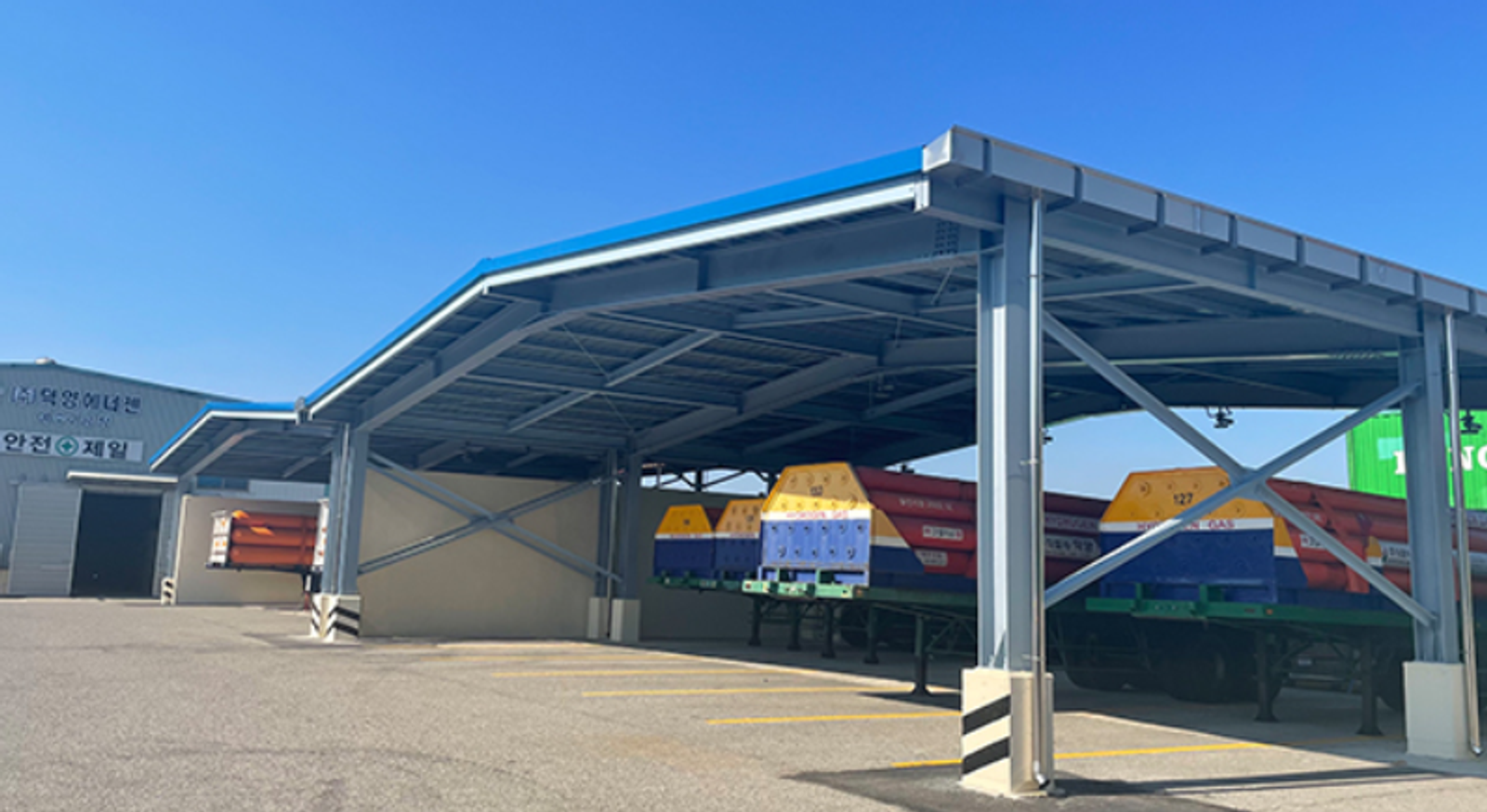
Deokyang Energen was established in November 2020 through a spin-off from Deokyang Corporation. It purchases by-product hydrogen via pipeline from chemical complexes in Yeosu and Gunsan, purifies it to a grade of 99.99% or higher, and resells it to industrial customers. As of 2025, pipelines account for 80% of revenues, tube-trailer deliveries for 12%, and EPC work for the remaining 8%.
The company listed on the KOSDAQ exchange in January 2026, raising 67.5bn won. The proceeds are earmarked for a hydrogen distribution centre in Hwangseong-dong, Ulsan (total cost: 20.4bn won, targeted for completion by end-2026), a second facility in Daesan (18.1bn won, planned for 2027–28), and a capital injection into KND Energen. The strategy is to extend the company's hydrogen distribution network — currently concentrated in Yeosu and Gunsan — into the Yeongnam region (south-east Korea) and the Chungcheong and greater Seoul areas.
The Shaheen connection
The central growth variable is KND Energen's plant at Onsan, on the south-east coast, which is being built to supply S-OIL's Shaheen project. KND Energen is a 50-50 joint venture between Deokyang Energen and Geukdong Oil Chemical; it is constructing a steam methane reforming (SMR) hydrogen production facility with a capacity of 92,000 Nm³/h at the Onsan industrial complex, with operations scheduled to begin in September 2026.
Shaheen is S-OIL's flagship 9 trillion won investment, comprising a crude-oil-to-chemicals (TC2C) conversion process and a steam cracker with an annual capacity of 1.8m tonnes. The TC2C process is hydrogen-intensive: its hydrogen requirements are up to 12 times greater than those of a conventional naphtha cracking unit, making large-scale external supply essential. In February 2024, following a competitive tender that included global industrial gas majors such as Linde, Air Liquide and Air Products, KND Energen was selected as the sole hydrogen supplier.
Outsourcing ageing refinery hydrogen plants
The research centre identifies a second growth opportunity: the potential for domestic refiners to outsource their ageing hydrogen production. The average age of hydrogen plants at South Korea's major oil refineries now exceeds 25 years. Building a replacement SMR hydrogen plant costs 250bn–300bn won per unit, and brings with it operational liabilities under South Korea's Serious Accidents Punishment Act as well as direct carbon emissions (Scope 1) on the corporate balance sheet. Switching to an external supply contract instead offers refiners three simultaneous advantages: lower capital expenditure, transferred accident liability, and reclassification of emissions as indirect (Scope 3).
Deokyang Energen is regarded as well-placed to capture this demand. Its chief executive, Kim Ki-cheol, is a former senior executive at Approtium — South Korea's largest industrial hydrogen producer — and has overseen the full lifecycle of refinery hydrogen plants, from design and construction through to commercial operation.
The gap between topline and profit
Investors should note an important accounting nuance. Under Korean IFRS, KND Energen is classified as a joint venture rather than a subsidiary, meaning its results are recognised in Deokyang Energen's accounts only through the equity method — not consolidated line by line. The Onsan plant's revenues will therefore not appear directly in Deokyang Energen's own sales or operating profit figures once it begins production.
Moreover, KND Energen has been loss-making, recording equity-method losses of 1.3bn won in 2024 and 1.6bn won in 2025. Given the burden of initial interest costs on project borrowings, a further equity-method loss of 1.4bn won is forecast for 2026. Meaningful dividend returns to Deokyang Energen are not expected until 2029–30.
A second near-term drag is DKME, a chemical heat-exchanger manufacturer in which Deokyang Energen acquired a 19.27% stake in May 2026. DKME has been suspended from trading since November 2024 following embezzlement allegations against its former chief executive, and has since seen multiple changes of controlling shareholder, leaving a significant operational gap. An operating loss is expected in 2026, with an associated equity-method loss of around 300m won for Deokyang Energen. That said, DKME's product range — heat exchangers, pressure vessels, distillation columns — overlaps substantially with hydrogen plant equipment, suggesting it could eventually serve as a vertically integrated EPC resource once stabilised.
Valuation concerns
The valuation also warrants scrutiny. On 2026 forecast earnings, Deokyang Energen trades at 1.9 times book value (price-to-book ratio), well above the 1.1 times average for the nine sub-trillion-won energy companies in the FnGuide WICS sector classification. Yet its forecast return on equity for 2026 stands at just 4.8%, far below the sector average of 9.1%. The research centre argues that closing this gap between price-to-book and return on equity will require concrete evidence of a KND Energen turnaround and new hydrogen plant contracts.
Financing capacity is a further medium-term constraint. A single outsourcing contract with a refiner would require investment of 250bn–300bn won — more than twice Deokyang Energen's total equity of 110.1bn won at end of the first quarter of 2026. Of its 73.8bn won in cash and equivalents, 22.4bn won is already committed to the DKME stake acquisition, with distribution centre construction costs also in the pipeline, leaving limited financial headroom. Should new contracts materialise, the company would face a choice between a rights issue — diluting per-share metrics — or increased borrowing, which would raise interest costs. A joint-venture or project-finance structure, along the lines of KND Energen, could help mitigate the strain on the company's own balance sheet.
Recent performance
Full-year 2025 results showed revenues of 143.2bn won (up 4% year on year) and operating profit of 6.7bn won (up 11%). Pipeline revenues fell 7% year on year, but were offset by 11bn won in EPC revenues from Min Company — consolidated from the second half — and tube-trailer revenues of 16.9bn won (up 27%). The first quarter of 2026 continued the momentum: revenues of 37bn won (up 23% year on year) and operating profit of 1.4bn won (up 118%).
Market structure
South Korea's industrial hydrogen market is characterised by regional oligopolies centred on major industrial complexes. By production capacity in 2024, Approtium leads with a 35.5% share, followed by SPG Hydrogen at 20.8% and Deokyang Energen at 17.3%. Once the KND Energen Onsan plant is operational, Deokyang Energen's total associated production capacity would rise from 70,000 Nm³/h to 162,000 Nm³/h — surpassing Approtium's 143,500 Nm³/h. However, since KND Energen is classified as a joint venture, this capacity does not feed into Deokyang Energen's consolidated production figures, a distinction investors would do well to keep in mind.